


Italian Cuisine is a UNESCO World Heritage of Humanity

The first cuisine in the world recognized in its entirety
 | From our selection Fig JamHandmade, no preservatives. € 7,90 Discover → |
There is something that unites sixty million Italians, wherever they may be in the world: the memory of a kitchen, of a scent, of a gesture. A grandmother's hand kneading dough without measuring anything. The sauce simmering slowly on a Sunday morning. The table set and waiting for everyone, with no one left out. On December 10, 2025, that “something” received an official name: Intangible Cultural Heritage of Humanity.
In New Delhi, the UNESCO Intergovernmental Committee unanimously voted to inscribe Italian cuisine on the list of intangible cultural heritage. The news was greeted with a long applause, and a few hours later the Colosseum lit up with the colors of the Italian flag and the words: “La cucina italiana, la prima al mondo”.
Because yes: it is the first cuisine in the world to be recognized in its entirety. Not a single dish, not a specific recipe, but an entire way of living around the table.
What UNESCO Recognized
The winning dossier is titled “Italian Cuisine, between sustainability and biocultural diversity”, and was curated by the jurist Pier Luigi Petrillo, the same person who led the Mediterranean Diet, the art of Neapolitan pizzaiuoli and the alberello vine of Pantelleria to UNESCO recognition.
But let’s be clear: UNESCO did not reward carbonara, pizza, or tiramisù. It rewarded something much deeper. In the official motivation, Italian cuisine is defined as a “cultural and social blend of culinary traditions”, a way to “care for oneself and others, express love, and rediscover cultural roots”.
The recognition is based on three pillars:
- Conviviality — the meal as a moment of encounter, dialogue, and sharing
- Transmission of knowledge — recipes handed down from generation to generation
- Sustainability — a food model that respects the land, the seasons, and avoids waste
UNESCO highlighted how cooking “the Italian way” “promotes social inclusion, enhances well-being and provides a channel for lifelong intergenerational learning”. It is a community activity that “emphasizes intimacy with food, respect for ingredients, and moments shared around the table”.
The Cuisine of Affection
A recurring expression in the dossier is: “the cuisine of affection”. In Italy, food is never just nourishment. It is storytelling, care, memory.
It’s a mother preparing her child’s favorite dish when they return home from far away. It’s a grandfather teaching his grandchild how to stir risotto. It’s Sunday, when everyone comes together and time pauses around a set table. UNESCO recognized exactly this: not recipes, but gestures. Not ingredients, but the relationships built around them.
The Sunday family lunch, explicitly cited in the dossier, has become a symbol of this ritual. A tradition that spans Italy from north to south — changing dishes, but never meaning: to be together, to share food, to be family.
A Mosaic of Diversity
One of the most extraordinary aspects of Italian cuisine is its variety. There is not “one” Italian cuisine, but twenty-one regional cuisines — each with its own traditions, products, and secrets.
Ligurian pesto is not Bolognese ragù. Valtellina pizzoccheri are not Apulian orecchiette. Sicilian arancini are not Milanese risotto. And yet, they all belong to the same language: care for ingredients, respect for seasonality, the art of transforming simple products into extraordinary dishes.
This is exactly what UNESCO celebrated: Italy’s ability to preserve diversity as a form of richness, maintaining strong local identities without losing a shared national culinary heritage.
Sixty Years of Commitment
This recognition did not arise from nowhere. UNESCO underlined the “significant efforts made by communities over the past sixty years” and highlighted three key institutions:
- La Cucina Italiana, founded in 1929, the oldest gastronomy magazine in Italy
- Accademia Italiana della Cucina, founded in 1953 to safeguard regional culinary traditions
- Fondazione Casa Artusi, which since 2007 has carried on the legacy of Pellegrino Artusi, father of modern Italian cuisine
But the true merit goes to Italian families. To those who light a stove every day and renew an ancient gesture. To those who knead bread as their grandmothers did. To those who teach children that food should not be wasted, but transformed. To those who set the table even when a quick meal would be enough.
Italy the Record-Breaker
With this new recognition, Italy achieves an extraordinary milestone: it is the country with the highest number of intangible cultural heritage items related to agriculture and food.
Of the 21 Italian traditions listed by UNESCO, 9 belong to the food and agricultural sector: the Mediterranean Diet (2010), the art of Neapolitan pizzaiuoli (2017), transhumance (2019), dry-stone walling (2018), the alberello vine of Pantelleria (2014), truffle hunting (2021), traditional irrigation systems (2023), and Lipizzaner horse breeding (2022). And now: Italian cuisine as a whole.
The Italian dossier was one of 60 evaluated, from 56 different countries. The decision was unanimous.
What This Recognition Really Means
Intangible heritage is not a museum artifact. It is not preserved in a showcase. It lives only if it is practiced, passed on, and renewed every day.
The UNESCO recognition does not turn Italian cuisine into a monument, but into a responsibility. It means protecting small producers, supporting local supply chains, and teaching younger generations the value of food and shared time at the table.
It also means defending authenticity against Italian sounding: products that imitate Italy without being Italian, that use Italian names and symbols to sell something that is not truly Italian. This recognition strengthens protection for those who work with transparency, tradition and respect.
A Heritage that Creates Wealth
Italian cuisine is not only culture: it is also economy. In 2024, Italian agri-food exports reached €68 billion, with a 6% increase in the first eight months of 2025. Food and wine tourism is worth over €40 billion, with a 12% rise compared to the previous year.
The UNESCO recognition will bring concrete effects: greater international visibility, new opportunities for producers, and an additional incentive for tourists to visit Italy not only for its monuments but for its tables.
A Celebration that Belongs to Everyone
On the evening of December 10th, while the Colosseum lit up in tricolore, a major celebration took place at the Auditorium Parco della Musica in Rome. The children of the Antoniano Choir and the Choir of Caivano sang together with Al Bano the anthem of the candidacy. The Orchestra of the Accademia di Santa Cecilia performed pieces from Rossini to Verdi, from Puccini to Tchaikovsky.
But the real celebration was not there. The real celebration was in every Italian kitchen where someone, that evening, prepared dinner for their family. It was in every restaurant where a chef renewed tradition. It was in every home where a grandmother told a grandchild how to make the “real ragù.”
Because Italian cuisine does not belong to great chefs or institutions. It belongs to anyone who lights a stove and renews an ancient gesture. It belongs to those who know that food is much more than nourishment: it is memory, care, love.
The world has now recognized it. But deep down, we always knew.
• • •
Sources: UNESCO Italy, Ministry of Agriculture (MASAF), Ministry of Culture, ANSA, Il Sole 24 Ore
Ingredients from Southern Italy
The jars this article is about
Handmade in our workshop, no preservatives. We grow and make them ourselves — field to jar.
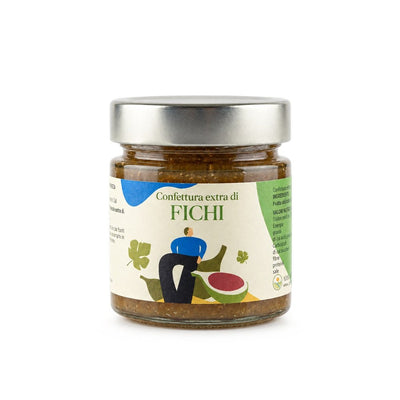
Extra White Fig Jam – Award-Winning Artisan, Preservative-Free
€7,90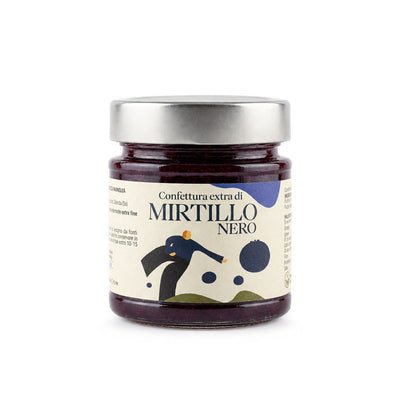
Extra Black Blueberry Jam – Award-Winning Artisan
€8,90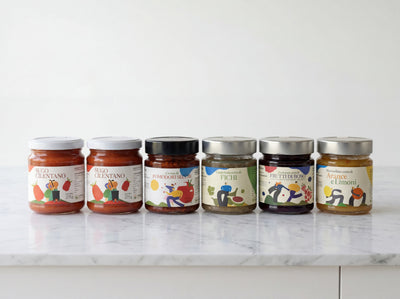
Welcome Kit – 6 Artisan Jars
€34,90- Free shipping over €27
- 30-day refund
- Award-winning: Great Taste and WineHunter Gold
- Choosing a selection results in a full page refresh.
- Opens in a new window.
Free shipping over €27
Handmade in Italy, no preservatives