
Burrata Warm or Cold? Every Way to Serve It with Antipasti in Oil and Jams
Burrata is eaten cold. Always. It's one of those unwritten rules most people take for granted. Except the rule is wrong, or at least half-right: burrata is also eaten warm, and when it's warm it's a different dish, with different pairings.
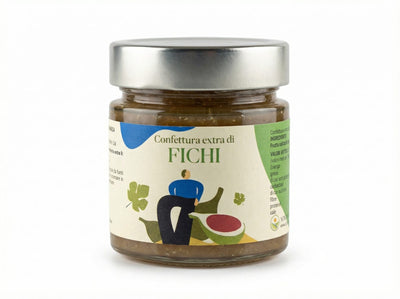
 | From our selection Fig JamHandmade, no preservatives. € 7,90 Discover → |
This is the guide that clarifies the difference, shows four ways to serve it and tells you exactly which antipasti in oil and jams work in each case.
What changes between cold and warm burrata
Burrata, by production specification, is a pasta-filata cheese with stracciatella (mozzarella strands) and cream inside. Temperature changes three things:
- Cold (fridge, 4-6 °C): the stracciatella is compact, the cream dense. Marked milky flavour, defined bite. This is the "summer, caprese, fresh tomato" version.
- Warm (15-18 °C): the stracciatella relaxes, the cream flows, the outer paste turns elastic. The milky flavour becomes rounder and slightly buttery. This is the "restaurant" version, the one served over warm crostoni.
- Hot (heated, 35-40 °C): burrata releases the stracciatella entirely the moment you cut it; it almost becomes a sauce. This is the "pasta" or "risotto" version — not to be confused with melted mozzarella.
Important: "warm" doesn't mean "reheated". It means "taken out of the fridge 30-40 minutes before serving", at full room temperature. It's the temperature used in pastry shops and restaurants in Andria, Puglia.
Cold burrata: three pairings that always work
1. Burrata + sun-dried tomatoes in oil
The modern classic. The tangy, concentrated note of sun-dried tomatoes in oil (or even better the sun-dried tomato spread, since it becomes spreadable) is exactly the contrast the milky sweetness of cold burrata asks for. Serve on toasted crostino, with a drizzle of EVO oil on top and a few basil leaves torn by hand.
Per person: 1/4 of a 125 g burrata, a generous teaspoon of spread.
2. Burrata + peppers in oil
Fuller, more summery. Peppers in oil cut into thin strips and laid on cold burrata make a composed salad you can eat in two minutes. If you want, add half a Cantabrian anchovy and a small piece of grilled bread.
Per person: 1/2 of a 125 g burrata, 30-40 g of drained peppers in oil.
3. Burrata + Taggiasca olives
The Ligurian-Apulian version. Pitted Taggiasca olives, good EVO oil, basil, and that's it. Works especially well as the first bite of a board or as an antipasto for a fish dinner.
Warm burrata: the version that changes everything
Taking burrata out of the fridge 40 minutes before serving is the simplest and most underrated thing in Italian cooking. When it's warm, sweet pairings work better than savoury ones.
4. Warm burrata + fig jam on a toasted crostone
The quintessential "restaurant" pairing. A still-warm slice of toasted rustic bread, the burrata torn open on top, a teaspoon of Minnelea extra white fig jam, freshly cracked black pepper. The natural sugar of the white fig (Dottato variety, whole fruit) meets the cream of the burrata and you end up with a bite that tastes like dessert and antipasto at the same time.
Per person: 1/2 burrata, 1 teaspoon of jam, 1 slice of bread 1.5 cm thick.
5. Warm burrata + lemon marmalade and almond flakes
A fresher variant on the fig version. Extra lemon marmalade has that slight bitter note from the peel that cuts the richness of the stracciatella, and toasted almonds add crunch. Perfect in late winter and spring, when figs are out of season.
Hot burrata: two serious recipes
6. Hot crostone with burrata and sun-dried tomato spread
Toast the bread at 200 °C for 5 minutes. Take it out boiling hot. Spread a generous spoonful of sun-dried tomato spread. On top, half a burrata torn open. The heat of the bread instantly melts the stracciatella, which blends with the spread. You haven't cooked the burrata: you've just "warmed" it with the bread.
Serve immediately. If you wait, the bread softens and you lose everything.
7. Pasta with burrata added at the end
The pasta version. Short pasta (mezze maniche, paccheri), cherry tomatoes sautéed in oil and garlic, sun-dried tomato spread added at the end of cooking, pasta tossed in. Plate, and on top of the still-hot pasta add the open burrata. Black pepper, basil.
Don't stir. The burrata "melts" only in the bites that meet it.
What NOT to do with burrata
- Don't microwave it. It breaks completely; the stracciatella turns watery.
- Don't season in advance. If you put oil, salt and pepper on the burrata half an hour before the guests arrive, the vegetation water comes out and you'll find it drowned.
- Don't use 2-3 day old burrata. Burrata is eaten within 24-36 hours of packaging; after that it loses structure and becomes a block of sour cream.
- Don't substitute buffalo mozzarella. They're not interchangeable. Buffalo has more melty softness but less inner cream, and sweet pairings with buffalo almost never work.
Operational summary
| Temperature | When | Pairings that work |
|---|---|---|
| Cold (fridge) | Summer aperitivo, caprese | Sun-dried tomatoes, peppers in oil, olives |
| Warm (40 min out of fridge) | Dinner, serious antipasto | Fig jam, lemon marmalade |
| Hot (on bread or pasta) | Primo, hot crostone | Sun-dried tomato spread |
Where it starts
The four Minnelea jars that cover all these pairings:
- Sun-dried tomato spread — cold and hot burrata
- Peppers in oil — cold burrata
- Extra Dottato white fig jam — warm burrata
- Extra lemon marmalade — warm burrata, spring