
How to choose a quality artisanal jam: the practical guide
The jam aisle in the supermarket is lined with jars that all look alike: same shape, same colourful label, similar prices. Yet the gap between an industrial preserve and a true artisan confettura is enormous — in the recipe, the flavour, the nutrients, and the value for money.
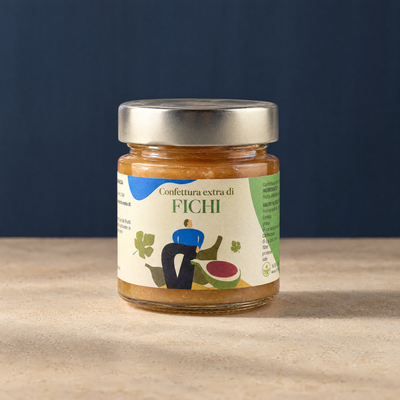
 | From our selection Fig JamHandmade, no preservatives. € 7,90 Discover → |
This guide gives you 7 practical yardsticks to tell a serious artisan product from one that’s only artisan in the marketing. All you need is the label on the jar and a couple of minutes of careful reading.
1. Fruit percentage (the figure that instantly separates the good from the mediocre)
Under EU Regulation 2001/113, a jam can only be labelled “extra” if it contains at least 45 g of fruit per 100 g of finished product. Low-end industrial jams sit right on that limit, often using reconstituted fruit purée.
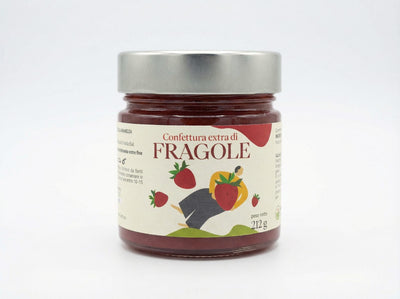
A serious artisan confettura starts with 50 % fruit in the pot. The best reach 60–70 %, and the weight of fruit that goes into the pot is actually greater than the weight of the finished jam, because fruit loses water as it cooks. Minnelea’s Extra Strawberry Jam, for instance, begins with 130 g of fruit to yield 100 g of finished product — a 130 % concentration, with a 50/50 fruit-to-sugar ratio in the pot.
Where to find the figure: in the ingredient list, usually right after the fruit name in brackets (“Fruit 50 %”) or in the nutritional table.
2. The presence (or absence) of industrial pectin
Pectin is a natural thickener found in some fruits (apples, citrus, berries). Traditional jam sets thanks to the fruit’s own pectin plus long, gentle cooking. Industry takes a shortcut: adding concentrated industrial pectin to set in minutes and slash cooking time (and cost).
The downside of added pectin: the jam turns gummy, overly stiff, with a uniform texture that bears no resemblance to slowly cooked fruit. Flavour suffers too — flatter, less complex.
What to look for on the label: a quality artisan confettura lists only fruit, sugar (preferably cane), lemon juice. No “apple pectin”, no “pectin E440”, no “gelling agents” of any kind.
3. The ingredient list must be short
Three or four ingredients, no more:
- Fruit (named and listed first)
- Sugar (preferably cane, always Italian)
- Lemon juice (for acidity, natural preservation and colour fixing)
- At most a single spice (e.g. cinnamon for apples, vanilla for peaches)
Avoid: preservatives (E202, potassium sorbate), colourings (E120, E163), thickeners (E440, E407), acid regulators (E330 industrial citric acid — real lemon juice is used instead), artificial flavours.
A long list peppered with E-numbers is the most reliable sign of an industrial product, even if the label says “artisan” or “nonna’s recipe”.
4. Cooking method (vacuum vs traditional)
Vacuum cooking at low temperature (below 60 °C) preserves vibrant colour, fresh fruit aroma and a good share of heat-sensitive vitamins (vitamin C, polyphenols). This is the method used by Italy’s top-tier artisan jam makers, including Minnelea’s confetture.
Traditional open-pot cooking (90–100 °C) for hours degrades colour and aroma. It’s the classic method of grandma’s home preserves — perfect for family use, less ideal for a commercial product that needs to reach the customer tasting as fresh as the day it was made.
Where to find the info: in the product description on the producer’s website (the jar label rarely states it). If it isn’t mentioned, it’s fair to suspect standard industrial cooking.
5. Sterilisation (professional autoclave vs hot-fill)
Food safety in jam hinges on perfect vacuum: a poorly sealed jar will grow mould within 2–3 months even with preservatives.
A professional artisan operation sterilises in a 121 °C autoclave for 12–15 minutes — impossible in a domestic kitchen and beyond reach of a 100 °C oven. This method guarantees perfect vacuum and 12–18 months shelf life without any chemical preservatives.
Home-style preserves (inverted jars, “pop” lids) are excellent for family consumption within a few months, less safe for long-distance sales.
6. Origin of the fruit (seasonal Italian vs out-of-season imports)
A strawberry jam “available all year round” means one of two things:
- Imported fruit from outside the EU (Morocco, Egypt, South-East Asia) grown under intensive conditions
- Frozen fruit from one or two years earlier, thawed and cooked
A serious Italian artisan jam follows the seasons: strawberries May–June, figs August–September, blueberries June, apricots June–July, citrus December–March. Production is concentrated in the right months, and during the rest of the year the producer draws from stock already sealed in jars.
Question to ask the maker: “When was this jar cooked?” — a small artisan usually knows the month of production.
7. Fair pricing (neither too cheap nor too steep)
Price is an indicator. A well-known industrial brand costs €2–3 for a 350 g jar. A quality Italian artisan jam costs €5–12 for 200–250 g. Below €4 a jar, it is very hard for the product to be genuinely artisanal with seasonal Italian fruit.
The maths is simple: 1 kg of in-season Italian strawberries costs €4–7 at the farm gate. To obtain 100 g of extra jam you need 130 g of fruit. Add cane sugar, lemon, glass jar, label, labour, sterilisation, packaging, distribution, retailer margin. A retail price below €5 for a 212 g jar implies shortcuts somewhere (imported fruit, low fruit %, added pectin).
Be wary of prices too high as well — above €15 a jar. Quality plateaus beyond a certain point, and very expensive products often pay for luxury packaging more than for the ingredient.
Awards (a signal, not the whole story)
International gastronomic awards are a sign of quality vetted by expert tasters. The most relevant for Italian artisan jams:
- Great Taste Award (UK, Guild of Fine Food): awards 1, 2 or 3 stars after blind tasting by a panel of food critics. Minnelea’s White Fig Extra Jam won Great Taste 2025
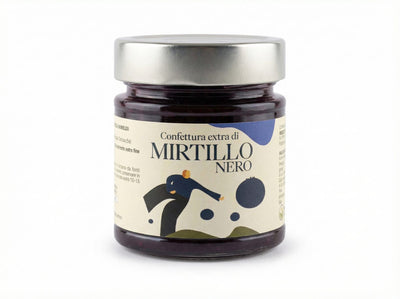
- WineHunter Award (Italy, Merano WineFestival): celebrates Italian food excellence. The same Fig Jam took Gold, while Minnelea’s Black Blueberry Jam earned Rosso 2024
- Sol d’Oro, 3 Forks Gambero Rosso, regional accolades
An award isn’t everything, but a producer who submits its products to blind judging usually has something worth saying.
30-second supermarket checklist
- Read the ingredient list: it must be short (fruit, sugar, lemon juice)
- Look for the fruit %: minimum 45 %, ideally 50 %+ in the pot
- Make sure there are NO: industrial pectin, preservatives, colourings, thickeners
- Check fruit origin: Italian and seasonal, not generic “EU and non-EU”
- Look at the price: €5–12 for a 200–250 g jar is the right range
- Open the jar: the colour must be vivid (deep red for strawberries, not dark), not dull
- Taste: it should taste of real fruit, not generic cooked sugar
Frequently asked questions
Can I trust the word “artisan” on the label?
No, there is no strict legal definition for “artisan” on jam labels. Always verify with the 7 criteria in this guide.
Are organic jams always better?
Organic guarantees no synthetic pesticides on the fruit, but does not automatically mean high fruit %, no added pectin or vacuum cooking. A non-organic Italian artisan jam with local fruit is often superior to an organic industrial jam made with low-cost imported fruit.
“Sugar-free” or sweetener jams: are they healthier?
Sugar-free or sweetener jams (erythritol, stevia) have fewer calories, but the flavour is very different and natural preservation requires more preservatives. If you want less sugar, choose jams with a high fruit percentage (60 %+) rather than sweeteners.
How long does an open jam keep?
An artisan jam should be refrigerated after opening and eaten within 15–20 days. An industrial jam full of preservatives can last 1–2 months, but flavour deteriorates.
Where can I buy reliable Italian artisan jams?
Directly from the producer’s website (you can check ingredients, origin, awards), or at specialist wine shops, independent delis, farmers’ markets. Be wary of “artisan” jams in supermarkets under €4.
Conclusion
A true artisan confettura of quality can be spotted in 3 minutes of careful label reading + one spoonful. The difference is worth the extra €2–3 over the industrial version.
Minnelea’s artisan confetture meet all 7 criteria in this guide: only seasonal Italian fruit (white Cilento figs, strawberries, black blueberries, apricots), cane sugar, lemon juice. Vacuum cooking, professional autoclave, no pectin, no preservatives, no colourings. 212 g jars, €7.90 each. 24–48 hour delivery across Italy.