
Mascarpone Cheese Mousse: Crema al Mascarpone Recipe
The authentic Crema al Mascarpone is an airy mascarpone cheese mousse that comes together in minutes with just a handful of ingredients, then needs only a brief chill. At Minnelea, we prepare it two ways: the classic method with separated eggs for maximum lightness, or egg-free with whipped cream for a quick, everyday-friendly variation.
Recipe at a Glance:
- Yield: serves several
- Active preparation time: just a few minutes
- Chilling time: enough time to set
- Method 1 (classic): Beat egg yolks with sugar, fold in mascarpone, gently incorporate stiffly beaten egg whites. Results in an exceptionally airy, light texture.
- Method 2 (egg-free): Beat mascarpone with icing sugar until smooth, carefully fold in stiffly whipped cream. Faster, gentler, and no concerns about raw eggs.
Table of Contents
- What do you need for Crema al Mascarpone?
- Which method suits your occasion?
- Step by step: the classic Crema al Mascarpone
- Flavour variations that elevate the mousse
- Can you substitute mascarpone or adapt the mousse?
- What equipment do you need, and what matters most?
- How long does the mousse keep, and can you prepare it ahead?
- Why mascarpone is the key to the perfect mousse
- How to serve the mousse most beautifully?
- Key insights
- What makes this recipe so special
- Minnelea confetture: the premium topping for your mousse
- Sources and further reading
What do you need for Crema al Mascarpone?
Good mascarpone mousse relies on few but exceptional ingredients. A high fat content in the mascarpone is not a luxury requirement but essential for that velvety structure. Fresh cream with sufficient fat whips more stably than lower-fat alternatives.
| Ingredient | Quantity (4 servings) | Note |
|---|---|---|
| Mascarpone | — | Chilled, min. 40% fat |
| Whipping cream | 150 ml | 30% fat, cold |
| Egg yolks | 2 | Room temperature, pasteurised recommended |
| Egg whites | 2 | Room temperature, fat-free |
| Icing sugar | 50 g | Adjust to taste |
| Vanilla seeds | ½ pod | Or 1 tsp vanilla extract |
| Salt | 1 pinch | Enhances the dairy flavour |
| Lemon juice (optional) | 1 tsp | Balances the sweetness |
Optional flavour enhancers: 1–2 tbsp rum or Amaretto, 2 tbsp strong espresso, 1 tbsp cocoa powder, 2 tbsp berry purée, or a fine confettura as topping.
Which method suits your occasion?
The choice of method depends on three factors: time, guests, and desired texture.
Classic method with eggs:
- Egg yolks and whites are beaten separately; the whites provide the volume.
- The result is noticeably airier and lighter than zabaglione-based desserts, as no water bath is required. Milk Street describes this method as the more elegant one, as it requires no heat and is ready in minutes.
- Ideal for guests and special occasions when texture and presentation matter.
Egg-free method with cream:
- Only mascarpone, cream, sugar and vanilla. Ready in about 15 minutes, with no separating of eggs.
- Slightly more compact in texture, but absolutely safe for pregnant women, children, and anyone avoiding raw eggs.
- Perfect for spontaneous evenings or as a base for layered desserts in glasses.
When gelatine makes sense: Those needing the mousse as a cake filling or for entremets can incorporate 2–3g dissolved gelatine. For glass portions it is usually unnecessary, as the glass wall supports the mousse and keeps the texture stable.
Step by step: the classic Crema al Mascarpone
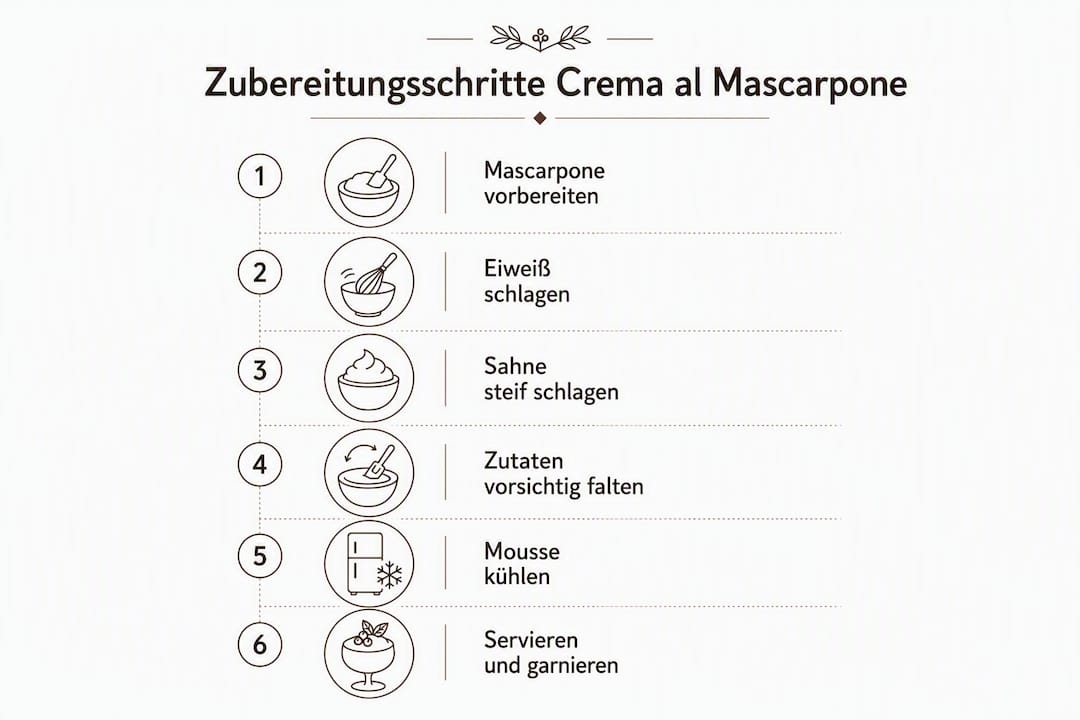
- Prepare: Remove mascarpone from the fridge but keep it cool. Bring eggs to room temperature 20 minutes before starting. Wipe bowls and beaters free of fat.
- Beat egg yolks: Beat egg yolks with 30g icing sugar and vanilla seeds for 2–3 minutes until pale and creamy, until the mixture has noticeably increased in volume.
- Fold in mascarpone: Briefly smooth the mascarpone with a silicone spatula, then fold in the egg yolk mixture in one go. Do not beat longer than necessary.
- Beat egg whites: Beat egg whites with a pinch of salt and the remaining 20–30g icing sugar until stiff. This takes about 1–2 minutes at medium speed; the peaks should be glossy and hold their shape.
- Fold together: Quickly stir one third of the meringue into the mascarpone mixture to loosen it. Gently fold in the remaining two thirds in two stages using the spatula, with large, circular movements from bottom to top.
- Portion: Fill the finished mousse into glasses or small bowls and cover with cling film.
- Chill: Leave to rest in the fridge for at least 1 hour, allowing the mousse to set and the flavours to develop.
Safety note: This recipe contains raw eggs. We recommend pasteurised eggs, especially for children, pregnant women and elderly people. USDA food safety guidelines provide orientation on safe temperatures and handling.
Pro tip: Smooth the mascarpone only briefly, never longer than one minute at medium speed. Overmixing is the most common cause of a grainy or curdled mousse.
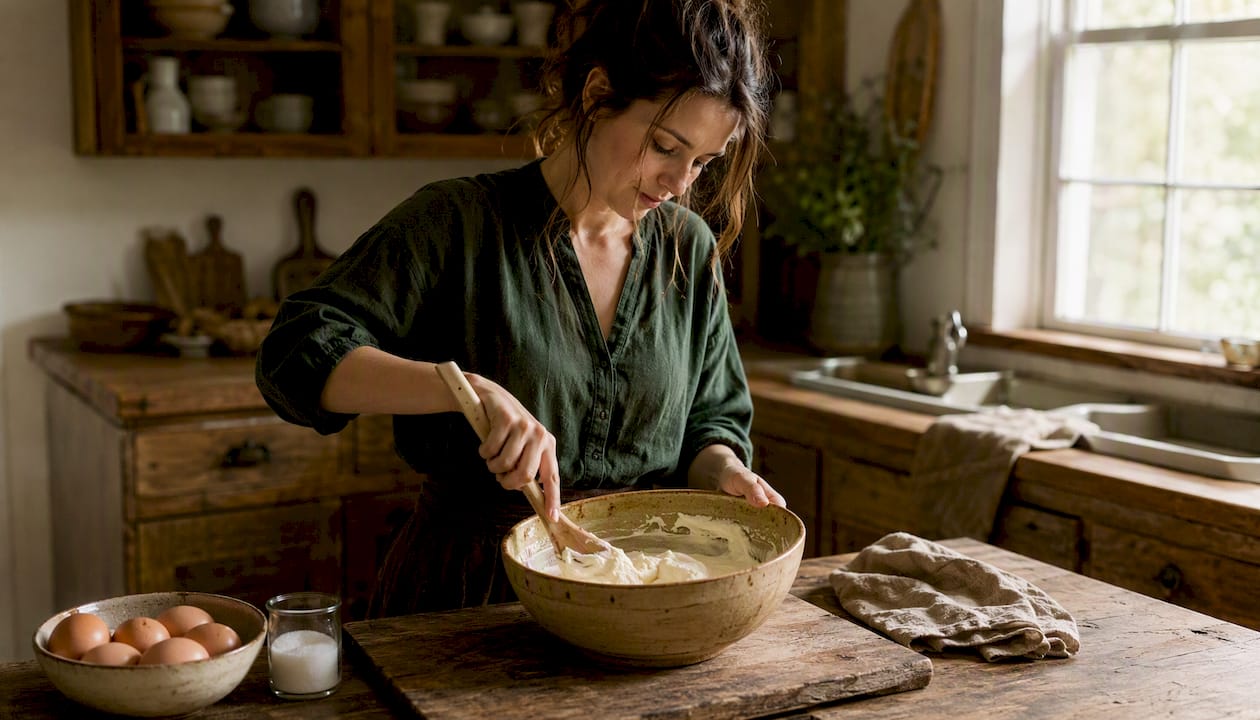
Egg-free quick version (6 steps): Beat mascarpone with icing sugar and vanilla until smooth. Whip cream until stiff. Fold together in two stages. Taste and adjust. Fill into glasses. Chill for at least 1 hour.
Flavour variations that elevate the mousse
Crema al Mascarpone is a grateful base recipe. It readily accepts flavours without losing its texture.
- Pure vanilla: Use the seeds of a whole pod instead of vanilla extract. The difference is palpable: the cream smells warmer and deeper.
- Lemon: Stir in 1–2 tsp freshly squeezed lemon juice and some grated zest. The juice balances the richness of the mascarpone and lets the dairy flavour shine.
- Coffee: Stir 2 tbsp cooled espresso into the egg yolk mixture. This creates an elegant tiramisu base that also works beautifully on its own in a glass.
- Chocolate: Pull 30g melted dark chocolate (min. 60% cocoa) lukewarm into the mascarpone mixture. For those who prefer it more intense, dust with cocoa powder when serving. This chocolate mascarpone mousse is particularly popular with guests.
- Berries: Swirl 2–3 tbsp fresh berry purée (e.g. raspberries, blended and strained) into the finished mousse without fully incorporating. This creates a beautiful marbled pattern and fruity freshness.
- Liqueur: Add 1–2 tbsp Amaretto, Limoncello or Vin Santo to the egg yolk mixture. Use sparingly, so the mascarpone remains the star.
For mascarpone mousse with berries, we recommend using a fine confettura as topping rather than raw fruit. The concentrated aromas of an artisan fig or blueberry confettura sing across the creamy surface in a way that fresh fruit alone cannot achieve.
Can you substitute mascarpone or adapt the mousse?
| Adaptation | Recommendation | Effect on texture and flavour |
|---|---|---|
| Cream cheese instead of mascarpone | Possible, but increase sweetness | More acidic, less creamy; lower fat content |
| Gelatine for firm setting | 2–3g per — mascarpone, dissolved | Sliceable, ideal for cakes; loses some lightness |
| Agar-agar (vegan) | 1–1.5g per — | Firmer, slightly rubbery; sufficient for glass portions |
| Keto version | Erythritol or xylitol instead of sugar | Texture nearly identical; sweetness perceived slightly differently |
| Plant-based base | Cashew cream (soaked, blended) | Nutty flavour; less neutral than mascarpone |
Cream cheese brings a noticeably more acidic note, which some find refreshing. Those who love mascarpone cheesecake variations can combine both: 150g mascarpone and 100g cream cheese yield a stable, lightly acidic mousse that works well for layered desserts. For the keto version: erythritol sometimes dissolves less completely than icing sugar in cold mixtures, so grind finely or warm briefly.
What equipment do you need, and what matters most?
The essentials at a glance:
- Mixing bowls: At least two, one of them fat-free for the egg whites.
- Hand mixer or stand mixer: Essential for egg whites and cream; a whisk alone is laborious.
- Silicone spatula: For gentle folding. A metal spoon cuts out air bubbles.
- Fine-mesh sieve: For straining berry purée or cocoa powder.
- Portion glasses: Not merely aesthetic. The glass wall supports the mousse, making gelatine unnecessary in most cases.
Temperature control: Work with cool mascarpone and cream, room temperature eggs. Too-cold eggs make emulsion difficult; too-warm mascarpone curdles more easily when beaten. This rule sounds simple, but makes the difference between a silky and a grainy cream.
Pro tip: Briefly rub the bowl for egg whites with a piece of lemon. Even minimal fat residues prevent the whites from becoming stiff.
When folding: work in 2–3 stages, never all at once. Pastry chefs recommend large, circular movements from bottom to top, and stopping immediately as soon as no white streaks remain visible.
How long does the mousse keep, and can you prepare it ahead?
- In the fridge: Covered with cling film, the mousse keeps for 2–3 days. From the second day some liquid may separate; a brief stir usually suffices.
- Freezing: Not recommended. The emulsion breaks when thawing, the texture becomes watery and grainy.
- Make-ahead up to 12 hours before: Fill the mousse into glasses, cover and store in the fridge. Add toppings only shortly before serving.
- Transport and catering: Seal glasses with lids or cling film, transport in a cool box at maximum 4°C. Never leave unrefrigerated for longer than 2 hours.
- Refreshing: Those serving the mousse a day later can add a spoonful of freshly whipped cream on top. This masks any texture changes and looks elegant.
Why mascarpone is the key to the perfect mousse
Mascarpone is an Italian fresh cheese product made from cream rather than milk. The fat content typically lies at 40–45%, giving it a mild, slightly sweet note and a butter-soft consistency. Cream cheese, by contrast, is made from milk and cream, bringing a noticeably more acidic flavour that is immediately apparent in a mousse.
It is precisely this high fat content that enables the airy, creamy structure of a Crema al Mascarpone. The fat coats the beaten air bubbles and stabilises them without heat or binding agents. A small pinch of salt or a squeeze of lemon juice reduces the perception of heaviness and emphasises the pure dairy flavour.
At Minnelea we value mascarpone not merely as an ingredient, but as an expression of a philosophy: few, hand-selected ingredients that speak for themselves through their quality.
How to serve the mousse most beautifully?
Toppings that truly add something:
- Fresh raspberries or blueberries: acidity and colour contrasting with the creamy surface.
- Cocoa powder, finely sieved: the classic that emphasises the tiramisu connection.
- Chocolate shavings or chopped pistachios: textural contrast that makes every spoonful more interesting.
- Caramelised walnuts or almonds: warm and crisp against the cool cream.
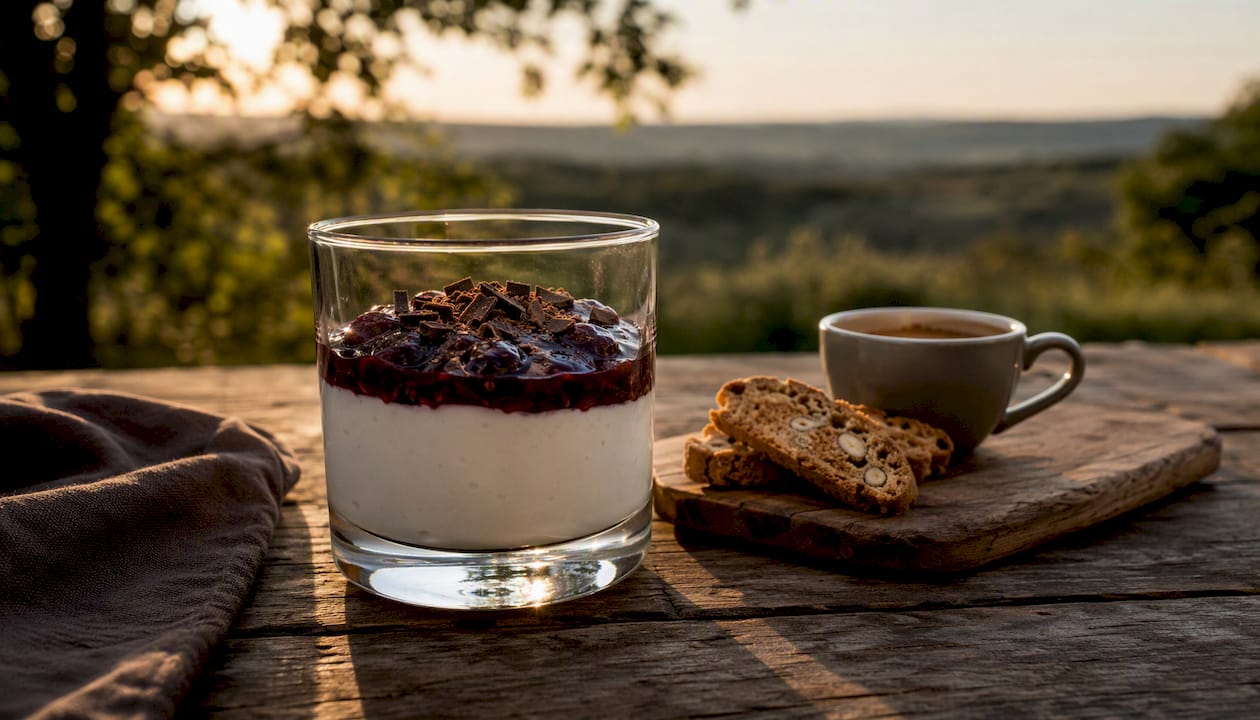
- Artisan confetture from Minnelea: A fig confettura or orange marmalade as topping brings depth and complexity that fresh fruit alone cannot achieve. Our fig confettura pairs particularly well, as its caramelised sweetness frames the mascarpone wonderfully.
Crisp companions: Cantuccini, sponge fingers or thin almond biscuits sit beautifully beside the glass. Those using the mousse as a filling for panettone slice the panettone horizontally and layer the cream between the slices.
Beverages: Espresso is the obvious choice, and no coincidence. Vin Santo or a light Moscato d'Asti also harmonise beautifully. For non-alcoholic accompaniment we recommend a mild chamomile tea or chilled apple juice with a splash of sparkling water.
Key insights
The classic Crema al Mascarpone succeeds reliably and without binding agents with cool mascarpone, room temperature eggs and gentle folding technique in three stages.
| Topic | Details |
|---|---|
| Ingredient temperature | Keep mascarpone cool, eggs at room temperature, so the emulsion succeeds. |
| Folding technique | Fold in meringue or cream in 2–3 stages; overmixing destroys the airiness. |
| Choose your method | Classic with eggs for guests; egg-free with cream for quick, safe everyday version. |
| Make-ahead and storage | Prepare up to 12 hours ahead; keeps 2–3 days in fridge, do not freeze. |
| Minnelea as topping | Artisan confetture from Minnelea elevate the mousse with concentrated fruit aromas. |
What makes this recipe so special
Crema al Mascarpone is one of those recipes that seems almost too simple on paper. Five ingredients, no heat, no gelatine. And yet many fail on the first attempt, because they underestimate the temperature rules or beat too long.
What fascinates me about this dessert: it is honest. It hides behind no elaborate technique or exotic ingredients. Those who buy good mascarpone and respect the folding technique receive a mousse that could stand in a Milanese restaurant just as well as on the home table.
And then comes the moment when you place a spoonful of Minnelea fig confettura on the surface. The caramelised, slightly resinous notes of the fig meet the mild sweetness of the mascarpone. This is no longer a topping. This is a second dessert within the first.
Minnelea confetture: the premium topping for your mousse
Artisan confetture from southern Italy bring something that industrial products cannot: concentrated fruit aromas, created in small batches with selected regional ingredients. On a mascarpone mousse they unfold especially beautifully, as the neutral creaminess of the mascarpone does not mask but carries the aromas.

We recommend two pairings from the Minnelea range: The fig confettura brings a warm, caramelised depth that pairs especially well with the classic Crema al Mascarpone. For a brighter, citrus-fresh note, the orange marmalade works excellently. Place a tablespoon on the finished mousse shortly before serving. Those hosting and seeking a special gift will find gift boxes at Minnelea combining several confetture. Browse directly in the Minnelea shop and discover which confettura will crown your next mousse.
Sources and further reading
- Mascarpone Mousse (Crema al Mascarpone) at Christopher Kimball's Milk Street: Original recipe and explanation of why the method without water bath is lighter than zabaglione.
- Vanilla Mascarpone Mousse at JWD Recipes: Quick egg-free recipe with timing and keto notes.
- 5-Step Mascarpone Mousse at AndBonBons: Professional variation with gelatine for firm setting and entremets.
- Light Mascarpone Mousse at My Chef's Apron: Detailed technique notes on folding and whipping.
- USDA Food Safety: Safe Temperature Chart: Reference for safe handling of raw eggs.
- Minnelea Fig Confettura: Product presentation and flavour profile of fig confettura as mousse topping.
Recommendation
- Crostini con fontina, confettura di arance e limoni e prosciutto crudo – Azienda Agricola Minnelea
- Kürbis-Pasta: cremige Rezepte & 10-Minuten-Version – Azienda Agricola Minnelea
- Crostata alla marmellata di albicocche – Azienda Agricola Minnelea
- Sahnesauce mit Tomaten: cremiges Rezept in 20 Minuten – Azienda Agricola Minnelea