

Condiments
Grape jam: the recipe with fresh white or black grapes
In September, leftover grapes become jam. This recipe explains how to handle seeds and skins without bitter aftertastes, how to use the natural pectin in unripe grapes and how to recognize the right set with the cold-plate test. It works with white grapes and black grapes, with little sugar and plenty of aroma.

Method
- Dirasca e lava l'uva in acqua fredda. Scarta ogni acino molle, ammuffito o con odore alcolico: uno solo rovina l'intera pentola.
- Elimina i semi con il metodo che preferisci: taglia gli acini a metà e togli i semi con la punta di un coltellino, oppure scalda l'uva intera 6-8 minuti con due dita d'acqua finché scoppia e passala al passaverdure con il disco fine da 2-3 mm. Non usare mai il frullatore a immersione con i semi in pentola.
- Se lavori con l'uva nera e hai usato il passaverdure, recupera le bucce dal setaccio, falle sobbollire 10 minuti nella purea e poi toglile: è lì che stanno colore e pectina.
- Unisci la polpa, gli acini acerbi o la mela grattugiata, lo zucchero e il succo di limone in una pentola larga e bassa. Lascia macerare 3 ore a temperatura ambiente, o tutta la notte in frigorifero, finché lo zucchero è sciolto.
- Porta a bollore a fuoco medio-alto e togli con una schiumarola la schiuma chiara che sale: sono proteine e intorbidano il prodotto.
- Cuoci da 35 a 50 minuti a seconda di quanto è acquosa l'uva, mescolando spesso con un cucchiaio di legno. Nell'ultimo quarto d'ora non allontanarti: lo zucchero brucia in fretta.
- Aggiungi il rosmarino o la vaniglia soltanto negli ultimi 5 minuti di cottura e toglili prima di invasettare.
- Fai la prova del piattino freddo: mezzo cucchiaino di confettura su un piattino tenuto in freezer, 60 secondi di attesa, poi spingi con il dito. Se resta una grinza è pronta, se cola come sciroppo prosegui 5 minuti e ripeti con un piattino nuovo.
- Invasetta subito nei vasetti sterilizzati e ancora caldi, riempiendo fino a 5 mm dal bordo. Pulisci il bordo con un panno imbevuto di acqua bollente, chiudi con capsule nuove e capovolgi i vasetti per 10 minuti, oppure pastorizzali 10 minuti in acqua bollente. Fai raffreddare in fretta.
Minnelea products for this recipe
The preserves used in this recipe.
Minnelea
Sweet Awakening Kit – 6 Artisan Jams
€39,00
Minnelea
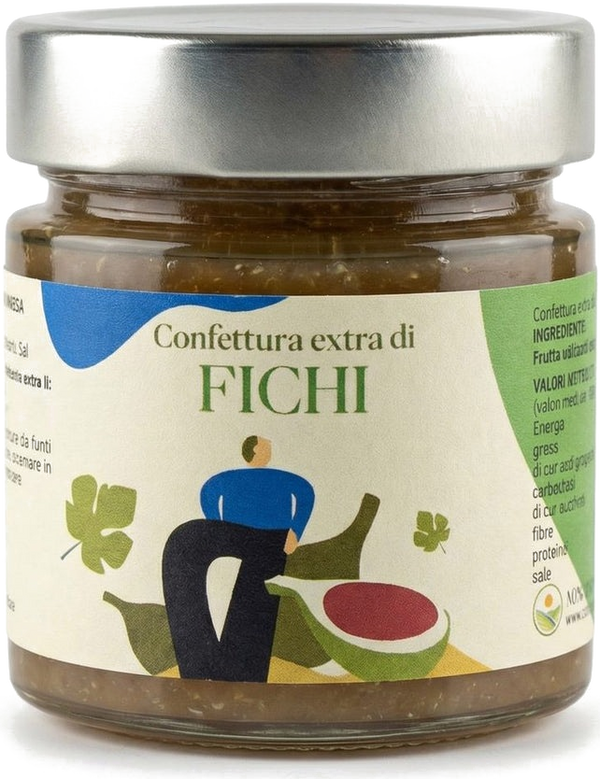
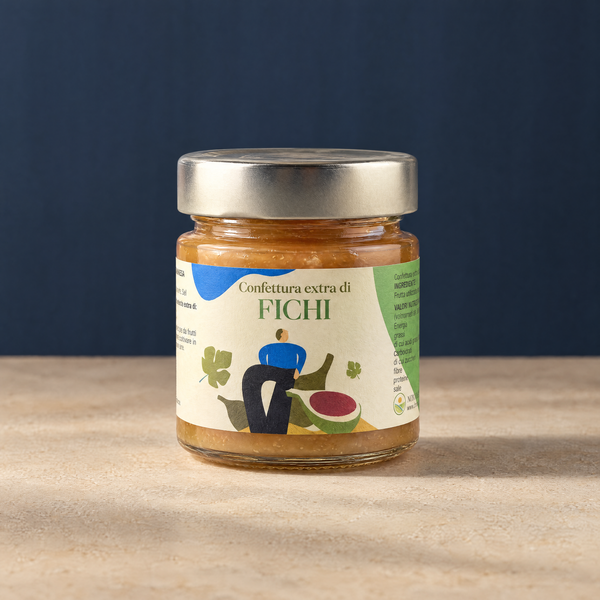
Extra White Fig Jam – Award-Winning Artisan, Preservative-Free
€7,90
Minnelea
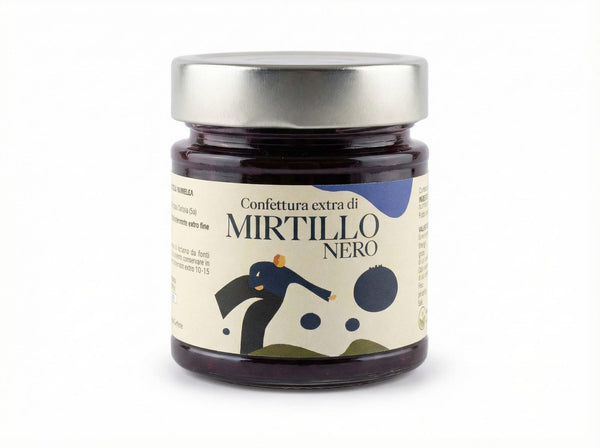
Extra Black Blueberry Jam – Award-Winning Artisan
€8,90
• Grape seeds contain bitter tannins: as long as they stay whole, they release very little, but if you break them with a stick blender or leave them simmering for a long time, the astringent aftertaste will not go away. Rule: never use a stick blender in a pot with seeds, and remove the seeds within the first ten minutes.
• The skins bring color, pectin and structure, and in black grapes all the color is there: if you remove them, you get a grayish-pink jam. After using the food mill, recover them, let them simmer for ten minutes in the puree and then remove them.
• Three valid methods for seeds and skins: cut the grapes in half and remove the seeds with the tip of a small knife (30-40 minutes per kilo, but better control and recognizable fruit pieces); pre-cook for 6-8 minutes with two fingers of water until they burst, then use a food mill with a fine 2-3 mm disc; blanch for 30 seconds and peel, which only makes sense with thick skins and loses pectin.
• Grape jam or grape jelly: in jam the pulp remains, while for jelly the grapes are briefly cooked, the juice is left to drain through a cloth and only that clear juice is cooked with sugar. Never squeeze the cloth: any pressure makes it cloudy. Let it drain for at least four hours, better overnight; the yield drops to around 60 percent and, because filtering out the skins loses pectin, 10-15 more minutes of cooking are needed.
• Pectin: grapes sit in the middle of the ranking, less than apple and quince, more than strawberry, and ripe grapes alone are rarely enough. Gelling sugar is not needed: keep aside 10 percent of the weight in unripe green grapes, the ones each bunch carries with it, or use one whole tart apple with its skin for each kilo. Together with lemon juice, which lowers the pH to the point where pectin gels, that is enough.
• Cold-plate test: put three small plates in the freezer before starting, pour half a teaspoon of jam onto the chilled plate, wait 60 seconds and push with your finger. If a wrinkle remains, it is ready; if it runs like syrup, continue 5 minutes and repeat with a new plate. The thermometer (104-105 °C) works worse here than with classic jams, because with little sugar the boiling point drops and you end up overcooking: trust the plate and remember that grapes thicken quite a lot as they cool.
• Maceration and working size: the 3 hours at room temperature, or overnight in the refrigerator, are not included in the indicated times; the sugar dissolves before you turn on the heat, so cooking is shorter and more aroma is preserved. Do not work more than 2 kilos at a time, because large quantities cook for too long and lose aroma, and use a wide, low pot: more evaporation surface, fewer minutes of cooking.
• Varieties: white table grapes (Italia, Victoria) give a golden result with an almost honeyed base; black table grapes (Red Globe, Michele Palieri) give color, tannin and deeper aroma; wine grapes have too many seeds compared with the pulp and are only worth using in a blend; seedless grapes are the easiest but the least interesting, with less aroma and less pectin. Never use grapes already in fermentation: the alcoholic or vinegary smell does not go away with cooking.
• Common mistakes: the stick blender, too much sugar (30-35 percent is enough if you jar hygienically), forgotten lemon, the 15 extra minutes of cooking that give a brownish, rubbery jam, hot product poured into cold jars and black grape skins thrown away.
• Storage: sterilize the jars first, at 90 °C in the dishwasher or 20 minutes in the oven at 120 °C, always with new lids. Fill to 5 mm from the rim, clean the rim with a cloth soaked in boiling water, close immediately and turn upside down for 10 minutes or pasteurize for 10 minutes in boiling water. Closed and kept in the dark, they last 8-12 months; once opened, refrigerate and consume within 3 weeks, the honest price of little sugar and no preservatives. When opened, the lid must make a pop: if it does not, discard the jar.
• Allergens: none. Only fruit, sugar and lemon juice, gluten-free, dairy-free and nut-free.
• Variations: a sprig of rosemary with black grapes or half a vanilla bean with white grapes, added only in the last 5 minutes and removed before jarring. Three quarters black table grapes and one quarter wine grapes give color and depth. Set one jar aside until December: after two months, grape jam becomes rounder.
• Pairing: it is excellent on bread, but it is beside aged cheeses that it does its best, because the low sugar and light tannin from the skin do what sweet-and-sour should do with fat and salt. Excellent with aged pecorino, mature caciocavallo, blue cheeses and hard goat cheeses. One teaspoon per serving: it should accompany, not cover.
• Minnelea does not produce a grape jam: the jars linked here are the closest in sweet-acid profile and for use alongside cheese.
A Minnelea recipe built around seasonal fruit from Cilento: in our workshop, jams are made with low-temperature vacuum cooking, where water evaporates without the fruit ever reaching 100 °C, with real fruit and a short ingredient list.
• The skins bring color, pectin and structure, and in black grapes all the color is there: if you remove them, you get a grayish-pink jam. After using the food mill, recover them, let them simmer for ten minutes in the puree and then remove them.
• Three valid methods for seeds and skins: cut the grapes in half and remove the seeds with the tip of a small knife (30-40 minutes per kilo, but better control and recognizable fruit pieces); pre-cook for 6-8 minutes with two fingers of water until they burst, then use a food mill with a fine 2-3 mm disc; blanch for 30 seconds and peel, which only makes sense with thick skins and loses pectin.
• Grape jam or grape jelly: in jam the pulp remains, while for jelly the grapes are briefly cooked, the juice is left to drain through a cloth and only that clear juice is cooked with sugar. Never squeeze the cloth: any pressure makes it cloudy. Let it drain for at least four hours, better overnight; the yield drops to around 60 percent and, because filtering out the skins loses pectin, 10-15 more minutes of cooking are needed.
• Pectin: grapes sit in the middle of the ranking, less than apple and quince, more than strawberry, and ripe grapes alone are rarely enough. Gelling sugar is not needed: keep aside 10 percent of the weight in unripe green grapes, the ones each bunch carries with it, or use one whole tart apple with its skin for each kilo. Together with lemon juice, which lowers the pH to the point where pectin gels, that is enough.
• Cold-plate test: put three small plates in the freezer before starting, pour half a teaspoon of jam onto the chilled plate, wait 60 seconds and push with your finger. If a wrinkle remains, it is ready; if it runs like syrup, continue 5 minutes and repeat with a new plate. The thermometer (104-105 °C) works worse here than with classic jams, because with little sugar the boiling point drops and you end up overcooking: trust the plate and remember that grapes thicken quite a lot as they cool.
• Maceration and working size: the 3 hours at room temperature, or overnight in the refrigerator, are not included in the indicated times; the sugar dissolves before you turn on the heat, so cooking is shorter and more aroma is preserved. Do not work more than 2 kilos at a time, because large quantities cook for too long and lose aroma, and use a wide, low pot: more evaporation surface, fewer minutes of cooking.
• Varieties: white table grapes (Italia, Victoria) give a golden result with an almost honeyed base; black table grapes (Red Globe, Michele Palieri) give color, tannin and deeper aroma; wine grapes have too many seeds compared with the pulp and are only worth using in a blend; seedless grapes are the easiest but the least interesting, with less aroma and less pectin. Never use grapes already in fermentation: the alcoholic or vinegary smell does not go away with cooking.
• Common mistakes: the stick blender, too much sugar (30-35 percent is enough if you jar hygienically), forgotten lemon, the 15 extra minutes of cooking that give a brownish, rubbery jam, hot product poured into cold jars and black grape skins thrown away.
• Storage: sterilize the jars first, at 90 °C in the dishwasher or 20 minutes in the oven at 120 °C, always with new lids. Fill to 5 mm from the rim, clean the rim with a cloth soaked in boiling water, close immediately and turn upside down for 10 minutes or pasteurize for 10 minutes in boiling water. Closed and kept in the dark, they last 8-12 months; once opened, refrigerate and consume within 3 weeks, the honest price of little sugar and no preservatives. When opened, the lid must make a pop: if it does not, discard the jar.
• Allergens: none. Only fruit, sugar and lemon juice, gluten-free, dairy-free and nut-free.
• Variations: a sprig of rosemary with black grapes or half a vanilla bean with white grapes, added only in the last 5 minutes and removed before jarring. Three quarters black table grapes and one quarter wine grapes give color and depth. Set one jar aside until December: after two months, grape jam becomes rounder.
• Pairing: it is excellent on bread, but it is beside aged cheeses that it does its best, because the low sugar and light tannin from the skin do what sweet-and-sour should do with fat and salt. Excellent with aged pecorino, mature caciocavallo, blue cheeses and hard goat cheeses. One teaspoon per serving: it should accompany, not cover.
• Minnelea does not produce a grape jam: the jars linked here are the closest in sweet-acid profile and for use alongside cheese.
A Minnelea recipe built around seasonal fruit from Cilento: in our workshop, jams are made with low-temperature vacuum cooking, where water evaporates without the fruit ever reaching 100 °C, with real fruit and a short ingredient list.