

Condiments
Pear jam with lemon and vanilla
Pear is the hardest fruit to put in a jar: little pectin and little acidity make it stay runny and flat. This pear jam corrects both problems with lemon juice, a quince and a quarter of still-firm pears, scented with vanilla and cooked without added pectin.

Method
- Sbuccia le pere, togli i torsoli e taglia la polpa a cubetti di 1,5 cm. Chiudi bucce e torsoli in un sacchetto da infusione o in una garza.
- Metti pere, mela, zucchero, succo di limone e sale in una casseruola larga dal fondo spesso. Mescola, appoggia sopra il sacchetto e lascia macerare almeno 2 ore, meglio una notte in frigorifero: lo zucchero tira fuori l'acqua e accorcia la cottura.
- Raschia i semi dalla bacca di vaniglia, aggiungi semi e baccello e porta a bollore a fuoco medio, mescolando finché lo zucchero è completamente sciolto.
- Cuoci 35-45 minuti a fuoco dolce, mescolando spesso con un cucchiaio di legno e schiumando quando serve.
- Togli il sacchetto e strizzalo bene sopra la pentola: è lì che sta la pectina. Recupera anche il baccello di vaniglia.
- Per una consistenza più fine schiaccia brevemente con lo schiacciapatate, oppure dai due o tre colpi corti di frullatore a immersione. Non frullare a lungo, altrimenti la confettura diventa collosa.
- Fai la prova del piattino freddo: versa mezzo cucchiaino su un piattino tenuto in freezer, aspetta 30 secondi e passa il dito in mezzo. Se il solco resta aperto è pronta.
- Se è ancora troppo liquida continua a cuocere a intervalli di 5 minuti e ripeti la prova. In alternativa controlla con il termometro: 104-105 °C al centro della pentola.
- Riempi i vasetti caldi e sterilizzati fino a mezzo centimetro dal bordo, chiudi subito, capovolgi per 5 minuti e poi lascia raffreddare in piedi.
- A freddo verifica che ogni coperchio sia concavo: se il sottovuoto non si è formato, conserva quel vasetto in frigorifero. La consistenza definitiva si giudica solo il giorno dopo.
Minnelea products for this recipe
The preserves used in this recipe.
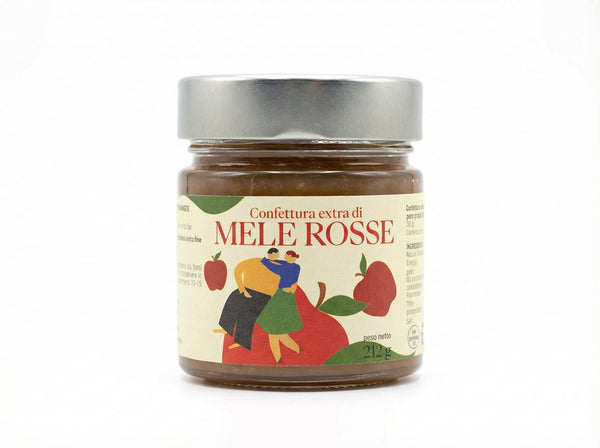
Minnelea
Extra Red Apple Jam – Artisan, Preservative-Free
€7,90
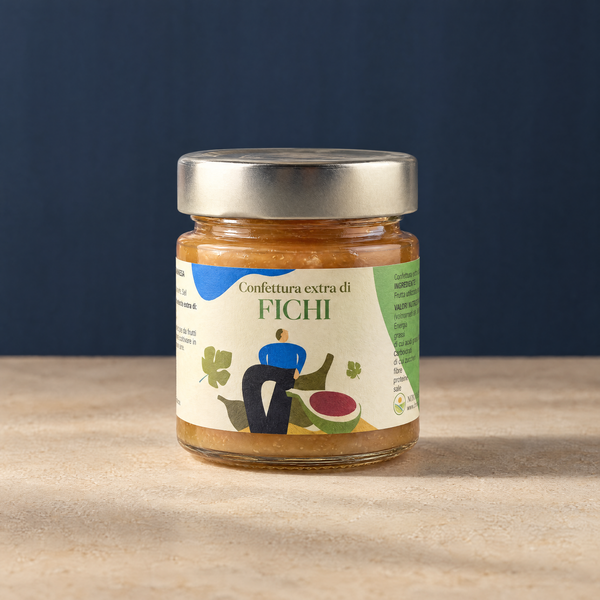
Minnelea
Extra White Fig Jam – Award-Winning Artisan, Preservative-Free
€7,90
Minnelea
Sweet Awakening Kit – 6 Artisan Jams
€39,00
• Pear has little pectin and little acidity, exactly the two things that make jam set: the fruit, not the method, is the cause of a runny jar. By law, “marmalade” refers only to citrus preparations, so this is technically pear jam.
• Lemon juice is not there to make it taste of lemon, but to lower the pH so pectin can close its network: count 60 ml, the juice of two lemons, per kilo of cleaned pulp.
• Quince is the classic source of pectin and ripens in the same season; failing that, a firm, tart apple works well (Renetta, Annurca, Granny Smith). Peels and cores cooked inside an infusion bag are the second reserve of pectin: squeeze the bag well before removing it.
• Keep about a quarter of the pears still firm: they bring more pectin, release less water and remain in pieces, so you get bites of fruit instead of an even puree.
• Varieties: Conference keeps its structure and releases little water but has a shy aroma; Doyenné du Comice is highly fragrant and the softest (use it only in a blend); Gieser Wildeman is hard and tannic and gives body and color, but needs slightly longer cooking. A successful mix: 700 g Conference, 300 g Comice and one apple. With Italian pears, Abate Fétel replaces Conference and Kaiser replaces Comice.
• Maceration: before turning on the heat, let fruit, sugar and lemon rest at least 2 hours, better overnight in the refrigerator. It is not cooking time, but it shortens cooking because the sugar draws out the water.
• The setting point is around 104-105 °C, measured at the center of the pot and not against the bottom; with pears, aim for the upper end of the range. If it still remains runny, do not throw it away: put it back in the pot with the juice of half a lemon and one grated apple per kilo, and cook another 10 minutes.
• Do not blend for long: two or three short pulses with a stick blender, or a quick mash with a potato masher. Blending too much makes the jam gluey.
• Always peel pears, because the skin becomes tough and remains in the jar as threads, and work quickly, adding the lemon right away: pears oxidize fast. An amber-gold color is normal; dark brown almost always means cooking too long or too hard.
• Storage: sterilize jars and lids, fill hot into hot jars and after cooling check that the lid is concave; if the vacuum has not formed, that jar goes in the refrigerator. Closed and kept in the dark, it keeps for over a year; once opened, keep refrigerated and consume within three weeks, always with a clean spoon. Below 400 g sugar per kilo of fruit, storage at room temperature does not hold.
• Allergens: the basic ingredients contain none. The chocolate variation may contain traces of milk, soy and nuts.
• Variations: vanilla, which fills exactly the aromatic gap pear leaves; finely grated fresh ginger, two centimeters in the pot from the start, excellent with aged cheeses; dark chocolate at least 70%, 60-80 g in pieces melted as soon as you remove the pot from the heat, which makes it darker and thicker but also less long-lasting, so at most two jars to keep in the refrigerator.
• Pairing: pear is the natural partner for blue cheeses, because the pungent edge of gorgonzola, roquefort or stilton needs something sweet and soft to land on. A spoonful next to a wedge of sweet gorgonzola, with walnuts and dark bread; it also works well with a pecorino that is not too aged.
• In our workshop in Cilento, we do not process pear: our season revolves around figs, apricots, blueberries and citrus. Among our jars, Extra Red Apple Jam is the closest to pear in character, while Extra Fig Jam is the one that performs best with blue cheese.
A Minnelea recipe built around seasonal fruit: low-temperature vacuum cooking, real fruit and short ingredient lists, with no added pectins and no preservatives, because long, violent boiling is the first thing that strips away aroma.