
Confetture and Marmellate: Are They Gluten-Free?
Confetture and Marmellate: Are They Gluten-Free?
For anyone living with celiac disease or gluten sensitivity, checking ingredients is a daily, non-negotiable ritual. Confetture — those seemingly simple jars of fruit and sugar — often raise eyebrows: could they contain gluten? Is there a risk of cross-contamination?
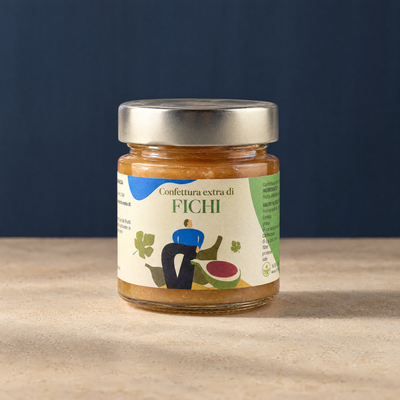
 | From our selection Fig JamHandmade, no preservatives. € 7,90 Discover → |
The ingredients in confetture are naturally gluten-free
Let’s start with the good news: the classic ingredients of an artisanal confettura — fruit, sugar, pectin, lemon juice — do not contain gluten. Gluten is a protein found in wheat, rye, barley, spelt, kamut and their derivatives; none of these cereals appear in a traditional confettura recipe. From a formulation standpoint, confetture are naturally gluten-free.
What European labelling law says
EU Regulation 1169/2011 on food labelling requires the 14 main allergens — including wheat and gluten-containing cereals — to be clearly declared on the label, both as intentional ingredients and as possible traces. If a jar of confettura carries the wording “may contain traces of gluten”, it doesn’t mean gluten is present, only that there is a potential risk of cross-contamination during production.
Cross-contamination: when and why it happens
Cross-contamination can occur if the same facility makes both confetture and gluten-containing products (biscuits, cakes, bread) and shares surfaces, equipment or packaging lines. In small, dedicated artisanal workshops that focus solely on fruit preserves — where cereals or flours are never handled — the risk is extremely low.
The “gluten-free” claim: what it certifies
Under EU Regulation 828/2014, a product may only carry the label “gluten-free” if its gluten content is below 20 ppm (mg/kg). Certification with the crossed-grain symbol (AIC and equivalent bodies) involves periodic analytical checks and is the strictest reference for celiacs. Many products that are naturally gluten-free — such as pure-fruit artisanal confetture — do not bear this certification simply because the cost is hard to justify for small producers. The absence of the crossed-grain symbol does not imply the presence of gluten.
Practical steps for celiacs
- Read the ingredients: confirm there are no gluten-containing cereal derivatives
- Check allergen warnings: watch for “may contain traces of wheat”
- Prefer certified products when available: the crossed-grain symbol is the strongest guarantee
- Contact the producer: for uncertified artisanal products, you can always ask about the facility and production processes
Conclusion
Artisanal confetture and marmellate, by ingredient composition, are naturally gluten-free. The critical point for celiacs and gluten-sensitive eaters is the potential for cross-contamination during production. Reading the label, choosing certified products when possible, and, when in doubt, reaching out directly to the producer are the right steps to make safe, informed choices.