
Extra Virgin Olive Oil from Cilento: the Pisciottana and Salella Cultivars Explained
In Cilento, extra virgin olive oil is not simply a condiment: it is the thread that holds together the landscape, history and cuisine of an entire territory. On these hills overlooking the sea, olive trees have grown for millennia, shaped by the salty wind and a generous Mediterranean climate. What makes Cilento oils unique are above all two native cultivars, the Pisciottana and the Salella: ancient varieties, hard to find elsewhere, capable of producing oils with a recognisable character. In this guide we explain what sets them apart, how a good extra virgin olive oil from Cilento is made and how to learn to recognise its quality.
 |
From our selection
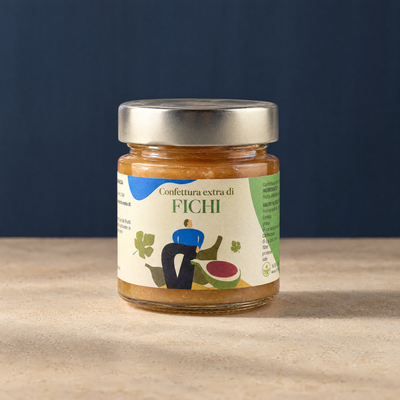
Confettura di FichiArtisanal, without preservatives.
€ 7,90
Discover →
|
Cilento, land of olive oil
Cilento is one of Italy's most ancient olive-growing areas: here olive trees have accompanied the life of the inhabitants for at least three thousand years. The landscape tells this story better than any document. The hills are shaped by terraces planted with olive groves, small plots clinging to the slopes, dry-stone walls that trace the geography of the territory and centuries-old olive trees that in many cases exceed five, six or seven hundred years of age.
It is an agriculture of toil and patience, often impossible to mechanise, that survives thanks to the attachment of farming families. It is precisely this continuity that has made it possible to preserve local varieties that have disappeared elsewhere, and that today represent a precious genetic and gastronomic heritage.
The Pisciottana: the olive tree that lives a millennium
The Pisciottana takes its name from the village of Pisciotta, on the Cilento coast, where some of the most long-lived and imposing specimens are found. It is a dual-purpose native cultivar, prized for its extreme resilience and for a delicate, elegant taste profile. Its main characteristics are:
- Resilience: a rustic and extraordinarily long-lived tree, well adapted to drought, sea wind and the poor, steep coastal soils; many trees are centuries old and continue to produce.
- Yield: generally limited and alternating production, with medium-small drupes; the oil yield is moderate, but the quality of the product repays the smaller quantity.
- Organoleptic profile: oil with a light-medium fruitiness, golden with green highlights, with measured and balanced bitterness and pungency, very harmonious on the palate.
- Tasting notes: hints of sweet almond, fresh grass, artichoke and a delicate note of ripe fruit in the finish.
Its softness makes it a versatile oil, ideal raw on fish, boiled vegetables, pulses and delicately flavoured dishes.
The Salella: the olive tree of the Vallo di Diano
The Salella is the characteristic cultivar of the Cilento inland, found above all in the Vallo di Diano, where the more continental climate and temperature swings give oils with a bolder character than those of the coast. Its main characteristics are:
- Resilience: a robust and adaptable variety, which tolerates inland hill climates and light frosts well, with good resistance to the main threats to the olive tree.
- Yield: more regular and generous production, with medium-sized drupes and a satisfying oil yield, appreciated by producers for its consistency.
- Organoleptic profile: oil with a medium-intense fruitiness, vivid green, with more marked and persistent bitterness and pungency, a sign of a good polyphenol content.
- Tasting notes: hints of freshly cut grass, tomato leaf, almond and artichoke, with a lively, slightly pungent finish.
More structured, the Salella is at its best on pulse soups, meats, bruschetta, grilled vegetables and the flavourful dishes of the Cilento tradition.
How Cilento oils are produced
Quality is born in the olive grove but is decided in the hours following the harvest. The most careful producers in Cilento follow a few fundamental good practices:
- Harvesting at the right moment: often slightly ahead of ripening (veraison), to obtain oils richer in aromas and polyphenols.
- Respectful harvesting: by hand or with mechanical aids, preventing the olives from falling and being damaged on the ground.
- Rapid milling: crushing within a few hours of harvest, to limit unwanted oxidation and fermentation.
- Cold extraction: processing at controlled temperature, which preserves aromas, antioxidant substances and the integrity of the product.
- Correct storage: storage in steel containers protected from light, air and heat until bottling.
How to recognise a quality extra virgin olive oil from Cilento
Even without being an expert taster, there are a few elements that help you choose a good extra virgin olive oil from Cilento well:
- The cultivar on the label: the indication of Pisciottana, Salella or a blend of the local cultivars is a sign of transparency and of a bond with the territory.
- The vintage: extra virgin olive oil is at its best in the first 12-18 months; always look for the most recent production year.
- Bitterness and pungency: these are not defects but indicators of freshness and polyphenols; an oil that is completely flat and sweetish is often old or oxidised.
- Aroma: a good oil smells of grass, almond, artichoke and fruit; smells of rancidity, mould or cellar signal a poor product.
- Packaging and storage: a dark bottle or tin, an intact cap and cool, dark storage protect quality over time.
Learning to read these signals means bringing to the table an oil that truly tells the story of Cilento: an authentic product, linked to ancient cultivars and to a way of farming that has endured for millennia.