
White Cilento figs: features, season and culinary uses
Among the most beloved fruits of the Mediterranean, white Cilento figs hold a special place: small, very sweet, with straw-coloured skin that turns honey-coloured when the sun warms them. They are the symbol product of a territory where figs, olive trees and citrus have lived together for millennia, telling the story of the Mediterranean Diet in every bite.
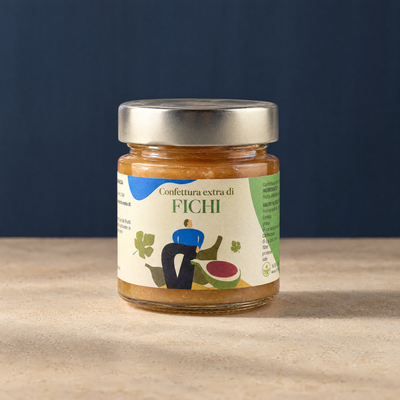
 | From our selection Fig JamHandmade, no preservatives. € 7,90 Discover → |
In this guide we tell you everything: origins, varieties, harvest season, nutritional values, culinary uses, gastronomic pairings. A mini-encyclopedia for those who want to understand why a Cilento fig is worth more than any fig.
What white Cilento figs are
White Cilento figs belong to the Dottato variety, cultivated for centuries in the hills of Cilento, Campania. The plant prefers dry, sunny soils of volcanic origin, conditions that Cilento offers in abundance thanks to its particular geography: mountains descending to the sea, Tyrrhenian breeze, favourable temperature range.
The fruit ripens between late July and September, reaching medium size (30-50 grams) and a characteristic teardrop shape. When ready, the skin is straw-yellow, the flesh is white-amber, rich in small crunchy seeds that give it a unique texture.
The two harvests: fioroni and forniti
The fig tree produces two harvests per year:
- Fioroni: harvested between June and July, the larger and sweeter fruits, perfect for fresh consumption
- Forniti: harvested between August and September, the figs proper, ideal for drying and for jam preparation
Cilento producers know this double cycle perfectly and harvest each fruit at peak ripeness, often by hand, to avoid bruising.
Nutritional values
Figs are energetic and nutritious fruits. Per 100g of fresh figs:
- Calories: about 74 kcal
- Natural sugars: 16g (fructose and glucose)
- Fibre: 3g (excellent for digestion)
- Potassium: 232 mg (fluid balance and blood pressure)
- Calcium: 35 mg
- Vitamins: A, B6, K, small amounts of C
- Antioxidants: polyphenols and flavonoids
Dried figs concentrate these values: the same 100g provide 250 kcal and more than tripled fibre (10g), which is why they are a traditional energy snack, perfect in winter and for physical activity.
Season and availability
Fresh Cilento figs are available from mid-June (fioroni) to late September (forniti). Out of season you can find:
- Dried figs: available year-round, long preservation
- Fig jams and marmalades: "extended" season through preserves
- Figs in oil or honey: traditional preparation that extends consumption
The golden rule: fresh figs don't keep. They must be consumed within 2-3 days of harvest. This is why Cilento producers have developed a true art of preservation over the years.
Traditional uses in Cilento cuisine
Desserts and breakfast
Tarts, biscuits, fig sweet bread, fig jam spread on warm country bread. The classic peasant pairing: dried figs, walnuts and honey as a winter snack.
Appetisers and boards
Fresh figs with prosciutto crudo, salted ricotta, capocollo. Fig jam on Cilento pecorino and gorgonzola. Fig carpaccio with rocket and EVO oil.
First courses
Risotto with figs and gorgonzola, pasta with walnut cream and dried figs, gnocchi with fig and onion ragout.
Mains and complete dishes
Baked duck glazed with fig jam, pork with plums and figs, roast chicken with caramelised figs.
Gastronomic pairings
Cilento figs marry with:
- Cheeses: pecorino, gorgonzola, brie, fresh goat's, salted ricotta
- Cured meats: prosciutto crudo, capocollo, soppressata, speck
- Dried fruit: walnuts, almonds, pistachios (classic Southern combination)
- Spices: cinnamon, star anise, cardamom, black pepper
- Wine: passito di Pantelleria, Marsala, aromatic white wines (Greco di Tufo)
How to recognise a quality Cilento fig
When you buy fresh Cilento figs, check:
- Appearance: uniform straw-yellow skin, no dark spots or cuts
- Consistency: yielding to touch but not mushy
- Aroma: sweet and fruity to the nose
- Weight: proportionate to size (a fig too light could be dehydrated)
For dried figs: amber colour, soft consistency (not dry/hard), no unpleasant odours, no mould at the stem.
Figs in Cilento tradition
Cilento figs have been a fundamental food in peasant nutrition for centuries: rich in sugars (immediate energy for fieldwork), easy to dry (winter preservation), versatile in cooking. In local tradition dried figs were often "stuffed" with a walnut and a candied lemon zest, then baked: this is how the spongata and other sweet preparations were born that still survive today in village festivals.
The women of Cilento were the keepers of recipes: who added a pinch of anise, who a bay leaf, who a drop of rum in fig preserves. Each family had its version, orally handed down from generation to generation.
Cilento figs in the Minnelea catalogue
We select white Cilento figs from small farms in the territory, hand-picked at the right ripeness. We transform them into artisan jams with 60% fruit, reduced sugars and slow processing in small batches. No added preservatives, transparent label, authentic flavour.
Explore our white Cilento fig jams and bring a piece of Mediterranean tradition into your pantry.
From our workshop in Cilento, Italy
Fig Jam — Great Taste 2025 winner
White figs harvested in Cilento, vacuum-cooked at 55°C. Great Taste 2025 and WineHunter Gold winner.
Discover → 7,90 €Free shipping in Europe over € 39 · 4.9★ on Google