
Homemade or artisan preserves: pros, cons and food safety
"I make them at home, they're healthier" is a phrase you often hear when talking about preserves, jams and oil-preserved vegetables. The Italian tradition of putting away summer vegetables for winter is still alive in many families and has indisputable charm. At the same time, artisan preserves from small workshops have won an important place: artisanal quality without the risks of improvised home production.
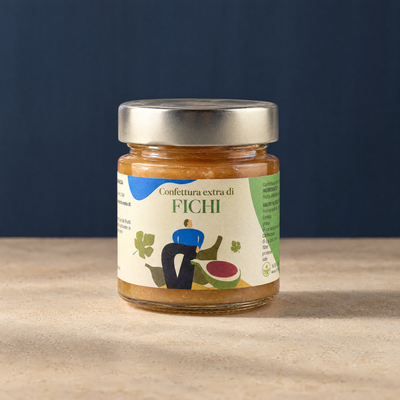
 | From our selection Fig JamHandmade, no preservatives. € 7,90 Discover → |
Which to choose? It depends on many factors. In this guide we help you understand the pros and cons of both options, with particular focus on food safety, often underestimated.
The pros of homemade preserves
Total control of ingredients
You know exactly what you put in: the fruit from your garden, the sugar you chose, the herbs you prefer. No hidden ingredients, no preservatives, no surprises.
Apparent low cost
If you have a garden or access to free fruit, homemade preserves seem to cost almost nothing. Consider however the time, the energy for cooking, the jars and the risk of waste due to processing errors.
Tradition and ritual
Emotional value cannot be measured: preparing jam with grandma or with the children is a moment of knowledge transmission worth more than the final product itself. And it's one of the pleasures of seasonality.
Customisation
You can experiment with unprecedented combinations, very particular tastes, sugar doses tailored. Recipes adapt to your palate.
The cons of homemade preserves
Botulism risk
This is the most important point. Clostridium botulinum is a bacterium that produces one of the most powerful toxins known. It develops in anaerobic environments (without oxygen) with pH above 4.6 and low salinity.
The most at-risk homemade preserves are:
- Oil-preserved vegetables (aubergines, peppers, mushrooms) if not properly acidified beforehand
- Preserves of low-acid vegetables (green beans, peas, pesto)
- Meat and fish in homemade preserves (always discouraged)
Jams and marmalades, thanks to the high sugar content and fruit acidity, are low risk. Oil-preserved vegetables are the most delicate case.
Variability of result
Without precise instruments (pH meter, Brix refractometer) it is difficult to guarantee correct preservation. One batch can come out well, another not.
Time cost
Preparing 10 jars of jam requires 3-4 hours of effective work, plus sterilisation and cleaning. If you multiply by the hourly cost of your time, the real saving is often modest.
Equipment
Stainless steel pot, new airtight jars, thermometer, pH meter, labels: the initial setup has a non-negligible cost.
The pros of quality artisan preserves
Guaranteed food safety
Artisan workshops follow HACCP (Hazard Analysis and Critical Control Points), control pH, water activity and pasteurisation temperatures. They run periodic batch analyses. Botulism risk is managed through rigorous protocols.
Constant quality
Every jar is practically identical to the previous one, in colour, consistency, taste. Artisan standardisation is the result of experience and professional instruments.
Transparent label
By law they must indicate ingredients, allergens, nutritional values, production batch, expiry date. No secrets.
Selected raw materials
The best workshops work with small local farmers, raw material at the right ripeness, native varieties hard to find elsewhere.
Time saved
The product is already ready. You can dedicate your free time to cooking, not to preparing supplies.
The cons of artisan preserves
Higher cost than supermarket
An artisan 250g jar can cost €6-10, against €2-3 for industrial. However, it reflects the real cost of slow processing, real ingredients and small quantities.
Limited availability
The batches are small, some references can run out before the next season.
Annual variability
Different fruit every year (climate, harvest) means small taste variations: for many it's an asset, for those looking for absolute standardisation it can be a limit.
What to do at home, what to leave to professionals
To make at home safely:
- Jams and marmalades: low risk if you follow the 1,000g rule (fruit + sugar) and prolonged cooking
- Jellies: also low risk
- No-added-sugar jams: only if consumed within 2-3 weeks in the fridge
To leave to artisan workshops:
- Oil-preserved vegetables (aubergines, peppers, mushrooms)
- Pesto and vegetable creams long-life
- Tomato preserves long-life (if you want to be certain of pasteurisation)
- Any preserves of meat, fish or ready meals
The basic rules for safe home preserves
If you decide to make them at home, always follow:
- New and sterilised jars at 100°C for 30 minutes
- Verified airtight sealing (lid test: it must be concave after cooling)
- Correct filling: leave 1 cm of space from the edge
- Bain-marie pasteurisation for at least 20-30 minutes after closing
- Preservation in the dark, dry and cool
- Label with date: consume within 12 months (6 months for oil-preserved)
- Visual check before consumption: discard jars with bulging lid, strange smells or moulds
The middle way: artisan at home
An interesting solution is to alternate: jams and marmalades made at home for the pleasure of the family ritual; oil-preserved, patés and complex preserves bought from trusted artisan workshops. This way you combine tradition and safety, perceived savings and guaranteed quality.
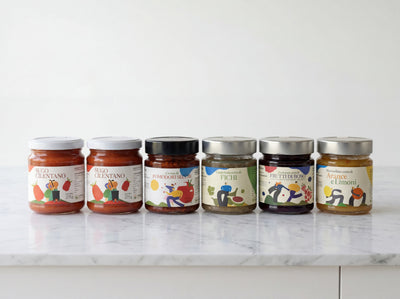
Discover our artisan Cilento preserves, prepared with local raw materials and according to HACCP protocols that guarantee maximum food safety.