
Glycaemic index of jams: what changes between artisan and industrial
The glycaemic index (GI) measures how quickly a carbohydrate-containing food raises blood sugar relative to pure glucose (GI = 100). Jams, being composed of sugars and fruit, have variable GI values depending on ingredients, processing, and pairings.
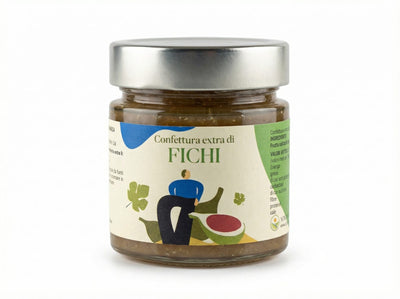
 | From our selection Fig JamHandmade, no preservatives. € 7,90 Discover → |
This article presents indicative data, selection criteria, and sensible portions. No health claims — factual nutritional information only.
What is the glycaemic index
The GI is a measure developed in the 1980s to categorise foods based on their glycaemic response. The scale is:
| GI | Category |
|---|---|
| ≤ 55 | Low |
| 56–69 | Medium |
| ≥ 70 | High |
Pure glucose = 100. For reference: white bread ~75, boiled white rice ~73, raw apple ~36, lentils ~30.
GI is not the only parameter: glycaemic load (GL) also matters, which accounts for the quantity actually consumed. A jam with a high GI but consumed in a minimal dose (10 g) has a low GL.
Indicative GI of jams (average values)
Values vary by fruit type, sugar percentage, and processing. Indicative references from nutritional literature:
| Jam type | Indicative GI |
|---|---|
| Standard industrial jam (35–45% fruit, high sugar) | 65–75 |
| Artisan extra jam (60–70% fruit, less sugar) | 55–65 |
| No-added-sugar jam (fruit + natural fructose) | 50–60 |
| "Diet" jam with stevia/erythritol | 35–45 |
| Industrial fruit mostarda | 70–80 |
Differences between artisan and industrial do exist but are moderate — not the difference between milk and sugar, but the difference between GI 70 and GI 60. Meaningful, but not dramatic.
What influences the GI of a jam
Type of sugar used
- Glucose-fructose syrup (industrial): higher GI
- Unrefined cane sugar: GI similar to white sucrose (~65)
- Pure fructose: low GI (~20) but with potentially different metabolic effects
- Erythritol, stevia: GI ~0
Fruit percentage
More fruit = more soluble fibre = slower absorption = lower GI. A jam at 70% fruit has more fibre than one at 35%.
Fruit type
- Low GI: raspberries, strawberries, blueberries, cherries (GI 25–40 fresh)
- Medium GI: peaches, apricots, apples, pears (GI 40–50)
- Higher GI: grapes, ripe figs, bananas (GI 60–70)
The original fruit "contributes" part of its GI to the finished jam, even though processing modifies the values.
Pectin and fibre content
Natural pectin slows absorption. An artisan jam rich in natural lemon pectin has a lower GI than an industrial one using pectin added solely for gelling.
How to pair jam to lower glycaemic load
The GI of a single food matters less than the overall meal. Strategy:
- Wholegrain bread instead of white bread: white bread has GI 70, wholegrain 50. Wholegrain bread + jam = medium-GI meal instead of high.
- Add fats: spread jam on bread with ricotta or almond butter. Fats slow sugar absorption.
- Add protein: jam + ricotta or Greek yoghurt lowers the glycaemic peak.
- Nuts alongside: 10 g of almonds/walnuts with bread and jam slows absorption.
Sensible portions
| Profile | Indicative daily jam portion |
|---|---|
| Healthy adult, moderate activity | 20–30 g (1–2 teaspoons) as part of a balanced breakfast |
| Person with prediabetes | 10–15 g, ideally artisan jam with more fruit, paired with fibre/protein. Consult your doctor |
| Type 2 diabetic | Depends on personalised treatment plan — consult diabetologist and dietitian. Specific "diet" jams may be appropriate |
| Child | Reduced portion (5–15 g), prefer artisan to avoid refined added sugars |
What the glycaemic index is NOT
Important to clarify:
- GI is not a measure of "healthiness": a low-GI food can still be calorie-dense (e.g. ice cream — low GI but high in fat and sugar overall)
- GI is not the only parameter: glycaemic load, total sugar quantity, meal context, and consumption frequency all matter
- GI varies by person: the same jam can produce different glycaemic responses in different individuals, based on microbiome, physical activity, and time of day
- GI of an isolated food is theoretical: in real life we eat combined foods, and combinations change the response
Frequently asked questions
Are jams suitable for diabetics?
It depends on the individual nutritional plan. There is no universal answer. Specific "diet" jams with sweeteners may be appropriate, but always after consulting a diabetologist. For non-diabetics who want to manage blood sugar, artisan jams rich in fruit and with less sugar are preferable to standard industrial ones.
Is a "no added sugar" jam truly low GI?
"No added sugar" does not mean "sugar-free". It still contains the natural sugars of the fruit (fructose, glucose). The GI may be medium-low but not zero. Check the full nutritional label.
Is fructose better than sucrose for blood sugar?
Pure fructose has a lower GI (~20 vs ~65 for sucrose) but is metabolised by the liver and in excess has different metabolic implications. It is not "better" overall, it is "different".
How much does a teaspoon (15 g) of artisan jam affect blood sugar?
A teaspoon provides ~10–12 g total carbohydrates (of which sugars ~7–10 g). The actual glycaemic impact depends on the overall meal. Generally modest when included in a balanced breakfast.
Do certified "low glycaemic index" jams exist?
Specific products with a declared GI below 55 exist, generally sweetened with erythritol, stevia, or fructose. These are niche products, often more expensive. Always check the label and certification.
Sources
CREA — Italian food composition tables
Nutritional literature via Glycemic Index Foundation (glycemicindex.com)
EU Reg. (EC) 1924/2006 on nutrition and health claims
Related articles
Jam, marmalade, compote: what's the difference?
Our artisan jams — high fruit percentage, less added sugar.