
Italian foods you don't know: biodiversity, rare products and artisanal preserves
When we talk about Italian food products, the collective imagination immediately turns to the classics: pasta, pizza, parmesan, ham. But Italy's agri-food sector is much more complex than these international ambassadors. There is a world of lesser-known products that tell the story of the biodiversity, history and gastronomic intelligence of a country that has been able to transform every natural environment into a cuisine.
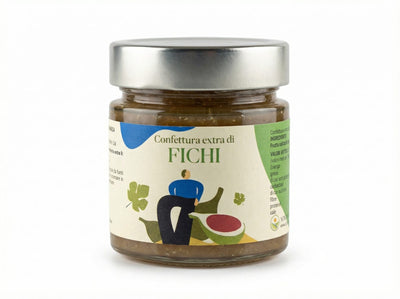
 | From our selection Fig JamHandmade, no preservatives. € 7,90 Discover → |
Ancient cereals
Senatore Cappelli wheat, spelt from Monteleone di Spoleto, Ottofile corn from Val Camonica: ancient cereals that have survived decades of industrial agriculture which produce flours with irreproducible organoleptic characteristics. They make bread, pasta, polenta with flavors that industrial flour cannot even come close to.
The forgotten legumes
The grass pea from Serra de' Conti (Marche), the bean from Lamon (Veneto), the lentil from Ustica (Sicily), the Ricciolino pea from Teano (Campania): native legumes at risk of extinction which in the hands of aware producers are resurrecting. They have intense flavours, particular textures, nutritional values superior to commercial varieties.
The rare fruits of the South
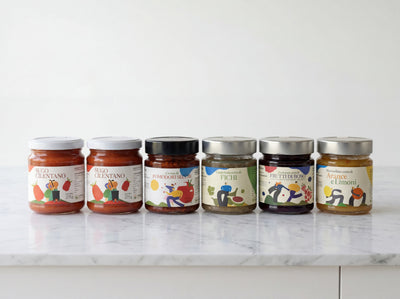
The path of biodiversity is even richer in Southern Italy. Apricots from Vesuvius, Spadona pears from Cilento, white figs from the Cilento hills, snuffbox peaches from Leonforte (Sicily), late mandarins from Ciaculli (Palermo): fruits that cannot be found in the supermarket because their production is too limited, their season is too short, their transportation is too delicate. They are instead found in artisanal preserves, which fix the season of these extraordinary fruits in a jar.
The value of preserves for biodiversity
In this context, artisanal preserves play an essential role that goes beyond simple food consumption. A producer who makes Pellecchiella apricot jam has an economic incentive to keep those varieties alive. A processor who processes white figs from Cilento contributes to the survival of an agricultural ecosystem. Preserve thus becomes an act of preserving biodiversity, as well as a gastronomic product.
How to choose authentic products
Orienting yourself in this panorama requires attention. The labels that are worth bearing precise indications: variety of fruit, production area, percentage of fruit, absence of artificial additives. Artisanal producers who respect the raw material are not afraid to be precise and transparent about what they sell.