
Sugar-free jam: what it really means and how to choose it
In recent years attention to added sugars in food has grown enormously, driven by WHO recommendations indicating not to exceed 10% (and ideally 5%) of daily calories from free sugars. For those who want to reduce sugar, sugar-free jams have become an increasingly requested choice. But what does "sugar-free" really mean? And how do you distinguish a genuinely light product from one that plays with words?
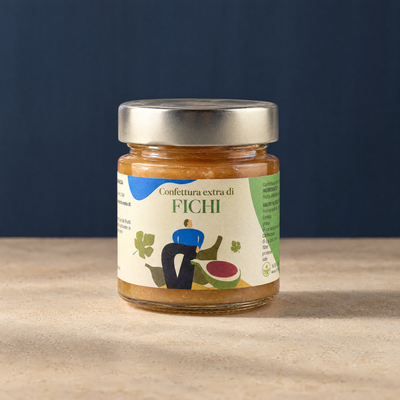
 | From our selection Fig JamHandmade, no preservatives. € 7,90 Discover → |
In this guide we help you understand the label, recognise the different types of jams with low or no added sugars and choose the most suitable for your needs.
The three categories of jams by sugar content
By European law (EU Regulation 1924/2006 on nutritional claims), different wordings can be used:
1. Classic jam
Generally contains 50-65% added sugars, typically sucrose. European regulations require for the term "jam" a minimum of 35% fruit. Quality artisan ones reach 50-70% fruit, but sugar remains present.
2. "No added sugars" jam
The wording can be used when no sucrose, glucose, fructose or other sweeteners are added. Sweetness comes exclusively from sugars naturally present in fruit (fructose) and sometimes from concentrated fruit juices (apple, grape).
Caution: no added sugars does not mean "sugar-free". Fruit contains natural fructose, and a jam prepared only with fruit can have 30-40g of total sugars per 100g.
3. "Reduced sugar content" jam
Wording allowed when the product has at least 30% less sugar compared to a reference product. Often obtained by replacing part of the sugar with sweeteners such as stevia, erythritol, maltitol.
How to read a jam label
On the label look for this information:
- Ingredient list: in decreasing order of weight. If "sugar" or "glucose syrup" is the first ingredient, it contains more sugar than fruit.
- Fruit percentage: indicated on the label. Above 60% is quality artisan.
- Nutritional table: the "of which sugars" row under carbohydrates indicates total sugars (added + natural).
- Health claims: only those provided by regulation have real value.
Sugar-free jams for those who need them
Diabetes and hyperglycaemia
People with diabetes must also monitor natural fruit sugars. A jam without added sugars remains rich in fructose: it should be consumed in moderation (15-20g at breakfast) and within a complete meal that reduces its glycaemic impact. Always recommended is the opinion of your diabetologist or nutritionist.
Low-calorie diets
A jam without added sugars has about 130-180 kcal/100g, against the 240-280 of a classic. A typical portion (15-20g) provides 20-35 kcal: a small daily saving that, added up, makes a difference.
Children
WHO recommends limiting added sugars in children's diets. Jams without added sugars are a more conscious choice for children's snacks, but should still be dosed (one teaspoon, not a whole layer).
Natural alternatives to sugar in jams
- Apple concentrate: natural sweetness, delicate taste, low impact on the flavour of the main fruit
- Concentrated grape juice: sweet and aromatic, typical of central European jams
- Apple pectin: natural thickener that allows sugar reduction (necessary for gelation in classic recipes)
- Stevia: natural plant-based sweetener, zero calories, but with a particular aftertaste
- Erythritol: sugar alcohol, zero calories, zero glycaemic impact
What to avoid in "light jams"
Beware of products that declare "no sugar" but contain:
- High fructose corn syrup: cheap sweetener but metabolically no different from sugar
- Maltodextrins: high glycaemic index, used as thickeners
- Aspartame and other artificial sweeteners: subject of debate on their long-term safety
- Chemical preservatives: in quality artisan jams they are superfluous if processing is correct
Our philosophy: whole-fruit artisan jams
In the Minnelea catalogue you find two families of jams:
- Traditional jams: with sugar but with fruit percentage above 60%, slow processing, zero preservatives
- No-added-sugar jams: sweetened only with natural fruit concentrates, authentic taste, suitable for those looking for a lighter alternative
All are prepared with hand-picked Cilento fruit, in small batches, with transparent labelling on ingredients and fruit percentage.
In summary: how to choose the right jam
- Always read the label: ingredients and nutritional table.
- Privilege high fruit percentage (above 60%).
- Beware of shortcuts: "no added sugars" doesn't mean "zero sugars".
- Moderate the portion anyway: even lighter jams should be dosed.
- Choose artisan: clean ingredients, slow processing, authentic flavour.
Explore our selection of artisan Cilento jams, with and without added sugars, to find the most suitable for your dietary style.