
The tradition of preserves in Italy: history, technique and ancient knowledge
Preserving to survive, then for pleasure
Before supermarkets, before refrigerators, before modern distribution, Italian families relied on preserves to feed themselves through the winter months. Every summer and autumn was a race against time: ripe fruit had to be harvested, prepared and stored before it spoiled. Out of this necessity grew one of Europe’s richest and most nuanced culinary traditions.
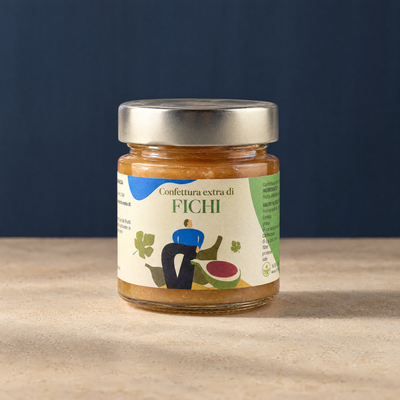
 | From our selection Fig JamHandmade, no preservatives. € 7,90 Discover → |
Traditional preservation techniques
In pre-industrial Italy, every household mastered at least one method of preservation. The most widespread were:
- Confetture and marmellate: fruit cooked with sugar until concentrated, then sealed in sterilised jars. Heat and sugar inhibit bacteria, ensuring storage for months or even years
- Sott’olio: vegetables, mushrooms, cheeses kept submerged in extra-virgin olive oil, which acts as a protective barrier against oxidation and micro-organisms
- Sott’aceto: vegetables blanched in wine vinegar and stored in jars — the simplest, safest route to crunchy pickles
- Drying: figs, tomatoes, aromatic herbs — the oldest form of preservation, concentrating flavour while cutting weight
- Under salt: anchovies, olives, capers — salt as both preservative and flavour enhancer
Artisan confettura: simple alchemy
Confettura is perhaps the most democratic of preserves. It needs little equipment — a pot, a wooden spoon, jars — but demands great attention. The ratio of fruit to sugar, the cooking time, the temperature at jarring: every detail matters.
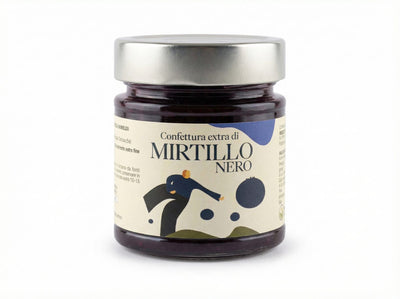
A well-made artisan confettura needs no thickeners, colourants or chemical preservatives. The fruit’s natural pectin, sugar and acidity do all the work. That is why the finest confetture list only two ingredients: fruit and sugar.
Cilento: a land of exceptional preserves
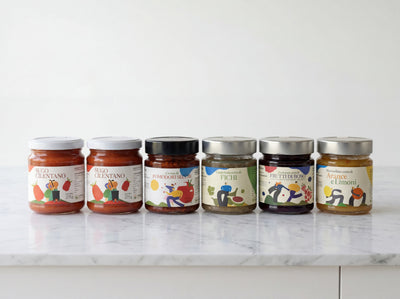
Cilento is one of the Italian regions where the tradition of preserving has survived most intact. Its mountainous, partly isolated landscape has safeguarded practices lost elsewhere. Cilentan families have continued to make confetture, sott’oli and every kind of preserve, passing down recipes that reach back generations.
Cilento figs — white and black varieties grown on sun-drenched clay soils — form the base of some of the region’s most sought-after confetture. Picked at peak ripeness and processed within hours, they yield dense, naturally sweet preserves that need little added sugar.
Why artisanal preserves are worth choosing today
In a market flooded with industrial products, an artisan preserve speaks a different language. It says that someone took the time to select the fruit, cook it slowly, fill each jar by hand. It carries a story, a territory and a know-how that cannot be improvised.
This is not mere romanticism: it is tangible quality. More fruit, fewer additives, truer flavour. In this case, tradition is also the smartest choice.