
Unrefined cane sugar vs refined: what really changes
At the supermarket, the sugar shelf looks like a little jungle: white, cane, raw, unrefined, mascobado, panela. The implicit message is that the darker the colour, the "healthier" the product supposedly is. The reality is more nuanced. Sugar remains sugar, and the differences between one type and another are mainly about appearance, flavour and behaviour in the kitchen, while on the nutritional side they matter far less than marketing would have you believe.
In this article we honestly compare unrefined, raw and refined white cane sugar: what really sets them apart, which values change per 100 grams and why the glycemic index is not the winning argument it is often made out to be. The goal is to help you choose based on what you actually need, without illusions.
 |
From our selection
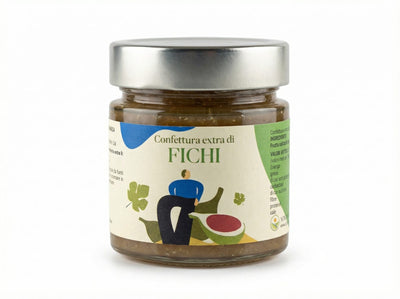
Confettura di FichiHandcrafted, no preservatives.
€ 7,90
Discover →
|
The three types of cane sugar
Behind the label "cane sugar" hide products that are very different from one another. There is only one key difference: how much molasses has been left in the final product. Molasses is the dark syrup that separates during the processing of cane juice; it is what gives colour, aroma and the few minerals present. The more molasses remains, the darker, moister and more aromatic the sugar.
Unrefined cane sugar (mascobado, panela, sucanat)
It is the sugar obtained from concentrated sugar cane juice, without any refining: the juice is simply cooked and dried. It retains all the original molasses, so it appears dark, moist, with an irregular grain and an intense aroma reminiscent of liquorice or caramel. It is the only one that truly deserves the adjective "unrefined". Depending on the country of origin it goes by different names: mascobado in the Philippines, panela in Latin America, sucanat as a commercial name. In the kitchen it tends to clump together and has a bold flavour that comes through, which is why it is not suited to every preparation.
Raw cane sugar (demerara, turbinado)
It is a partially refined sugar: the molasses is only partly removed, leaving fairly large amber crystals, dry and crunchy. It is by far the most common at the supermarket under the simple label "cane sugar". Demerara and turbinado are the best-known versions. The flavour is more delicate than the unrefined type and the large crystals make it pleasant used raw, sprinkled over biscuits and crumbles or to sweeten coffee. Nutritionally it is much closer to white sugar than to the unrefined type, precisely because most of the molasses has been removed.
Refined white cane sugar
There is also fully refined cane sugar, but it is usually not labelled as "cane" once it is white: the molasses has been completely removed and only pure sucrose remains. At this point it is chemically identical to the common European white sugar made from beet. In other words, between a refined "cane" sucrose and a "beet" one there is no practical difference: they are the same molecule.
Nutrition facts compared
Here the myth falls apart. Per 100 grams, all sugars provide roughly the same calories (about 380-400 kcal) and are almost entirely sucrose. The differences concern the micronutrients linked to molasses, and they are real but numerically small:
- Refined white sugar: practically 100% sucrose, negligible traces of minerals.
- Raw cane sugar (demerara/turbinado): about 96-98% sucrose, minimal amounts of potassium, calcium and magnesium.
- Unrefined cane sugar (mascobado/panela): the richest of the category, with appreciable amounts of potassium and small doses of calcium, magnesium and iron thanks to the molasses.
The honest point is proportion: to take in a significant amount of these minerals you would have to eat enormous quantities of sugar, well beyond any reasonable consumption. As a source of minerals, a teaspoon of unrefined sugar is irrelevant; fruit, vegetables, legumes and nuts provide incomparably more. So yes, unrefined sugar contains a little more than white sugar, but that is not what makes it a "healthy" choice: it remains a sugar, to be used in moderation.
Glycemic index: the myth to debunk
The most used argument to sell cane sugar is the glycemic index (GI), that is the speed with which a food raises blood sugar. The widespread idea is that dark sugar "raises blood sugar less". The data do not confirm it.
White sugar has a GI of around 60-65. Cane sugar, raw or unrefined, has a practically comparable glycemic index: molasses adds traces of minerals, not fibre in amounts able to slow absorption. Sucrose is sucrose, and once digested it behaves the same way regardless of the colour of the crystal. Those who need to keep blood sugar under control gain no real advantage by switching from white to cane: the difference is in the order of a few points, with no practical relevance.
So what really makes the difference? Not the type of sugar, but the total amount you consume and the context of the meal (the presence of fibre, fats and proteins slows absorption more than any choice between white and cane).
What really changes in the kitchen
If the nutritional side is not the decisive argument, in the kitchen the differences matter a great deal. This is where choosing makes sense:
- For neutral sweetness and light batters (meringues, creams, delicate desserts): better white or raw sugar, which do not alter colour and aroma.
- For aroma and character (spiced biscuits, chocolate desserts, marinades, rustic baked goods): unrefined sugar gives caramel and liquorice notes that enhance the recipe.
- For crunchy raw finishes (crumbles, sprinkled over cakes, the edge of biscuits): raw demerara with its large crystals is unbeatable.
- In jams and preserves: the type of sugar affects the final colour and taste; a touch of unrefined sugar adds depth, white sugar lets the fruit speak for itself.
In short: choose sugar based on the result you want on the table, not on health promises. Unrefined, raw and refined tell different stories in the kitchen, but they all remain sugars: the real difference is made by the light hand with which you use them.