
Women of Cilento and traditional cooking: guardians of a knowledge that endures
A cuisine shaped by hands and memory
If we had to name the keepers of Cilento’s traditional cuisine, the answer would almost always be the same: the women. Not because of fixed roles, but because of a tangible historical and cultural reality. In Cilentan households, preparing food—and above all preserving it for the winter months—has always been a female responsibility, passed from mother to daughter with a precision no cookbook could ever replicate.
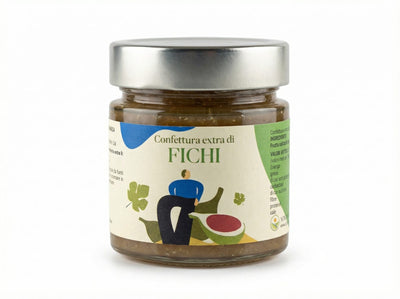
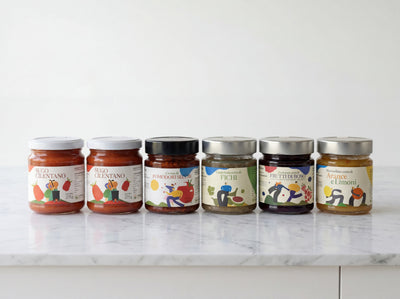
 | From our selection Fig JamHandmade, no preservatives. € 7,90 Discover → |
The annual cycle of preservation cooking
Traditional Cilentan cooking was never a collection of isolated recipes; it was a system. Every season had its tasks, its produce, its techniques. And women were the architects of this system:
- Summer: harvesting figs, tomatoes, peaches. Making confetture, tomato sauce, and vegetable preserves
- Autumn: gathering olives and the first pressing. Preparing sott’oli of mushrooms and aubergines
- Winter: working the pork, crafting salumi and fat-based preserves
- Spring: gathering the first aromatic herbs and capers, to be kept under salt
Each stage demanded specific skills, handed down by word of mouth. How to know when a confettura is ready (the spoon test), how to sterilise jars without modern equipment, how much vinegar is needed for safe preservation—all of this lived in women’s memories.
Recipes that were never written down
A distinctive trait of traditional Cilentan cuisine is that recipes were not—and often still are not—written. They lived in practice, in repeated gestures, in corrections passed on by voice: “add a touch more sugar if the figs are tart this year” or “cook until it pulls away from the spoon.” This oral transmission is at once fragility and richness: every recipe carries nuances a text could never fully capture.
Continuity and change
Today many of these traditions survive, but inevitably transformed. Some women have chosen to translate the knowledge of mothers and grandmothers into small artisanal productions, moving from the home kitchen to the workshop without losing the essence of the method. It is a delicate passage: maintaining artisanal quality—hand-selecting fruit, slow cooking, meticulous attention—on a slightly larger scale.
What remains unchanged is the founding principle: the product is only as good as the raw ingredients. Figs picked perfectly ripe, oil from healthy olives, local fruit grown with care. The skill lies in exalting what nature offers, not in masking the flaws of poor produce.
A heritage not to be lost
Cilentan preserving cuisine is now recognised as part of the intangible cultural heritage of Cilento. Not out of sentimentality, but because it represents a way of relating to the land, to seasonality, and to food that has proven—through centuries of practice—to work. The women who have safeguarded this knowledge have done something extraordinary: resisted homogenisation, championed the local, and passed on quality.