
Buying Authentic Italian Antipasti: Your Practical Guide
Anyone in Germany looking to buy authentic, jar-preserved Italian antipasti will find a direct path at Minnelea: artisan-made glass preserves from Cilento, Southern Italy, with transparent labelling and HACCP-compliant production. Private customers order conveniently through the Minnelea online shop; trade customers can request samples before placing a bulk order. Two trust signals you should check immediately:
- Transparent labelling: Every product page must display product name, ingredient list including allergens, nutritional values, net content and unit price, as the German Consumer Advice Centre bindingly requires.
- HACCP/IFS certification: Reputable suppliers document their food safety processes in writing and make these available upon request.
Key Takeaways
Anyone buying authentic Italian antipasti in Germany needs three things: complete mandatory information on the product page, verifiable food safety from the supplier, and the opportunity to sample before placing a bulk order.
| Topic | Details |
|---|---|
| Check mandatory information | Product name, ingredients, allergens, nutritional values, unit price must be visible before purchase. |
| Read origin seals | DOP/g.U. protects against false origin claims; "Italian-style" is not proof of origin. |
| Shelf life and storage | Long shelf life unopened with proper pasteurisation; refrigerate after opening and keep covered in oil. |
| B2B procurement | Request HACCP documentation, IFS/BRC certificate and sample policy in writing. |
| Minnelea as supplier | Cilento antipasti in EVOO, small batches, transparent labelling, samples available upon request. |
Table of Contents
- What must you check on the product page before buying?
- How do delicatessens and restaurateurs choose the right supplier?
- How does Minnelea produce its antipasti?
- What should you know about ordering, delivery and returns?
- How do you recognise the quality of olive oil in glass preserves?
- How do you store antipasti correctly, and how long do they keep?
- What pack sizes and prices are usual?
- What the market often overlooks: A look behind the labels
- Minnelea: Direct from Cilento to your shop or table
- Sources
What must you check on the product page before buying?
Every product page of a German online supplier must provide the same mandatory information before purchase as the physical packaging. This is not discretionary, but a legal obligation under the EU Food Information Regulation (FIR).
Specifically, this means for you:
- Exact product name: "Aubergines in extra virgin olive oil" is correct; "Antipasti Mix" alone is insufficient.
- Ingredient list incl. allergens: All 14 mandatory allergens must be highlighted, e.g. celery or mustard.
- Nutritional information: Energy, fat, saturated fats, carbohydrates, sugars, protein, salt per 100 g.
- Net content and drained weight: Particularly relevant when comparing prices of glass preserves.
- Unit price: Mandatory in German online retail, e.g. "€18.90/kg".
Read origin seals carefully: DOP/g.U. seals (Denominazione di Origine Protetta) reliably protect against false origin claims. Phrases like "Italian-style" are, however, not legally proof of origin and guarantee no actual origin from Italy, as a look at origin fraud cases shows.
Pro tip: Take a screenshot of the complete product page before purchase. Missing mandatory information is a clear warning signal. Ask the supplier in writing for the current safety data sheet or certificate if you are buying commercially. Our checklist for authentic Italian delicacies will help you.
How do delicatessens and restaurateurs choose the right supplier?
For buyers in specialist retail, concept stores and hospitality, delivery reliability, batch consistency and cost transparency count for more than the list price alone. Hospitality buyers prioritise authenticity and dependability significantly above the cheapest purchase price, as industry overviews for antipasti suppliers show.
| Criterion | Questions for the supplier |
|---|---|
| Pack sizes | Which jar sizes and trade packs are available (e.g. 180 g, 314 g, 1,700 g)? |
| Minimum order quantity (MOQ) | From what quantity do trade terms apply? |
| Sample policy | Are trial deliveries possible before the first order? |
| Storage conditions | Dry shelf or chilled? What temperature range is permissible? |
| Certificates | Is HACCP documentation, IFS or BRC certificate available? |
| Traceability | Is a batch number indicated on every jar? |
| Delivery times | What lead times apply for repeat orders? |
Why IFS and BRC are crucial: IFS Food and BRC Global Standard are internationally recognised food safety standards that go beyond HACCP and require systematic quality management systems. For retailers listing private labels or trade goods, these certificates are often a prerequisite for listing.
Anyone sourcing Southern Italian products online as a retailer should also request written batch delivery agreements and FIFO arrangements (First In, First Out) to ensure sensory consistency on the shelf.
How does Minnelea produce its antipasti?
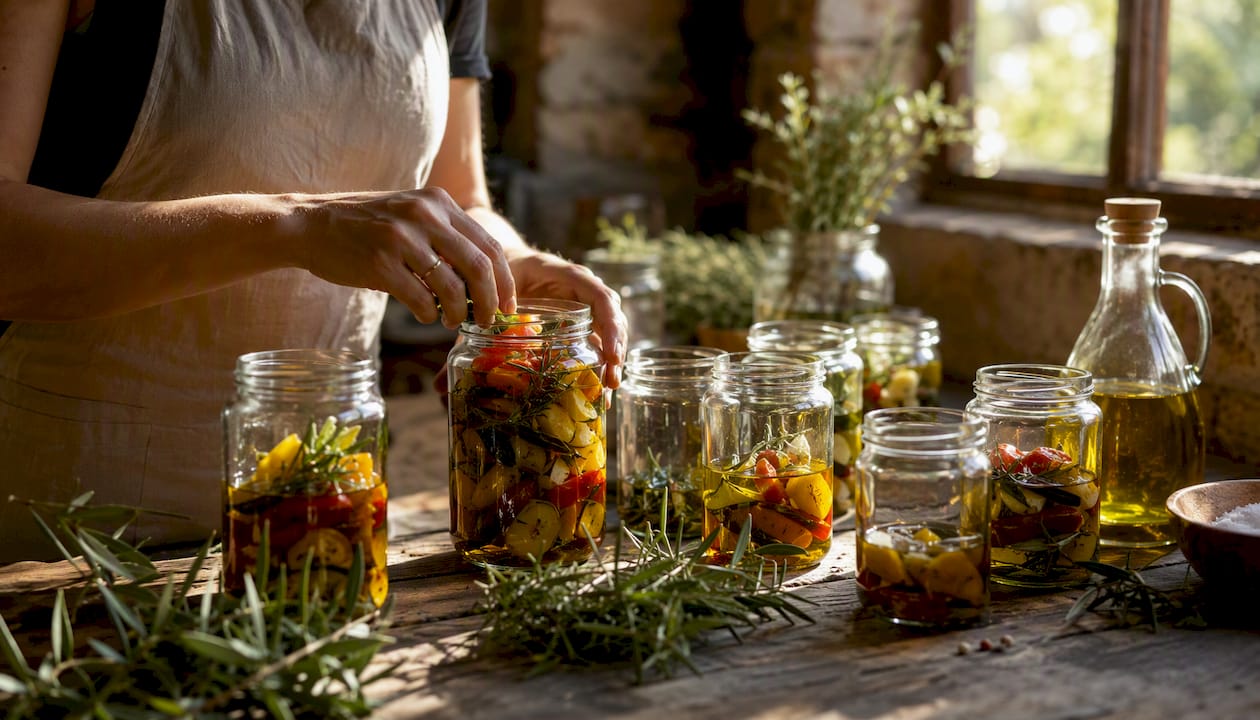
Minnelea produces in small batches in Cilento, one of the most aromatic agricultural regions of Southern Italy. The principle: selected ingredients from the region, extra virgin olive oil (EVOO) as the preserving medium, gentle heat treatment and complete batch labelling.
The process in brief:
- Harvest and raw materials: Aubergines and peppers from Cilento, harvested at optimal ripeness.
- Pre-treatment: Salting and/or pickling in wine vinegar removes water and stabilises texture and flavour.
- Preserving in EVOO: The oil seals the vegetables, excludes oxygen and carries the flavour of the region.
- Gentle pasteurisation: Controlled core temperatures around 85°C ensure shelf life without flavour loss.
- Batch labelling: Every jar carries a batch number for complete traceability.
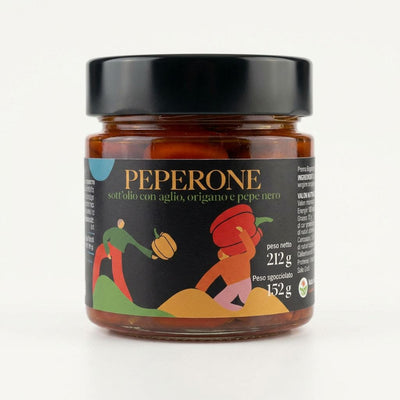
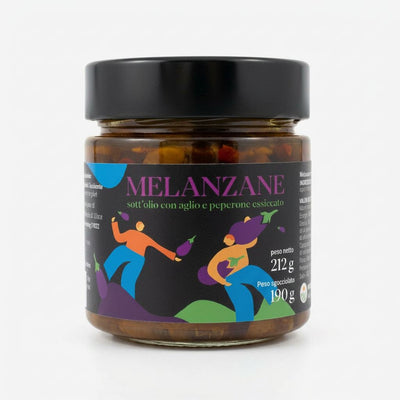
Two products exemplify this approach: The Cilento Aubergines in EVOO show how the smoky, tender flesh of the melanzane blossoms in oil. The Cilento Peppers in EVOO bring the lively, mildly sweet heat of Southern Italian peppers directly into the jar.
Craft over industry: Small batches mean that every production is individually checked. This is the difference between a jar that tastes of Cilento and one that tastes of preserve.
Pro tip: B2B buyers can request samples from Minnelea before their first order. Write directly via the retailer guide for delicatessens or use the contact form in the shop.
What should you know about ordering, delivery and returns?
The typical ordering process for German buyers follows a clear sequence: check product page, request samples if needed, place order, receive delivery. Realistic delivery times within Germany are a few working days for standard orders.
What you should look for in the terms of purchase:
- Payment methods: Reputable online shops offer credit card, PayPal and invoice (for B2B).
- Total price: The displayed price must include VAT; shipping costs must be clearly stated before checkout.
- B2B terms: Many suppliers require proof of trade for trade prices and bulk packs, as B2B hospitality suppliers standardly handle.
- Invoicing: For commercial buyers, a proper invoice with VAT breakdown must be issued.
In case of transport damage: Photograph damaged jars immediately upon unpacking, before touching the contents. Report the damage in writing to the supplier within 24 hours. Opened jars generally cannot be returned for hygiene reasons, unless there is a product defect.
Customs duties do not apply for goods from EU member states such as Italy. This would be different for imports from third countries, but Minnelea delivers from within the EU internal market.
How do you recognise the quality of olive oil in glass preserves?
The preserving oil is not an afterthought. It is the carrier medium for flavour, texture and shelf life. Practical quality characteristics for extra virgin olive oil in antipasti can be checked even without blind tasting.
On the product page, look for:
- Declaration "extra virgin olive oil": Only this category guarantees cold pressing and maximum polyphenol content.
- Origin indication: "From Italy" is better than no indication; a region (e.g. Cilento, Apulia) is even more meaningful.
- Harvest year or batch number: An indication of freshness and traceability.
With the sample itself:
- Colour: Golden yellow to greenish, depending on variety and harvest time.
- Aroma: Fruity, slightly grassy, no rancid or musty notes.
- Taste: Slight bitterness and pungency in the finish are signs of high polyphenol quality.
- Cold cloudiness: Oil that becomes cloudy below 10°C shows natural wax content. This is a quality characteristic, not a defect, as BioHandel expressly confirms.
Pro tip: For a small tasting: bring oil to room temperature (approx. 18–20°C), assess in a white dish and compare with a known reference oil. Deviations will be immediately apparent.
How do you store antipasti correctly, and how long do they keep?
Correctly pasteurised, oil-preserved antipasti can achieve long shelf life at room temperature as long as the jar remains unopened. The oil acts as a natural oxygen barrier. After opening: keep vegetables completely covered in oil, store jar in the refrigerator and consume within a few days.
For trade:
- FIFO principle: Always sell older batches first; use batch numbers for this.
- Dry shelf vs. chilled display: The majority of antipasti sales in specialist retail is dry goods (jar/tin), while a smaller proportion is chilled products.
- Oil level in jar: If the oil level falls below the vegetables, spoilage risk increases. Advise customers accordingly.
- Warning signs: Cloudy liquid with foam, unpleasant smell upon opening or bulging lid are clear exclusion criteria.
Pro tip: Place antipasti jars visibly on the shelf next to pesto and olive oil. Thematic bundling increases basket size. Portion samples at the counter are, according to BioHandel analysis, one of the most effective sales drivers in the delicatessen trade.
What pack sizes and prices are usual?
Consumer jars typically range between 180 g and 314 g net content. Hospitality and trade packs start from 314 g and go up to 1,700 g or more for large-scale catering. Tiered prices for retailers usually apply from a defined minimum order quantity.
On unit price: In German online retail, the indication of unit price (e.g. per kg) is legally required. If it is missing, this is a legal violation and a warning signal.
| Format | Typical net content | Main channel |
|---|---|---|
| Consumer jar | 180–314 g | B2C, gift boxes |
| Trade jar | 314 g | Delicatessen, concept store |
| Hospitality pack | 314–1,700 g | Hospitality, catering |
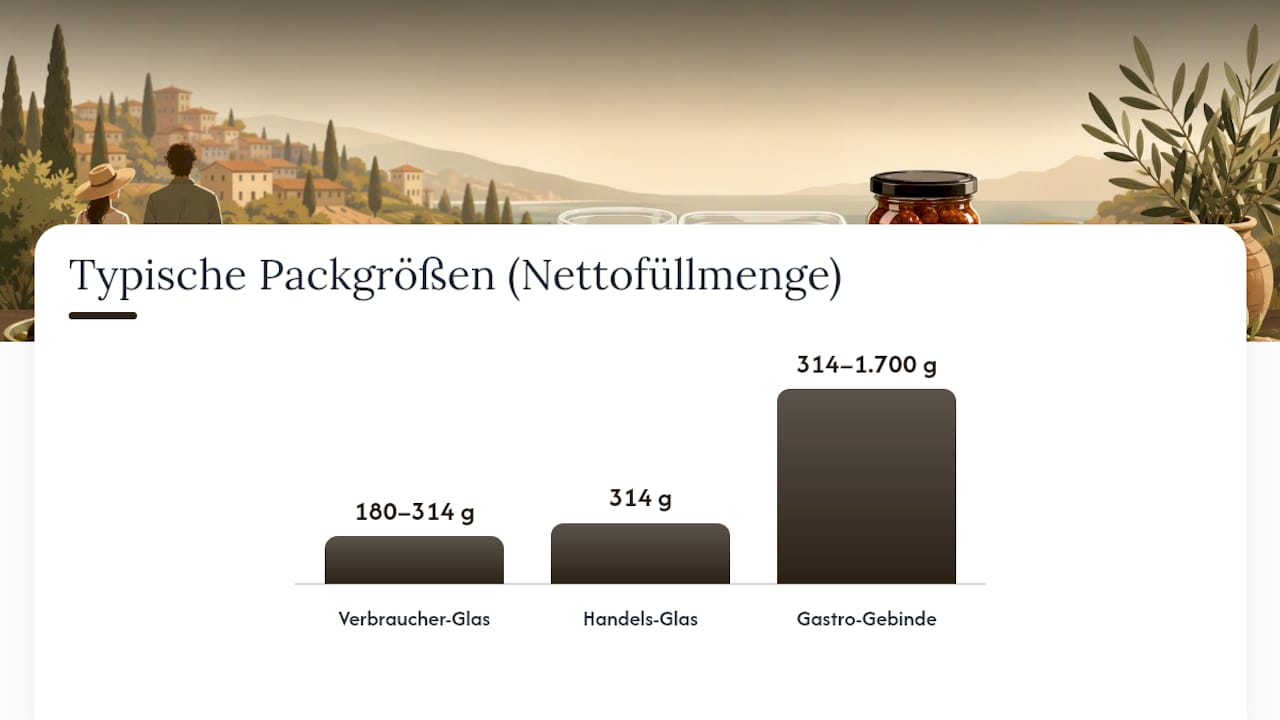
For retailers, it is worth looking at range ideas and presentation examples to align pack sizes specifically with your own customer profile.
What the market often overlooks: A look behind the labels
Anyone clicking through antipasti offers in German online retail quickly encounters a problem: many products look similar at first glance. Glass, oil, vegetables, an Italian-sounding name. But the differences lie in the details, and most buyers are looking in the wrong place.
The debate often revolves around price per jar. This is the wrong criterion. Decisive is the unit price per kilogram, combined with oil quality. A cheap jar with refined olive oil is no bargain. It is a different product. EVOO as a preserving medium is not decoration, but flavour carrier and preservative in one.
And then there is the question of origin. "From Italy" on the label means little when neither region nor producer is named. The DOP/g.U. seal is the only legally secured proof of origin. Everything else is marketing.
For B2B buyers: a supplier's sample policy says more about their quality assurance than any certificate. Anyone who doesn't offer samples either has no capacity or no confidence in their own goods. Both are exclusion criteria.
Minnelea: Direct from Cilento to your shop or table
Minnelea brings artisan antipasti from Cilento directly to Germany, without intermediaries and with complete labelling on every product page. For private customers who want to know what is in the jar. And for retailers who want to offer their customers something genuine.
The Cilento Aubergines in EVOO and the Cilento Peppers in EVOO exemplify what makes Minnelea: small batches, selected ingredients, extra virgin olive oil and packaging that convinces on the shelf and as a gift. B2B buyers can request samples before their first order. Write to us directly via the shop or order your first jar today.
Sources
For further checks, we recommend the following references:
- German Consumer Advice Centre
- Antipasti suppliers & manufacturers | wlw
- What matters in presentation and sale of antipasti… | BioHandel
- B2B / Hospitality - Tavaglione GmbH
Recommended
- Checklist for authentic Italian delicacies: The Guide – Azienda Agricola Minnelea
- Typical ingredients of Southern Italian cuisine: The Guide – Azienda Agricola Minnelea
- Antipasti italianos: what they are and how to serve them | Minnelea
- DOP and IGP: Examples from Southern Italy for gourmets – Azienda Agricola Minnelea