
Antipasti in Oil: Recipes, Safety & Expert Tips
Antipasti are Italian appetisers, and antipasti preserved in oil are cooked or marinated vegetables conserved in olive oil. Three classic examples almost always grace the table:
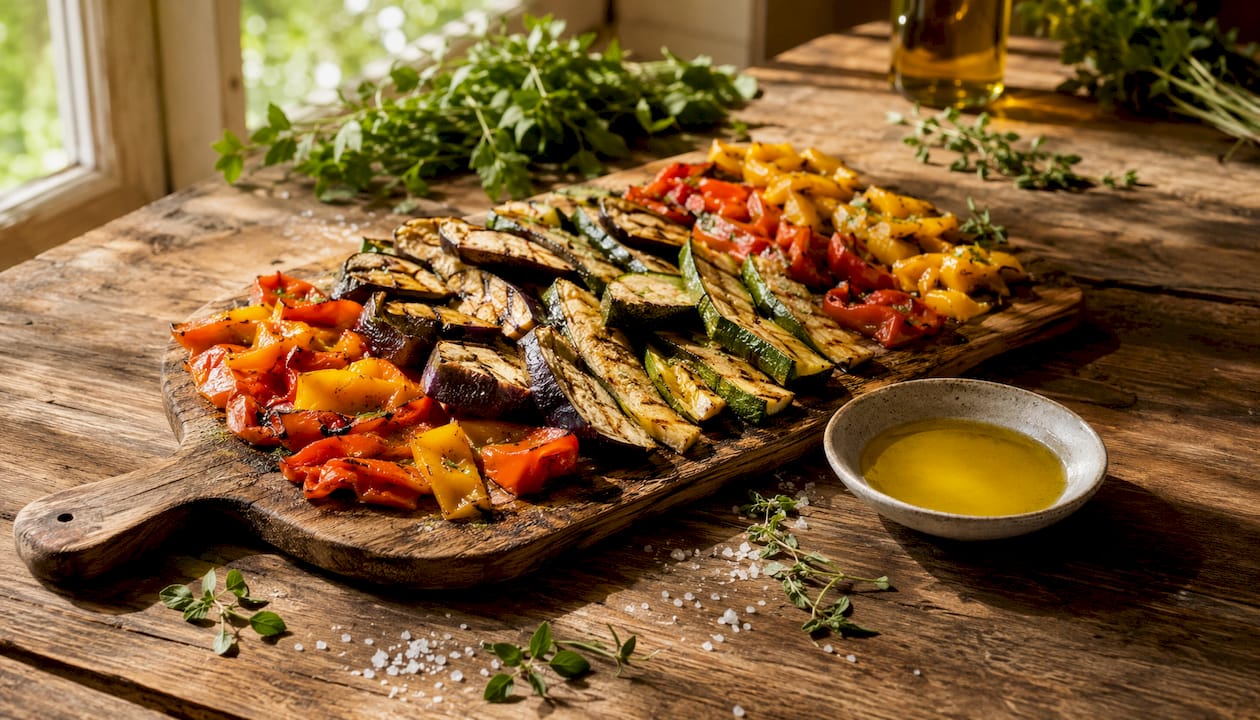
- Aubergines (grilled, cut into strips, acidulated with vinegar)
- Peppers (roasted, peeled, marinated with herbs)
- Courgettes (grilled in slices, lightly acidulated)
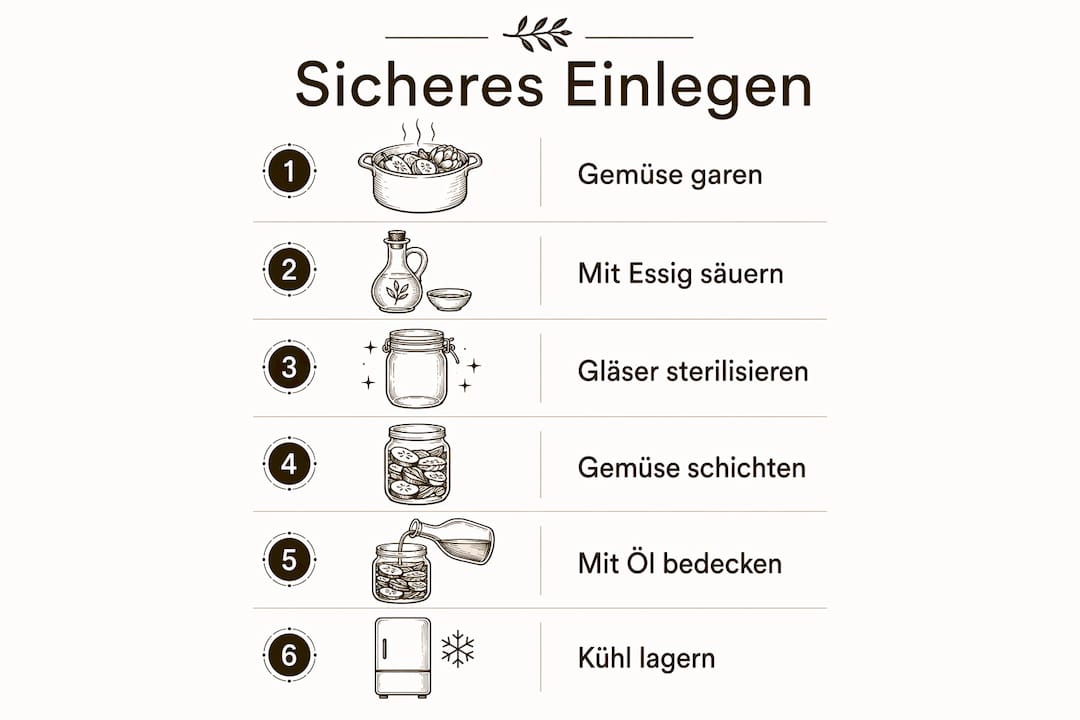
An important note from the outset: oil alone does not preserve. The vegetables must be cooked and acidulated with vinegar before being submerged in oil to ensure safety. Skipping this step risks anaerobic bacteria in the jar.
Table of Contents
- What exactly does "antipasti preserved in oil" mean?
- Which vegetables are best suited for preserving in oil?
- What you need: ingredients, oil selection, and equipment
- Step by step: a safe basic recipe for antipasti in oil
- Shelf life, storage, and food safety
- Which variations and marinades are easy to prepare?
- How can you recognise good antipasti in oil?
- Key insights
- What truly defines antipasti
- Minnelea: artisan antipasti as a ready-made alternative
- Further sources and reading recommendations
What exactly does "antipasti preserved in oil" mean?
Antipasto comes from Italian and literally means "before the meal". It refers to small dishes served as the opening of a multi-course menu. In Italian cuisine, antipasti encompass a broad spectrum: from raw vegetables with dip to cured meats and cheeses, through to the beloved preserved varieties in oil.
The oil-preserved variety, in Italian sott'olio (literally: "under oil"), is a category unto itself. Here, vegetables are first cooked, then acidulated with vinegar or lemon juice, and finally completely covered with olive oil. The oil protects against oxidation and carries flavour, but does not independently preserve against bacteria.
Raw antipasti such as pinzimonio (fresh vegetables with olive oil for dipping) or carpaccio follow an entirely different logic. So when one asks what preserved appetisers in oil are, they mean this cooked, acidulated-marinated, and oil-conserved variety that has been part of household tradition in Southern Italy for generations.
Which vegetables are best suited for preserving in oil?
Not every vegetable tolerates the oil bath equally well. Firm, aromatically intense varieties retain their texture and absorb the marinade beautifully. Watery or delicate leafy vegetables, by contrast, become mushy and lose their character.
Well-suited vegetable varieties:
- Aubergines – the classic from Southern Italy; absorb flavours like a sponge
- Peppers (red, yellow, orange) – sweetly fruity, particularly tender after roasting and peeling
- Courgettes – grilled in thin slices, with delicate bitterness and bite
- Mushrooms and porcini – earthy, meaty, wonderfully receptive to garlic and thyme
- Artichoke hearts – mildly nutty, a classic of Mediterranean antipasti ideas
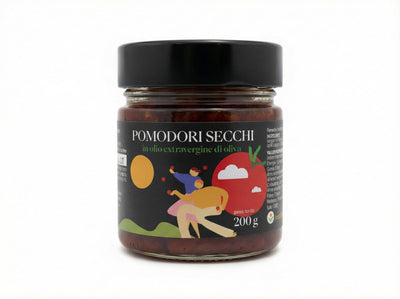
- Sundried tomatoes – intense, sweet-sour, requiring less preparation
- Carrots – blanched in slices, marinated with herbs and vinegar
Raw leafy vegetables such as spinach or rocket do not belong in oil. It disintegrates, releases water, and offers no stable texture for preservation.
Pro tip: Grilling or roasting brings out caramelised notes that the oil later absorbs and transmits. Those who only blanch their vegetables achieve a milder result. Grilled vegetables in oil taste deeper, almost caramelised. Important: allow the vegetables to cool completely before placing them in the jar. Warm vegetables create condensation, making the preserve cloudy and more susceptible to spoilage.
What you need: ingredients, oil selection, and equipment
The quality of ingredients determines both flavour and safety equally. This is where it pays not to economise.
Ingredients:
- Extra virgin olive oil (cold-pressed, preferably from a named origin region)
- White wine vinegar or apple cider vinegar with at least 5% acidity
- Sea salt
- Fresh garlic
- Herbs: thyme, rosemary, oregano, bay leaf
- Optional: chilli flakes, black pepper, lemon zest
Equipment:
- Heat-resistant jars with screw lids (sterilised)
- Pan, grill pan, or oven
- Tongs and clean ladles
- Labels with date for storage
When it comes to olive oil: extra virgin olive oil noticeably improves the aroma. Designations such as "vegetable oil" on the ingredient list speak against premium quality. DOP or IGP certifications indicate controlled origin. Those seeking good oil for antipasti will find a reliable selection at specialised delicatessen retailers, for instance in olive oil ranges with declared provenance.
The vinegar is not a flavouring agent but a safety measure. At least 5% acidity is necessary to sufficiently lower the pH of the vegetables.
Pro tip: When purchasing olive oil, pay attention to harvest or bottling dates. Fresh oil smells grassy-fruity with a slight peppery finish. Oil without a date or with a very long shelf life indication is often old and oxidised, which directly affects the taste of the antipasti.
Step by step: a safe basic recipe for antipasti in oil
The sequence is decisive: first cook, then acidulate, then layer, then cover with oil. Those who follow this order make antipasti safely at home.
Step-by-step instructions:
- Sterilise jars – pour boiling water over jars and lids, or heat in the oven at 120°C for 15 minutes. Allow to cool completely.
- Prepare vegetables – wash, trim, and cut into uniform pieces or slices.
- Cook – cook in grill pan, on the grill, or in the oven until the vegetables are soft and lightly browned. Alternatively: blanch in salted water.
- Allow to cool – let vegetables cool completely on a clean tea towel. This step is not optional.
- Acidulate/marinate – mix vegetables in a bowl with white wine vinegar (ratio: approximately 1 part vinegar to 3 parts vegetables), salt, garlic, and herbs. Allow to infuse for at least 30 minutes.
- Layer – place vegetables in layers in the sterilised jars. Drizzle a little olive oil over each layer to avoid air bubbles.
- Cover with oil – fill the jar to the brim with extra virgin olive oil. Every piece of vegetable must be completely covered.
- Seal and rest – seal the lid tightly, turn the jar upside down (vacuum test), then store in a cool, dark place. Wait at least 24 hours before first consumption, preferably 2–3 days.
| Step | Time required |
|---|---|
| Sterilise jars | 15 minutes |
| Cook vegetables (grilling) | 15 minutes |
| Allow to cool | 30 minutes |
| Acidulate/marinate | min. 30 minutes |
| Layer and fill with oil | 15 minutes |
| Resting time before consumption | min. 24 hours |
Pro tip: When layering in jars, run a clean skewer or knife along the inside of the jar after each layer to release trapped air bubbles. Air pockets are the most common cause of spoilage. The oil must truly fill every cavity.
Shelf life, storage, and food safety
Homemade antipasti in oil are not an industrial product. Their shelf life is limited, and the risk from incorrect preparation is real.
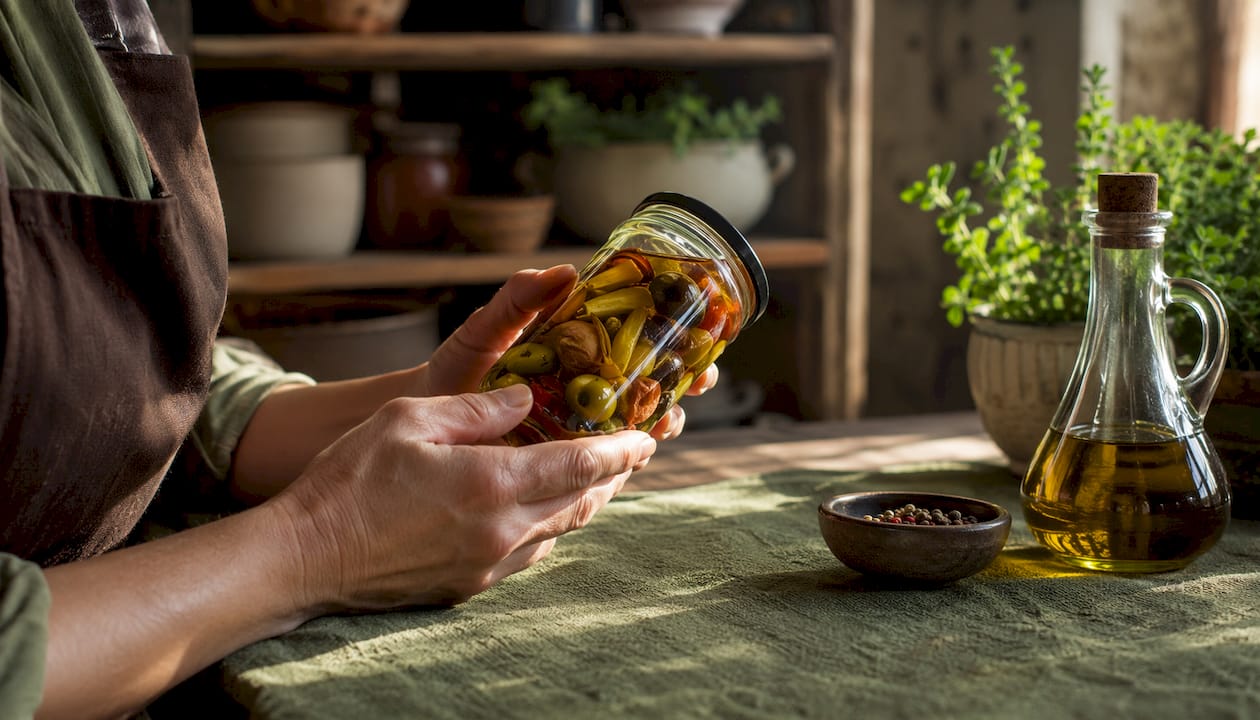
The greatest risk when preserving in oil is Clostridium botulinum. This bacterium thrives in low-oxygen, anaerobic environments – precisely where vegetables lie beneath oil. Proper acidulation and cold storage are the most important protective measures.
| Storage type | Approximate shelf life |
|---|---|
| Refrigerator, opened | 4–5 days |
| Refrigerator, sealed, acidulated with vinegar | several weeks |
| Cool and dark, olive oil, correctly acidulated | up to approx. 6 months |
| Industrially processed (vacuum, process control) | significantly longer |
Check before consumption: If the jar smells sourly pungent or unusual, if the vegetables are discoloured or the oil is cloudy-foamy, dispose of the jar. Bubbling after opening is also a warning sign.
For further information on food safety when preserving, consult the guidance from Verbraucherservice Bayern or the Bundeszentrale für Ernährung.
This article is general information, not a substitute for professional advice. In case of uncertainty regarding food safety, consult current recommendations from official authorities.
Which variations and marinades are easy to prepare?
Three basic marinades cover the greater part of the Mediterranean antipasti world. All quantities refer to approximately 500g prepared vegetables.
Garlic-herb (the classic): 3 tbsp white wine vinegar, 1 garlic clove sliced, 1 tsp oregano, 1 tsp thyme, sea salt. Robust and aromatic, suits aubergines and courgettes.
Lemon-chilli (fresh and lively): 2 tbsp white wine vinegar, zest of half an organic lemon, ½ tsp chilli flakes, fresh parsley. Bright, lively character, ideal for peppers and mushrooms.
Balsamic-sweet (for depth): 2 tbsp white wine vinegar, 1 tbsp balsamic cream, 1 tsp honey, rosemary. Sweetly complex, wonderful with grilled peppers or artichokes.
Serving suggestions:
On an antipasti platter, preserved vegetables unfold their effect best in small bowls, not directly on the board. They release oil that would soften bread and cheese. As an accompaniment to bruschetta or toasted ciabatta, they are hard to surpass. When arranging a cheese board, use preserved peppers or aubergines as a salty counterpoint to mild cheese. And with raclette, antipasti work as a spicy accompaniment that shifts the evening towards the Mediterranean.
How can you recognise good antipasti in oil?
Quality reveals itself already on the label. Those who know what to look for rarely choose poorly.
- Oil declaration: "Extra virgin olive oil" is the minimum criterion. "Vegetable oil" or "sunflower oil" as the main oil indicates mass production.
- Ingredient list: The shorter, the better. Vegetables, olive oil, vinegar, salt, herbs. Nothing more is needed.
- Origin indication: DOP or IGP certifications indicate controlled geographical origin. A practical guide to delicatessen quality helps in evaluating such indications.
- Transparency regarding production: Artisan products often name the region, harvest, or processing method.
Two products from Minnelea show what this looks like in practice:
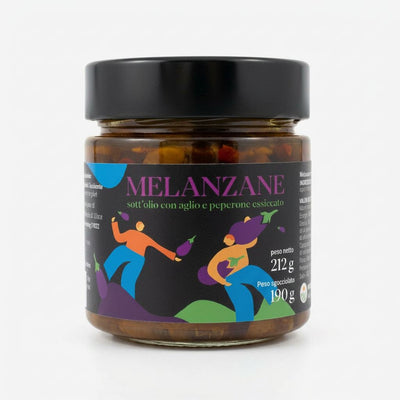
- Minnelea Cilento Aubergines in extra virgin olive oil (Melanzane sott'olio): Artisan-made in small batches from Cilento, Southern Italy. Aubergines in extra virgin olive oil, preserved according to traditional method. No vegetable oil, no additives.
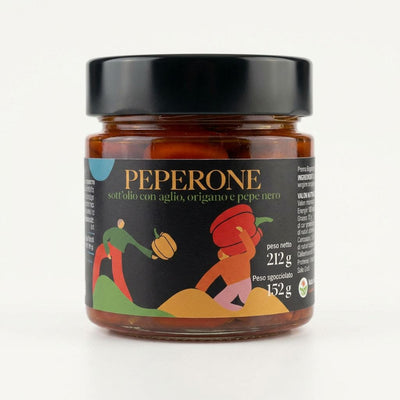
- Minnelea Cilento Peppers in extra virgin olive oil (Peperoni sott'olio): Mediterranean peppers, artisan-processed, with clear origin indication from Cilento. Ideal as a reference for how grilled vegetables in oil can taste when the raw materials and oil are right.
Ready-made products of this quality are excellent as an introduction: for tasting, as a gift, or as a benchmark for one's own preserving.
Key insights
Safe preserving in oil only succeeds with cooking and acidulating before the oil bath, for oil alone does not protect against anaerobic bacteria.
| Topic | Details |
|---|---|
| Safety when preserving | Vegetables must be cooked and acidulated with vinegar (min. 5% acidity) before the oil bath. |
| Oil selection | Extra virgin olive oil carries flavour and is the quintessential quality marker. |
| Shelf life | Homemade antipasti in olive oil keep for up to approx. 6 months when stored cool and dark. |
| Layering without air bubbles | Cover each layer individually with oil and release air bubbles with a skewer. |
| Minnelea as reference | The antipasti from Minnelea from Cilento show what artisan quality in extra virgin olive oil looks like. |
What truly defines antipasti
Those who have once preserved vegetables in oil immediately understand why this tradition does not die in Southern Italy. It is not complicated craft, but it demands respect for the sequence: first heat, then acid, then oil. Those who reverse or shorten this sequence do not get inferior antipasti, but unsafe ones.
What inspires me about Minnelea products is precisely this respect for the process. The aubergines from Cilento, preserved in extra virgin olive oil in small batches, are not mass production. They are an argument that quality begins with raw materials, not with marketing. Those who wish to preserve themselves should try these products once, not as a substitute, but as a benchmark. And those who have no time to preserve themselves have an honest alternative with Minnelea.
Minnelea: artisan antipasti as a ready-made alternative
Those who know the theory but have no time to preserve this evening get a direct, artisan answer with Minnelea. No industrial goods, no vegetable oil, no compromises on origin.

The Cilento Aubergines in extra virgin olive oil and the Cilento Peppers in extra virgin olive oil from Minnelea are created in small batches from selected ingredients of the Cilento region in Southern Italy. The oil is cold-pressed, the ingredients clearly declared, the packaging elegant enough for a gift box. Those seeking antipasti as appetiser, accompaniment, or host gift find here a product that delivers what the label promises. Visit the Minnelea shop and discover the selection directly.
Further sources and reading recommendations
Those wishing to delve deeper will find reliable resources here:
- Verbraucherservice Bayern on botulism risks when preserving: Selbsteinlegen von Gemüse in Öl — the most important source for food safety in home preserving.
- EDEKA practical guide: Antipasti selber machen — clear step-by-step instructions with shelf life indications.
- SevenCooks Magazine: Gemüse einlegen für Anfänger — practical beginner help with layering tips.
- Minnelea Blog: Arten eingelegter Gemüse als Antipasti — a comprehensive overview of various preserving methods and vegetable varieties.
- Minnelea Blog: Auberginen als Antipasti einlegen — the classic recipe with Southern Italian background.
Recommendation
- Types of preserved vegetables as antipasti: The Guide – Azienda Agricola Minnelea
- Preserved specialities in olive oil: 10 examples – Azienda Agricola Minnelea
- Aubergines as antipasti: the Southern Italian school – Azienda Agricola Minnelea
- Preserving aubergines as antipasti: the classic recipe – Azienda Agricola Minnelea