
Fig jam tart: the Sunday shortcrust with the right jam
In short: the fig tart is made with shortcrust pastry and fig jam (not fresh figs, which release too much water in the oven). For a 24 cm tin you need 350–400 g of jam. Bake at 180 °C for 30–35 minutes and cut only when cold, for a clean slice.
 | From our selection Fig JamHandmade, no preservatives. € 7,90 Discover → |
The jam tart is the Italian dessert by definition: shortcrust pastry, a layer of fruit, the lattice on top. Change the fruit and you change the character of the tart. With figs it becomes something softer and deeper — a warm, almost caramelised sweetness that strawberry or apricot don't have.
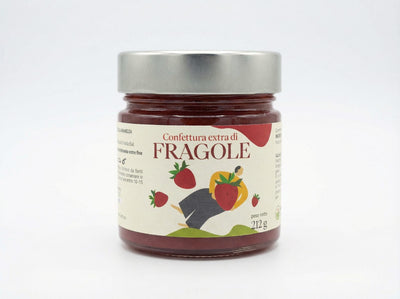
Fresh figs last just a handful of weeks a year and release too much water in the oven. For the tart, the right route is fig jam: dense, concentrated, ready to hold up to the baking without soaking the pastry. You can make it in any month. If you're after the more traditional version, here's the classic tart with strawberry jam.
Ingredients (24 cm tin)
Shortcrust pastry
- 300 g plain flour
- 150 g cold butter
- 120 g sugar
- 1 whole egg + 1 yolk
- 1 pinch of salt
- grated zest of half a lemon
Filling
- 350–400 g fig jam (about two 212 g jars)
Time: 20 minutes prep, 30 minutes rest, 35 minutes baking.

How to make the fig tart
- Pastry. Quickly work the flour with the cold cubed butter until sandy. Add sugar, salt and lemon zest, then the egg and yolk. Knead just enough to form a dough: shortcrust shouldn't be overworked or it loses its crumble.
- Wrap the dough in cling film and chill for 30 minutes.
- Roll out two thirds of the pastry to about half a centimetre and line the buttered, floured tin. Prick the base with a fork.
- Filling. Spread the fig jam over the base in an even layer, leaving a one-centimetre free border.
- With the remaining pastry, form strips and arrange them in a lattice over the filling.
- Bake in a static oven at 180 °C for 30–35 minutes, until the pastry is golden. Let it cool completely before cutting.
The detail that makes the difference
The tart is cut cold. During baking the jam melts and needs to rest to set again: if you slice it fresh from the oven, the filling runs and the slice falls apart. Wait until it's at room temperature — better still, after a few hours — and the cut will be clean.
With figs there's a second tip: the jam is very sweet, so the lemon zest in the pastry isn't optional. That thread of acidity balances all the sweetness and keeps the tart from turning cloying.
Variations and pairings
A thin layer of almond cream under the jam turns the fig tart into something close to a frangipane — a natural pairing, figs and almonds.
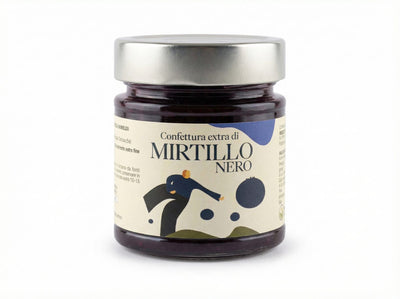
For those who love contrast, a less obvious version: figs with a grating of orange zest in the pastry, or a few walnut pieces over the filling before the lattice. If you like the idea of another dark fruit, try the tart with black blueberry jam too.
And then there's the sweet-savoury rule: a slice of fig tart next to an aged cheese, at the end of a meal, is a small joy. Fig jam is also at its best beyond dessert — here are other ways to bring it to the table. And if you want to branch out, here are 10 ideas for desserts with jam.
Why it works with fig jam
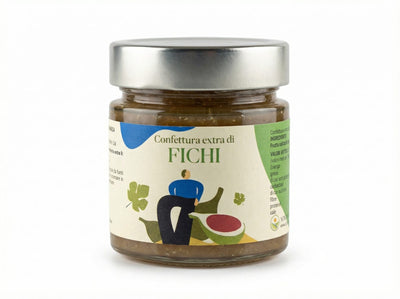
Jam-only tarts have a known weak point: too much flat sweetness. The quality of the filling matters. Our extra fig jam from white Dottato figs is made with figs of the white Dottato variety, cane sugar and lemon juice, without industrial pectins. The density that makes it perfect for a tart comes from the cooking, not from thickeners — and it's exactly this density that stops the base from getting soggy.
You'll find it with the other flavours among our jams: the same one that fills the tart is just as good on a slice of warm bread at breakfast.
FAQ
Can I use fresh figs instead of jam?
Not for this tart: fresh figs release too much water in the oven and soak the pastry. The jam, already dense and concentrated, gives a stable filling.
How much jam do I need?
For a 24 cm tin count on 350–400 g, about two 212 g jars. A generous layer is better: it dries out a little while baking.
How do I keep the pastry from getting soggy?
Prick the base well and keep the jam in an even layer. A light dusting of cornstarch on the base, before the filling, absorbs any moisture.
How long does it keep?
Three or four days at room temperature, covered. Like many jam tarts, it's often better the next day: the flavours settle and the pastry takes on flavour.