
Sun-Dried Tomato Pesto: The Base Recipe and 5 Variations
 |
From our selection
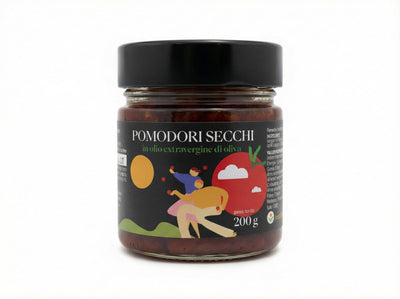
Sun-Dried Tomatoes in OilHandmade, no preservatives.
€ 7,90
Discover →
|
Sun-dried tomato pesto is the sauce that saves dinner when there's nothing left in the house but a jar and a piece of bread. It needs no cooking, comes together in five minutes with an immersion blender, and keeps in the fridge for days. The difference between a good one and a mediocre one isn't in the recipe, which is basic, but in two choices made beforehand: which tomatoes you use and how much oil you add.
The base recipe (serves 4)
Ingredients
- 150 g sun-dried tomatoes in oil, drained
- 40 g blanched almonds (or pine nuts, or walnuts)
- 30 g grated pecorino or parmesan
- 1 small garlic clove, germ removed
- 6-8 basil leaves
- 4-5 tablespoons extra virgin olive oil
- black pepper, salt only at the end
Method
- Drain the tomatoes and set them aside on a sheet of paper towel for two minutes: the preserving oil carries the flavours of the jar with it, which can sometimes mask the basil.
- Toast the almonds in a dry pan for two minutes, until fragrant. It's the step people skip most often, and the one you notice most.
- Blend the tomatoes, almonds, garlic and basil in short bursts. In bursts, not continuously: the blade heats up and the pesto turns bitter.
- Add the cheese and drizzle in the oil, a little at a time, until you reach the consistency you want.
- Taste, and only then decide whether it needs salt. Almost always it doesn't: the sun-dried tomatoes already bring plenty.
Why tomatoes in oil rather than dried ones you rehydrate
You can also make it with dry sun-dried tomatoes, but they need rehydrating: ten minutes in hot water, then squeezed well. The result is more fibrous and soaks up much more oil, because the rehydrated flesh is thirsty for fat. Tomatoes already in oil start out soft and carry good oil inside them, so the pesto turns out creamier with fewer additions.
Rule of thumb: if you use dry sun-dried tomatoes, add two extra tablespoons of oil and one tablespoon of the soaking water so the sauce doesn't dry out.
The five variations that work
1. With ricotta
One part pesto, two parts cow's milk ricotta, worked together with a fork. It turns into a spreadable cream, much less salty, that also suits people who aren't fond of concentrated tomato. It's the version for crostini at aperitivo time.
2. With arugula
A handful of arugula blended in with the rest adds a bitterness that cuts through the sweetness of the tomato. Use it raw and add it last: cooked, it loses everything and turns the sauce grey.
3. With almonds and pecorino (the Sicilian version)
This is the best-known red pesto: more almonds (70 g), pecorino instead of parmesan, no basil but a teaspoon of dried oregano. It holds up well with short pasta and ridged shapes.
4. Spicy
Half a fresh chilli blended in, or two drained chillies in oil. The heat spreads more evenly if it goes into the blender rather than being added afterwards.
5. Without cheese
Leave out the pecorino, add a tablespoon of nutritional yeast flakes and ten extra grams of almonds. The savouriness stays, so does the creaminess, and the sauce becomes suitable for anyone who doesn't eat dairy.
How to use it
On pasta. Never in a pan over heat: pesto isn't cooked. Put it in the serving bowl, loosen it with two tablespoons of pasta cooking water and toss off the heat. Suitable shapes: fusilli, casarecce, trofie — anything with a surface that holds onto sauce.
On crostini. Warm toasted bread, a thin layer of pesto, a shaving of pecorino on top. If you're serving it at an aperitivo, let it sit at room temperature for half an hour beforehand: cold from the fridge, it doesn't smell of anything.
In cold pasta salads. This is where it shines, because cooked sauces fade when cold and raw sauces don't. Two tablespoons per 300 g of already-cooled pasta, with cubed mozzarella and olives.
Pesto isn't the only red spread you'll find on the shelf, though, and the three that look most alike have different uses: it's worth reading about the difference between paté, red pesto and sauce before you buy the wrong jar.
Storage
In the fridge, in a clean glass jar, covered with a thin layer of oil: five days. The oil on top isn't a fussy extra — it seals the sauce off from the air, which is what darkens it.
It freezes well in ice cube trays: one cube is the right amount for a single portion of pasta. Don't freeze it if it contains ricotta, which separates when thawed.
Frequently asked questions
Can sun-dried tomato pesto be cooked?
No, and there's no need to. All the ingredients are already ready to eat. Cooking evaporates the basil's aromas and makes the toasted almonds turn bitter.
How much pesto do you need per person?
Two heaped tablespoons for 80-100 g of pasta. It's a concentrated sauce: anyone who portions it out like a regular sauce will find it too salty.
Can I make it without a blender?
Yes, with a knife: finely chop the tomatoes and almonds on a board, then mix in the oil and cheese. The result is more rustic and, according to many, better, because the blade doesn't heat the ingredients.
How can I tell if the tomatoes in the jar are good?
Look at the oil: if it's clear rather than cloudy, and the label says extra virgin olive oil rather than "vegetable oil", the product is off to a good start. The rest is in the texture — they should give under a fork without falling apart. The same tomatoes, used whole, make five different dishes without any need to blend a thing.
We put ours in oil with the same approach: vegetables, extra virgin olive oil, aromatics. You can find them all among the handmade Cilento vegetables in oil.