

Sides
Pickled red beets: the sweet-and-sour recipe
Among all autumn preserves, beetroot is the one almost no one makes at home. A pity: it costs little, lasts a year and tastes far from the watery industrial jars. One step, however, cannot be skipped: pre-cooking. Here are the exact sweet-and-sour proportions, the right spices and pasteurization.

Method
- Lava le barbabietole, accorcia i gambi a 2-3 cm e lascia intatta la radichetta. Ogni taglio nella buccia lascia uscire colore e zuccheri.
- Lessale intere e coperte per 35-45 minuti in acqua con una spruzzata di aceto, oppure cuocile in cartoccio 50-70 minuti a 200 °C. Sono pronte quando uno spiedino entra al centro senza resistenza.
- Falle intiepidire e sbucciale strofinandole con la carta da cucina, indossando guanti sottili e lavorando su carta da forno o su vetro.
- Tagliale a fette da 5 mm o a cubetti da 1 cm, tutte della stessa misura, così l'acido le attraversa in modo uniforme.
- Sterilizza i vasetti e tienili caldi fino al riempimento: 10 minuti in acqua bollente o un quarto d'ora in forno a 120 °C, con capsule nuove.
- Porta a bollore aceto, acqua, zucchero e sale e lascia sobbollire 5 minuti, finché zucchero e sale sono sciolti del tutto.
- Unisci le barbabietole e lasciale insaporire 5 minuti appena sotto il bollore: devono entrare bollenti nel vasetto.
- Distribuisci semi di senape, chiodi di garofano, alloro, rafano e pepe nei vasetti caldi, poi aggiungi le barbabietole.
- Versa il liquido bollente fino a 1 cm dal bordo, coprendo tutti i pezzi. Elimina le bolle d'aria battendo il vasetto e pulisci bene il bordo.
- Chiudi e pastorizza 30 minuti in acqua bollente, che deve superare i coperchi di 2 cm. La barbabietola è densa: i 15 minuti che bastano alle cipolle qui sono pochi.
- Lascia riposare 24 ore, poi controlla ogni capsula: deve essere concava e non fare clic. Se fa clic, quel vasetto va in frigorifero e si consuma entro pochi giorni.
- Conserva al fresco e al buio e aspetta due o tre settimane prima di aprire: aceto, zucchero e chiodo di garofano devono diventare un sapore solo.
Minnelea products for this recipe
The preserves used in this recipe.
Minnelea
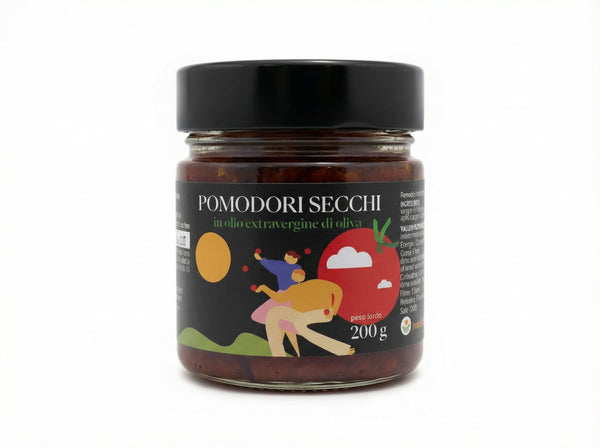
Artisan Sun-Dried Tomatoes in EVOO – Gourmet Antipasto
€7,90
Minnelea
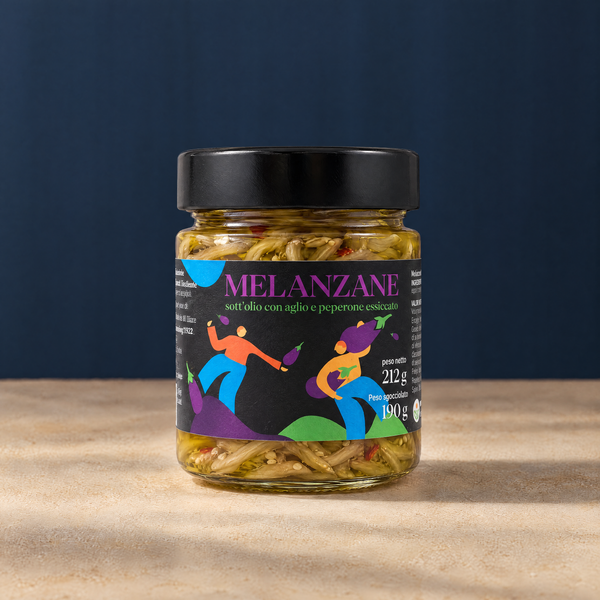
Artisan Eggplant in EVOO – Traditional Antipasto
€7,90
Minnelea
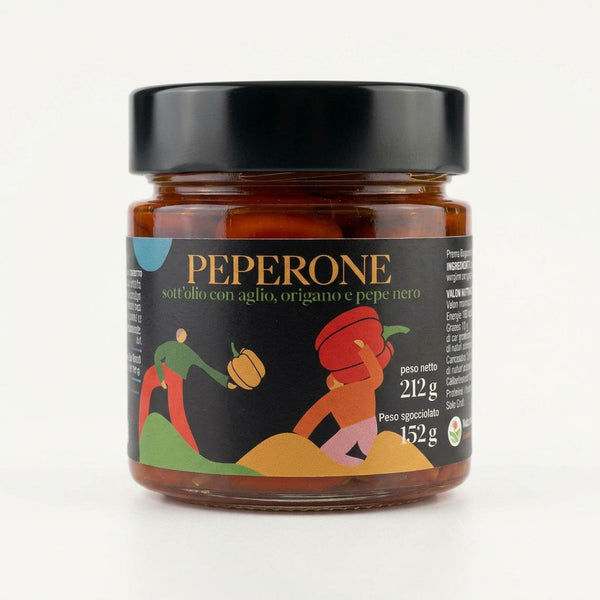
Artisan Peppers in EVOO – Mediterranean Antipasto
€7,90

Minnelea
Aperitivo Kit – 4 Antipasti in Olive Oil
€27,90
• Pre-cooking is not a suggestion, it is the first step: raw beetroot is among the densest vegetables on the counter and acid does not enter, so after a month you end up with two millimeters of preserved surface and a woody center; moreover, the skin only comes off after cooking.
• Boiled: root tip intact and stems shortened to 2-3 cm, because every cut in the skin is a leak where color and sugars escape. Cook whole and covered in water with a splash of vinegar, which fixes the color: 35-45 minutes for pieces around 150 g, up to an hour for large ones, until a skewer enters the center without resistance.
• Baking concentrates instead of diluting: in an aluminium foil parcel with one tablespoon of water and a drizzle of oil, 50-70 minutes at 200 °C. The beetroot does not touch the water, moisture evaporates and sugars and color stay inside - sweeter, firmer, much more “beetroot”, and it withstands pasteurization better. Look at the purple water from boiled beets: that color used to be in the vegetable.
• Peeling without staining yourself: betanin is water-soluble and enters skin, porous plastic and wood. Peel while lukewarm, when the skin slips off with kitchen paper, wearing thin gloves and working on baking paper or glass. Already stained hands: lemon and a tablespoon of salt, rinse in cold water and only then soap, because hot water fixes the stain; baking soda works on the worktop.
• The cut decides the use: 5 mm slices for bread and salads, crossed by the acid in a couple of weeks, cut evenly or you will find soft slices next to hard slices; 1-1,5 cm cubes if they will go into hot dishes or salads, with more texture; julienne or coarse grater only for the refrigerator version, ready in four hours, never for the pantry because it compacts and heat penetration becomes unpredictable.
• The sweet-and-sour brine: 2 parts vinegar at 5% and 1 part water, that is about 3,3% acidity in the liquid; 120-150 g sugar and 12-15 g salt without iodine or anti-caking agents for every 600 ml; 600-700 ml liquid per kilo of already cooked beetroot, better to have plenty because the pieces must stay submerged. If it is too aggressive, increase the sugar, never the water, and never stretch it with cooking water: it is sugary water and dilutes the acidity exactly where it must not.
• The safety point: beetroot is a low-acid vegetable, with a natural pH between about 5,3 and 6,6, well above the 4,6 below which Clostridium botulinum does not develop. Here vinegar is not a taste choice, it is the reason the jar is safe. So at least 5% acidity verified on the label, no extra beets in the same brine (more low-acid vegetable means less acid per gram) and no reuse of liquid from an opened jar.
• Spices that stand up to earthiness: the earthy note comes from geosmin and should not be erased, but framed. Maximum 3 cloves per 250 ml jar, because with the fourth they cover everything; one bay leaf for structure; one teaspoon mustard seeds, which gives the tone of real sweet-and-sour; 2 cm horseradish in slices for a spicy point that cuts through the sugar. Optional caraway, cinnamon or a strip of orange zest. Avoid ground spices, which cloud the liquid, and dill, good on cucumbers but not here.
• Pasteurize 30 minutes in boiling water that covers the lids by 2 cm: beetroot is dense and the 15 minutes that are enough for onions are too few here. After 24 hours every lid must be checked: concave and without clicking; if it clicks, that jar goes in the refrigerator. Then wait two or three weeks, because freshly made they are disconnected and sharp, and only later do vinegar, sugar and clove become one flavor.
• Storage: 12 months closed in a cool, dark place, because light shifts the color toward dull brown; 3-4 weeks in the refrigerator once opened, with the beets always submerged and a clean spoon; 2 weeks for the unpasteurized refrigerator version, at its best in the first. Softer flesh and darker liquid after six months are normal; discard everything if the lid is swollen, if the liquid is cloudy with bubbles, if you smell fermentation or if you see mold.
• Red cabbage variation: it is the twin recipe, the same low-acid vegetable and the same sweet-and-sour balance, but cabbage is not pre-cooked, it is salted. Cut 1 kg red cabbage into 3-4 mm strips, mix with 20 g salt, leave one hour and squeeze. Bring 400 ml vinegar at 5%, 200 ml water, 100 g sugar, 4 cloves, 2 bay leaves and one teaspoon mustard seeds to a boil, add one tart apple in cubes and wilt the cabbage 5 minutes; jar to 1 cm from the rim and pasteurize 20 minutes, less than beetroot because the strips remain more separate than compact cubes. Do not confuse it with sauerkraut, which is lactic fermentation with salt and without vinegar.
• Allergens: no allergens among the main ingredients, but mustard seeds are a declarable allergen. Anyone sensitive to mustard should omit them and compensate with a few more peppercorns and a small piece of horseradish.
• On the table: cubes with fresh goat cheese, walnuts and lamb’s lettuce, with a spoonful of the liquid emulsified in extra virgin olive oil; slices on rye bread with smoked mackerel or with roast beef and horseradish; in potato or lentil salads together with marinated red onions; beside braised meats and game, where they do what mostarda does but with more contrast. Put peeled hard-boiled eggs in the leftover liquid for 24 hours: they turn pink through to the white.
• Let us say it openly: Minnelea does not produce beetroot. We are a farm in Cilento and sweet-and-sour beetroot is a northern European tradition that turns out better at home than any bought jar. Our craft is the other half of the table: not pickled but in oil. Pickle cuts fat, oil preserves flavor, and the two jars sit well on the same plate.
A Minnelea recipe built around our vegetables in oil: we do not make beets, but sun-dried tomatoes, aubergines and peppers are cooked under vacuum at low temperature in extra virgin olive oil from Cilento, with short ingredients and no preservatives or colorings - the full side of the table, next to the acidic side of your jar.
• Boiled: root tip intact and stems shortened to 2-3 cm, because every cut in the skin is a leak where color and sugars escape. Cook whole and covered in water with a splash of vinegar, which fixes the color: 35-45 minutes for pieces around 150 g, up to an hour for large ones, until a skewer enters the center without resistance.
• Baking concentrates instead of diluting: in an aluminium foil parcel with one tablespoon of water and a drizzle of oil, 50-70 minutes at 200 °C. The beetroot does not touch the water, moisture evaporates and sugars and color stay inside - sweeter, firmer, much more “beetroot”, and it withstands pasteurization better. Look at the purple water from boiled beets: that color used to be in the vegetable.
• Peeling without staining yourself: betanin is water-soluble and enters skin, porous plastic and wood. Peel while lukewarm, when the skin slips off with kitchen paper, wearing thin gloves and working on baking paper or glass. Already stained hands: lemon and a tablespoon of salt, rinse in cold water and only then soap, because hot water fixes the stain; baking soda works on the worktop.
• The cut decides the use: 5 mm slices for bread and salads, crossed by the acid in a couple of weeks, cut evenly or you will find soft slices next to hard slices; 1-1,5 cm cubes if they will go into hot dishes or salads, with more texture; julienne or coarse grater only for the refrigerator version, ready in four hours, never for the pantry because it compacts and heat penetration becomes unpredictable.
• The sweet-and-sour brine: 2 parts vinegar at 5% and 1 part water, that is about 3,3% acidity in the liquid; 120-150 g sugar and 12-15 g salt without iodine or anti-caking agents for every 600 ml; 600-700 ml liquid per kilo of already cooked beetroot, better to have plenty because the pieces must stay submerged. If it is too aggressive, increase the sugar, never the water, and never stretch it with cooking water: it is sugary water and dilutes the acidity exactly where it must not.
• The safety point: beetroot is a low-acid vegetable, with a natural pH between about 5,3 and 6,6, well above the 4,6 below which Clostridium botulinum does not develop. Here vinegar is not a taste choice, it is the reason the jar is safe. So at least 5% acidity verified on the label, no extra beets in the same brine (more low-acid vegetable means less acid per gram) and no reuse of liquid from an opened jar.
• Spices that stand up to earthiness: the earthy note comes from geosmin and should not be erased, but framed. Maximum 3 cloves per 250 ml jar, because with the fourth they cover everything; one bay leaf for structure; one teaspoon mustard seeds, which gives the tone of real sweet-and-sour; 2 cm horseradish in slices for a spicy point that cuts through the sugar. Optional caraway, cinnamon or a strip of orange zest. Avoid ground spices, which cloud the liquid, and dill, good on cucumbers but not here.
• Pasteurize 30 minutes in boiling water that covers the lids by 2 cm: beetroot is dense and the 15 minutes that are enough for onions are too few here. After 24 hours every lid must be checked: concave and without clicking; if it clicks, that jar goes in the refrigerator. Then wait two or three weeks, because freshly made they are disconnected and sharp, and only later do vinegar, sugar and clove become one flavor.
• Storage: 12 months closed in a cool, dark place, because light shifts the color toward dull brown; 3-4 weeks in the refrigerator once opened, with the beets always submerged and a clean spoon; 2 weeks for the unpasteurized refrigerator version, at its best in the first. Softer flesh and darker liquid after six months are normal; discard everything if the lid is swollen, if the liquid is cloudy with bubbles, if you smell fermentation or if you see mold.
• Red cabbage variation: it is the twin recipe, the same low-acid vegetable and the same sweet-and-sour balance, but cabbage is not pre-cooked, it is salted. Cut 1 kg red cabbage into 3-4 mm strips, mix with 20 g salt, leave one hour and squeeze. Bring 400 ml vinegar at 5%, 200 ml water, 100 g sugar, 4 cloves, 2 bay leaves and one teaspoon mustard seeds to a boil, add one tart apple in cubes and wilt the cabbage 5 minutes; jar to 1 cm from the rim and pasteurize 20 minutes, less than beetroot because the strips remain more separate than compact cubes. Do not confuse it with sauerkraut, which is lactic fermentation with salt and without vinegar.
• Allergens: no allergens among the main ingredients, but mustard seeds are a declarable allergen. Anyone sensitive to mustard should omit them and compensate with a few more peppercorns and a small piece of horseradish.
• On the table: cubes with fresh goat cheese, walnuts and lamb’s lettuce, with a spoonful of the liquid emulsified in extra virgin olive oil; slices on rye bread with smoked mackerel or with roast beef and horseradish; in potato or lentil salads together with marinated red onions; beside braised meats and game, where they do what mostarda does but with more contrast. Put peeled hard-boiled eggs in the leftover liquid for 24 hours: they turn pink through to the white.
• Let us say it openly: Minnelea does not produce beetroot. We are a farm in Cilento and sweet-and-sour beetroot is a northern European tradition that turns out better at home than any bought jar. Our craft is the other half of the table: not pickled but in oil. Pickle cuts fat, oil preserves flavor, and the two jars sit well on the same plate.
A Minnelea recipe built around our vegetables in oil: we do not make beets, but sun-dried tomatoes, aubergines and peppers are cooked under vacuum at low temperature in extra virgin olive oil from Cilento, with short ingredients and no preservatives or colorings - the full side of the table, next to the acidic side of your jar.