
Extra Jam: What Changes From 2026 and Why "Extra" Now Means More
Share
"Extra jam" is not an advertising buzzword: it is a legally defined category, and from 14 June 2026 it means something different than before. If you buy jam by reading the label, this is the most significant change in twenty years — and almost no one has yet explained it from the perspective of someone standing in front of the shelf.
What "Extra" Means on the Label
The distinction between jam and extra jam has nothing to do with taste, perceived quality, or price. It concerns only one measurable thing: how much fruit is inside.
Until 13 June 2026, the European thresholds were as follows: 350 g of fruit per kg of finished product for standard jam, 450 g/kg for extra jam. From 14 June 2026, with the implementation of EU Directive 2024/1438, both have increased:
- Jam: from 350 to 450 g/kg (45 g of fruit per 100 g of product)
- Extra jam: from 450 to 500 g/kg (50 g of fruit per 100 g of product)
In plain terms: the legal minimum for ordinary jam today is what until yesterday qualified for the "extra" designation. The bar has been raised for everyone.
The Second Change: Where the Fruit Comes From
From the same date, the origin information also changes. Previously, the generic formula "EU / non-EU" was sufficient — a wording that, in practice, said nothing at all. Now the countries of origin must be listed on the label, in descending order by weight.
This is the change that will have the most practical effect on purchasing decisions, because it makes visible a difference that was previously invisible: a product with fruit from a single country and a product assembled from batches across four different continents now distinguish themselves when you read the label.
Why "Extra" Alone Is Still Not Enough
Be careful, however, not to turn this wording into an absolute guarantee. "Extra" remains a minimum threshold, not a target: a product with 50 g of fruit per 100 g and one with 130 g both carry the same word on the label, yet they are profoundly different products.
There are then two things the "extra" category does not tell you at all:
- What kind of fruit was used. Fresh seasonal fruit and preserved semi-processed purée count equally in the calculation.
- What else is in the jar. Added pectins, acidity regulators, and flavourings are all compatible with the extra designation.
This is why the number to look for is not the word, but the declared fruit percentage, which is always on the label next to the product name. It is the most honest figure the producer puts at your disposal.
How to Read a Jar in Thirty Seconds
- Product name: "extra jam of..." tells you you are above 50 g/100 g. "Jam of..." means you are between 45 and 50.
- Fruit percentage: the real number. Above 100 g per 100 g of finished product means the water evaporated during cooking and more fruit went in than the final weight suggests.
- Ingredient list: if there is a third line after fruit and sugar, ask yourself why.
- Origin: from June 2026 this will be stated. A single country is a good sign of a short supply chain.
If you want the extended version of these criteria, with the most common mistakes, we have gathered them in the practical guide to recognising quality artisan jam. On the relationship between sugar and fruit, you will find how much sugar jam really needs.
Attention: The Word "Marmellata" Is Changing Too
The same directive touches on a point that has always caused confusion in Italy. Historically, the term "marmellata" was legally reserved for citrus-based products only; the new regulation expands its use at European level, with the obligation to specify when citrus is involved. This is a change that will have effects mainly in German-speaking markets, where the two terms were used in the opposite way to ours. We discuss this in detail in the article on marmellata, confettura and composta.
Where Our Extra Jams Stand
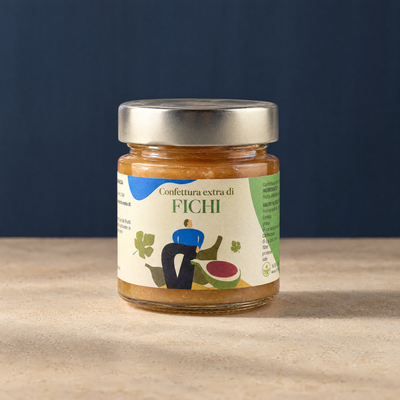
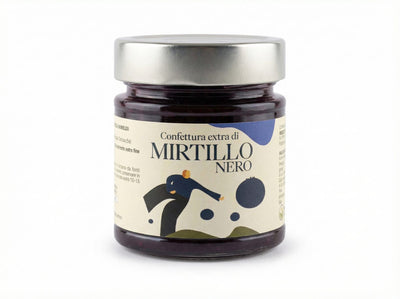
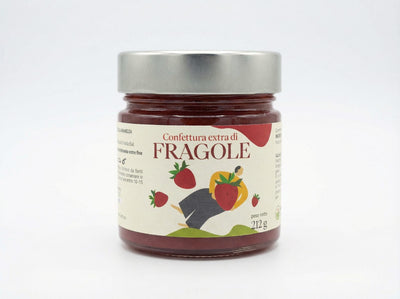
Minnelea jams declare 66 to 130 g of fruit per 100 g of finished product on the label, depending on the variety: all above the new 50 g threshold, several of them at double the minimum or more. The ingredient list runs to three items — fruit, cane sugar, lemon juice — with no added pectins, preservatives, or colourings, and the vacuum cooking below 60°C is designed precisely to seal the jar without thickeners.
On origin: Italian fruit, from a single territory. This is the part of the new label that changes little for us, because it was already this way.
You can verify variety by variety in the artisan jams and marmalades section of our catalogue.
Frequently Asked Questions
Are jams produced before 14 June 2026 still saleable? Yes. Products already placed on the market with the previous labelling may be sold until stocks are exhausted, so for a while you will find jars with both different formats on the shelf. The way to tell them apart is to check the origin indication.
Does extra jam mean no preservatives? No, these are two separate things. The "extra" category concerns only the fruit content. The absence of preservatives must be verified in the ingredient list.
Why do some jams declare more than 100 g of fruit per 100 g of product? Because during cooking the water in the fruit evaporates: to obtain 100 g of finished jam requires more than 100 g of starting fruit. It is an indicator of concentration, and is calculated on the fruit put into production.