
Home-Style Italian Cooking: The Tradition That Works Every Day
Home-Style Italian Cooking: The Tradition That Works Every Day
Italian food is the world’s most imitated — and most poorly copied — cuisine. You’ll find “Italian trattorias”, “Italian restaurants”, “Italian food” everywhere, yet the people who actually cook Italian at home in Italy follow unwritten rules that rarely survive translation. No cream in carbonara, no overcooked pasta, no cheese on fish, no cappuccino after lunch, no ketchup on pasta. These aren’t laws carved in stone, but anyone raised here recognises them instantly. In this guide we share what makes home-style Italian cooking what it is: the principles, the raw materials, the essential pantry, the iconic recipes region by region, and the mistakes you pay for when you “cook Italian” without being Italian. It’s the guide we wish we’d read twenty years ago, when we started bottling what our grandmothers used to make in a pot.
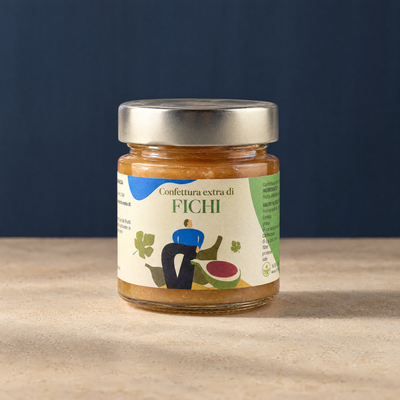
 | From our selection Fig JamHandmade, no preservatives. € 7,90 Discover → |
The five principles of home-style Italian cooking
They’re not rules — they’re habits that, added together, create an identity.
1. Few ingredients, chosen well
A proper tomato pasta has six ingredients: pasta, tomato, EVO oil, garlic or onion, basil, salt. Full stop. Not twelve, not eight. Six. Every extra ingredient dilutes, it doesn’t enrich. This underpins almost every regional dish: Roman cacio e pepe has three (pasta, pecorino, black pepper), margherita pizza five (dough, tomato, mozzarella, basil, oil), Genovese pesto six (basil, pine nuts, garlic, Parmigiano, pecorino, EVO oil).
2. Rigid seasonality
What you eat in March is not what you eat in September. Strawberries for breakfast come between April and June. Fresh tomatoes in sauce in July–August. Figs at the end of August. Pumpkin in October–November. Even confetture follow the same calendar. Italian home cooking works with the seasons, never against them.
3. The right timings, no improvisation
Bolognese ragù simmers for three hours, not thirty minutes. Pasta is drained al dente (one minute before the time on the packet) and finished in the pan, never over-boiled. Shortcrust pastry rests in the fridge before rolling, always. Freshly baked bread rests at least twenty minutes before slicing. Italian cooking is a matter of precise timings.
4. Bread is always on the table
Lunch, dinner, aperitivo: bread is present. Fresh white bread, yesterday’s loaf for bruschetta, breadsticks for aperitivo, rusks for breakfast. An Italian table without bread is incomplete — bread is the pillar that ties everything together.
5. Wine as an accompaniment, not the main drink
Italian wine is drunk with meals, in moderation (half a glass to one glass per meal), paired with food. It’s not drunk “before” without something to nibble (aperitivo always includes a bite). It’s not drunk in excess (getting drunk is not part of the Italian convivial tradition). And it’s never drunk without considering what you’re eating.
🇮🇹 Want to bring home-style Italian cooking to your pantry?
Minnelea products are designed to be “ingredients” — not additives. A handful of Italian components, artisanal processing, ready to slip into dozens of everyday recipes.
Browse the catalogueThe essential Italian pantry
What to ALWAYS have at home to cook real Italian food, broken down by category.
Dried pasta
At least three or four different shapes. Long (spaghetti, linguine), short ridged (penne, rigatoni), short smooth (mezze maniche, fusilli), small shapes (orecchiette, paccheri or farfalle). Italian brand, ideally IGP Gragnano, bronze-drawn, slow-dried.
Rice
Carnaroli or Arborio for risotti. Vialone Nano if you want to lean Venetian. The “long-grain white rice” used as a side dish is not the rice of Italian home cooking.
Tomato
Italian tomato pulp (preferably San Marzano DOP), tomato passata for basic sauces, whole peeled tomatoes for long cooking. Three different references, all Italian.
Extra-virgin olive oil
At least one Italian oil for every use: an all-purpose cooking oil (medium-fruity) and a “fine” finishing oil (more intense, higher price). Never seed oil to dress a real Italian dish.
Vinegars
White wine vinegar (for salads), traditional or IGP balsamic vinegar of Modena (to reduce over meats, dress cheeses), apple-cider vinegar for specific recipes. Three references are enough.
Confetture and marmellate
At least two or three artisanal Italian confetture: one for breakfast (strawberry, apricot, mixed berries), one for cheeses (fig is the classic), one seasonal (black blueberry, apple, bitter orange). For more, see our guide to artisanal Italian confetture.
Sottoli and spreads
Aubergines sottolio, sun-dried tomatoes sottolio, sun-dried tomato paté, savoury pumpkin cream. They’re the pantry for quick pasta + aperitivo + crostini. See our guide to recipes from the pantry.
Quality ready-made sauces
At least one quality ready tomato sauce (for quick evenings) and a few specific ones (Genovese pesto, quality Bolognese ragù) for variety.
Grated cheeses
24-month Parmigiano Reggiano (grated at the moment, never from a bag), Pecorino Romano DOP for cacio e pepe, Grana Padano for everyday use.
Basic cured meats
Prosciutto crudo (Parma or San Daniele), guanciale (for amatriciana and carbonara — guanciale, not pancetta), flat pancetta for soffritti.
Dried and tinned legumes
Chickpeas, cannellini beans, lentils. Pasta e fagioli, ribollita, lentil soup are foundational Italian home dishes.
Spices and herbs
Dried Sicilian oregano, Calabrian chilli, fresh basil (in a pot on the windowsill), fresh rosemary, fresh sage. No pre-mixed “Italian” blends — they’re marketing, not tradition.
Iconic recipes region by region
Italy doesn’t have “one” cuisine — it has twenty. A concise guide for anyone who wants to explore home-style Italian cooking with purpose.
North-West (Piedmont, Liguria, Lombardy, Valle d’Aosta)
Piedmont: bagna cauda (anchovies + garlic + EVO oil), agnolotti del plin, brasato al Barolo. Liguria: Genovese pesto, Ligurian focaccia, trofie with pesto. Lombardy: saffron risotto alla milanese, ossobuco, polenta concia.
North-East (Veneto, Trentino-Alto Adige, Friuli-Venezia Giulia, Emilia-Romagna)
Veneto: risi e bisi, Venetian liver, creamed salt cod. Emilia-Romagna: tagliatelle al ragù bolognese (never spaghetti!), tortellini in brodo, ragù lasagne. Friuli: frico, goulash, plum gnocchi.
Centre (Tuscany, Umbria, Marche, Lazio, Abruzzo)
Tuscany: ribollita, pappa al pomodoro, Florentine steak, pici with wild-boar ragù. Lazio: cacio e pepe, carbonara (egg + guanciale + pecorino + pepper, NEVER cream), amatriciana, Roman saltimbocca. Umbria: torta al testo, strangozzi with truffle.
South (Campania, Puglia, Basilicata, Calabria, Sicily, Sardinia)
Campania: Neapolitan pizza, pasta alla genovese (onion + beef, NEVER pesto), aubergine parmigiana, sartù di riso. Puglia: orecchiette with turnip tops, Bari focaccia, fava beans and chicory. Sicily: pasta alla Norma, caponata, arancini, cannoli. Calabria: ’nduja, pasta with breadcrumbs. Sardinia: malloreddus with sausage ragù, fregula with clams.
Peasant-tradition cooking
Cross-regional: humble dishes that use pantry + seasonal vegetables + a little protein. Pasta e fagioli, pasta and potatoes, minestrone, vegetable frittata, bread meatballs. These are the dishes that kept Italy going for generations — and today are comfort food for entire families.
The Mediterranean diet: the context of Italian cooking
The Mediterranean diet isn’t a “diet” in the slimming sense — it’s a dietary pattern recognised as UNESCO Intangible Cultural Heritage since 2010, first studied by Ancel Keys in Pioppi in the 1950s–60s. The principles:
- Abundant seasonal fruit and vegetables at every meal
- Whole grains as the base (pasta, bread, rice)
- Legumes 2–3 times a week
- Fish 2–3 times a week
- EVO oil as the main fat (never butter or margarine for raw dressing)
- Nuts in small daily doses
- Wine in moderation with meals
- Red meat reduced (max 1–2 times a week)
- Cheese and yoghurt in moderate amounts
- Desserts occasional, not daily
Common mistakes when “cooking Italian”
Five traps many fall into when they want to cook Italian but aren’t Italian.
1. Carbonara with cream. No. Never. Egg + guanciale + pecorino + black pepper. The creaminess comes from the egg that sets when it meets the hot pasta, not from cream. Cream in carbonara is the classic mistake. 2. Overcooked pasta. “Al dente” means the tooth meets resistance in the centre of the pasta. Not “soft”. Drain the pasta one minute before the time on the packet and finish it in the pan with a ladle of cooking water. 3. Cheese on fish. Never. Pasta with fish sauces (clams, prawns, shrimps, tuna) does not want Parmigiano or pecorino. Exception: pesto trapanese (with almonds and tomato), a specific Sicilian case. 4. Cappuccino after lunch. Cappuccino is a breakfast drink (latest 11 a.m.). After lunch you drink an espresso, maybe macchiato. Cappuccino after steak = mistake. 5. Ketchup on pasta. Absolutely not. Ever. For any reason. Tomato is added as a cooked sauce, not as a cold, sugared industrial condiment.Minnelea products in home-style Italian cooking
Our philosophy: every Minnelea jar is an ingredient of home-style Italian cooking, not an add-on. A handful of Italian components, artisanal processing (low-temperature vacuum cooking, no preservatives), ready to slip into dozens of traditional recipes.
Four catalogue categories, four families of use:
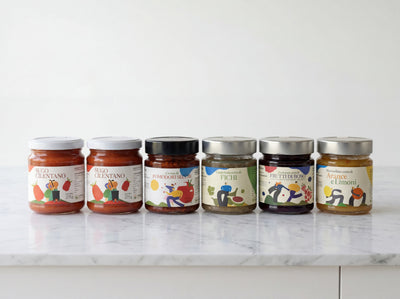
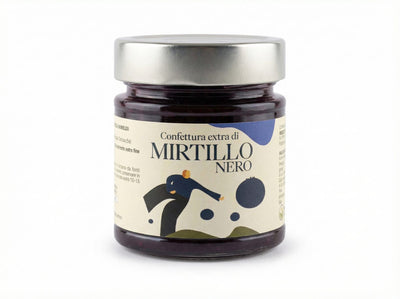
Confetture and marmellate (8 references + kit): classic breakfast, cheese pairings, pastry, savoury recipes. All over 50 % seasonal Italian fruit, no industrial pectin. Award-winners: Dottato Figs (Great Taste 2025), Black Blueberry (WineHunter Rosso 2024), Sfusato Lemons (WineHunter Gold). Sottoli (3 references): aubergines, sun-dried tomatoes, peppers. For quick pasta, antipasti, gourmet sandwiches, composed salads. See the guide to the perfect Italian aperitivo. Paté and savoury creams (2 references): sun-dried tomato paté (Great Taste 2025 + WineHunter Gold), pumpkin cream (Great Taste 2025 + WineHunter Gold). Multi-use: crostini, pasta, fillings, finger food. Ready sauce (1 reference): Cilentano tomato sauce. For quick evenings or as a base for variations (arrabbiata, puttanesca, light amatriciana). Gift kits: Sweet Awakening Kit (8 artisanal confetture) — to give the Italian home pantry as a gift. See the guide to Italian gourmet gifts.🥫 The Minnelea pantry
The entire Minnelea catalogue — confetture, marmellate, sottoli, paté, Cilentano sauce — is artisanal Italian, made with seasonal Italian raw materials, low-temperature vacuum-cooked, with no preservatives or thickeners.
Explore the full catalogueFrequently asked questions
What’s the difference between “Italian cooking” and “Mediterranean cooking”?
Italian cooking is the main subset of Mediterranean cooking, but “Mediterranean” also includes Spanish, Greek, southern French, Lebanese. Italian cooking is a specific, region-by-region codified subset. The Mediterranean diet (dietary pattern) is the nutritional framework; Italian cooking is one practical way to apply it.
How many portions of pasta per week?
Traditional Italian home cooking has pasta 5–7 times a week, in moderate portions (70–90 g dry per person). It isn’t “a lot” when accompanied by vegetables and little protein. The problem comes with gigantic portions (150 g) + fatty ragù + heaps of Parmigiano.
Can you eat Italian without using animal products?
Yes. Italian cooking is rich in traditional plant-based dishes: tomato pasta, aglio-olio-peperoncino pasta, pasta and chickpeas, ribollita, caponata, aubergine parmigiana (without Parmigiano), focaccia, pizza marinara, minestrone, mushroom risotto. Vegan Italian recipes are part of the tradition.
What to cook for foreign guests?
Iconic recipes that work universally: proper carbonara (no cream), spaghetti alle vongole, margherita pizza, aubergine parmigiana, tiramisù, panna cotta. Stick to the classics, avoid “creative fusion”.
How much does seasonality affect quality?
A lot. Cherry tomatoes in January are tasteless, strawberries in December are pesticide-laden, figs in March are dried Turkish imports. Italian home cooking follows the calendar because the flavours are authentically different: the same recipe made with seasonal raw materials is three times better.
Is there one “true Italian recipe” or does every region have its own?
Both. There are recipes codified across Italy (Roman carbonara, Neapolitan pizza, Bolognese ragù) — regional variations exist, but within recognised boundaries. Then there are infinite family variants (“grandma’s recipe” changes with every grandma). Both are legitimate: the first is codified tradition, the second is lived tradition.
Can I cook Italian at home if I don’t live in Italy?
Yes, but you need to pay attention to raw materials. Buy: Italian IGP pasta (Gragnano, Garofalo, Rummo are widely available), real Italian EVO oil (not EU-blended), Italian tomatoes (tinned San Marzano can be found everywhere), real Italian DOP cheeses. The difference between cooking “real Italian” and “Italian-style” is almost entirely down to the raw materials.
More guides on our blog:
In short
Home-style Italian cooking is a system of simple principles that work together: a few well-chosen ingredients, rigorous seasonality, precise timings, bread always on the table, wine in moderation. It’s a model that runs through every Italian region — each with its own iconic recipes — and translates into an essential pantry of Italian IGP pasta, real EVO oil, Italian tomatoes, artisanal confetture and sottoli, DOP cheeses. Minnelea products are a slice of that pantry: confetture, sottoli, paté, sauces that are ingredients of home-style Italian cooking, not substitutes for cooking. When you open a jar, you have a piece of tradition made the way it used to be, only with modern tools and professional food safety.
Explore the complete Minnelea catalogue to choose which jars can join your home pantry.
From our workshop in Cilento, Italy
Welcome Kit — 6 artisanal jars
Six sweet and savoury jars to discover us — two award-winning (Great Taste 2025, WineHunter Gold). Free shipping included.
Discover → 29,70 €Free shipping in Europe over € 39 · 4.9★ on Google