
Artisan Italian Confetture: The Guide to Spotting True Quality
Artisan Italian Confetture: The Guide to Spotting True Quality
In Italy every family once had its nonna’s confetture. That screw-top jar with the hand-written label, the flavour that tasted nothing like supermarket jam—more fruit, less sugar, something you could simply feel. Today that confetture is almost gone: most of what we find on shelves comes from large factories using pectin, preservatives, low fruit percentages and plenty of sugar. Yet a small circle of artisan makers still do things the old way—only with modern tools and professional food-safety standards. In this guide we explain how to recognise a genuine artisan Italian confetture, what sets it apart from industrial versions, why it costs more, and how to read a label in ten seconds to know whether you’re looking at a good product or not.
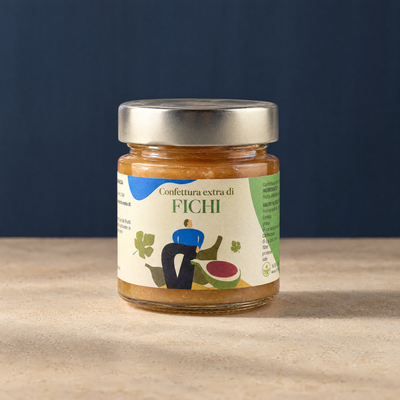
 | From our selection Fig JamHandmade, no preservatives. € 7,90 Discover → |
Confetture, marmellata, composta: what the law says
Three names many use as synonyms, but under European law they are different things. Reg. CE 2001/113 (adopted in Italy as D.Lgs. 50/2004) distinguishes them as follows:
Marmellata — reserved ONLY for citrus-based products (oranges, lemons, mandarins, grapefruits, citrons, bergamots). A “marmellata di fragole” on a commercial label is illegal: the correct name is confetture. Minimum fruit: 200 g/kg for the standard version. Confetture — any fruit that is not citrus (strawberries, figs, apricots, blueberries, etc.). Minimum fruit: 350 g/kg. Confetture Extra — the premium category of confetture. Minimum fruit: 450 g/kg (so almost half the jar is real fruit). Serious artisan confetture all sit here, often exceeding 500 g/kg. Composta — category with a maximum of 35 % added sugar (versus the 45–60 % of confetture). Perceived as fruitier, shorter shelf life. Marmellata Extra — the premium version of marmellata. Minimum fruit 300 g/kg.In everyday speech “marmellata” is used for everything. On a commercial label, however, the correct wording must respect these categories. For a deeper dive we have a dedicated guide to the differences.
How to recognise a quality artisan confetture
Six concrete criteria, in order of importance. Checkable in ten seconds by looking at the jar.
1. Declared fruit percentage on the label
The first number to look for. By law it must be printed. The thresholds:
- Below 35 % → generic industrial, mostly sugar
- 35–45 % → standard, medium-quality confetture
- 45–50 % → standard confetture extra
- Above 50 % → serious artisan confetture extra
- Above 55 % → top-tier confetture
2. Short ingredient list
A real artisan label is three lines long:
- Fruit (with name and variety, when possible)
- Sugar
- Lemon juice
3. Type of sugar
Nearly all Italian artisan confetture use light cane sugar. Refined white sugar is cheaper, interchangeable, but adds nothing. Added fructose, syrups (glucose, corn), artificial sweeteners (erythritol, stevia) are signs of industrial products with “healthy” marketing.
4. Declared fruit origin
Generic “Italian fruit” is vague. “Italian seasonal strawberries” is better. “White figs from Cilento (Dottato variety)” is the level of serious producers. Undeclared origin = probably opportunistic imported fruit (Turkey, Spain, Poland depending on season).
5. Mentioned processing technique
A serious artisan confetture tells you HOW it is made. “Vacuum-cooked at low temperature”, “no added industrial pectin”, “small batches”, “pasteurised in autoclave”. These are technical details that industry avoids because they are irrelevant to mass-market marketing.
6. Independent awards
International prizes (Great Taste Award, WineHunter, SOL d’Oro, Concours Mondial de Bruxelles) have value when they come from independent juries that conduct blind tastings. They are an external seal of recognised quality.
✅ Quick check
All Minnelea confetture meet the six criteria above: 50 %+ fruit, short ingredient list, light cane sugar, declared Italian origin, vacuum cooking at low temperature, Great Taste 2025 + WineHunter awards on several references.
View the confettureVacuum cooking vs traditional cooking
One of the most important technical differences between industrial, home-made and serious artisan confetture.
Traditional open-pot cooking
Nonna’s method. Fruit + sugar + lemon in a pot, medium heat, 30–50 minutes, stirring. It works well but has three limits:
- High temperature (100–105 °C) → oxidises pigments, colour shifts to brown
- Open evaporation → volatile aromas are lost in the steam
- Long cooking → the fruit “stresses”, some natural antioxidants (vitamin C, polyphenols) degrade
Vacuum low-temperature cooking
The method used by professional artisan laboratories. Fruit + sugar + lemon in a sealed vacuum pot, heated at 65–70 °C instead of 100–105 °C. Differences:
- Vivid colour → keeps the red of strawberries, the purple of blueberries, the pale yellow of white figs
- Aromas preserved → no evaporation, the fruit’s perfumes stay in the jar
- Vitamins and polyphenols → far lower thermal degradation
- Longer cooking time (90–120 min) but at a gentle temperature, so the fruit is not “stressed”
Ultra-fast industrial cooking
Large industrial brands use continuous plants that cook the fruit in minutes at high temperature, then add pectin for texture. Speed + standardisation + low cost = shelf price of €2–3. Result: predictable but flat confetture.
Confetture without industrial pectin: how it’s possible
Industrial pectin (E440) is the gelling agent added to almost all commercial jams to give texture. Serious artisan confetture do without it. How?
Natural fruit pectin. All fruits contain pectin naturally, in varying amounts: apples, citrus, figs (high); strawberries, cherries, raspberries (medium); peaches, apricots (low). Cooking the fruit with sugar in the right proportions and acidity (lemon) causes the natural pectin to gel and set without needing industrial pectin. Longer cooking. Extracting and activating natural pectin takes cooking time—not just temperature. Industrial confetture cut the time by adding pectin. Correct acidity. Lemon juice isn’t just flavour: it’s the catalyst that allows natural gelling. The presence of lemon (in small amounts) is the sign of a confetture without added pectin. Different texture. A confetture without industrial pectin is slightly “softer” than one with pectin. It spreads on bread leaving a light trail, not a compact block. This is a sign of authenticity—not a flaw.For a deeper look we have an article dedicated to strawberry jam without pectin.
Why an artisan confetture costs more
A legitimate question. Answer in five points.
1. Italian seasonal raw material
A €2.50 industrial jar contains imported, frozen, opportunistically purchased surplus fruit. A €7–10 artisan jar contains Italian seasonal fruit bought fresh or grown by the producer. The raw material cost difference is 3–5 times.
2. Labour
Artisan confetture are made in small batches, with people following every step. Fruit cleaning, cutting, cooking control, skimming, jarring, labelling: real human work. Industrial ones are made by automatic plants at 50,000 jars per hour.
3. Vacuum and low-temperature cooking
Vacuum cooking requires dedicated equipment (vacuum pans, autoclave sterilisers) and longer times. It costs more to produce 1,000 artisan jars than 1,000,000 industrial jars in unit cost terms.
4. Short supply chain and traceability
Knowing the fruit supplier, checking every batch, keeping traceability records: this takes time and is reflected in the price. Large industries buy from international brokers without detailed traceability.
5. Packaging and shipping
Serious jars are thick glass (for autoclave sterilisation), quality twist-off caps, labels printed on real paper. Industry uses thin glass, cheap caps. Difference to the consumer: small. Difference to the producer: €0.30–0.40 more per jar.
In short: an honest Italian artisan confetture does not drop below €6–8 per 200–250 g jar. If you find one at €3–4, something is off (poor fruit, added ingredients, or subsidies that affect quality).
The seasonal calendar of Italian confetture
A serious artisan confetture follows the fruit season. Reference calendar for southern Italy (add 2–3 weeks for the north):
- Spring (March–May): strawberries, late citrus (lemons, oranges)
- Early summer (June–July): cherries, raspberries, blackberries, peaches, apricots
- Mid-summer (July–August): plums, blueberries, black figs, currants
- Late summer (August–September): white figs (Cilento Dottato is mid-August to mid-September), grapes
- Autumn (September–November): apples, quinces, pomegranates, chestnuts, wild berries
- Winter (December–February): citrus (oranges, mandarins, bergamots, citrons)
Serious artisan producers work within the right window and then sell in the following months what they have produced. No “continuous production” of strawberries all year round.
The Minnelea confetture: our approach
What we do in our laboratory in Moio della Civitella for every jar.
Raw material: Italian seasonal fruit. For some references, specific territorial varieties are declared: white figs from Cilento, Dottato variety; Amalfi Sfusato lemons; Washington Navel oranges. For others (strawberries, blueberries, apricots, wild berries) Italian seasonal fruit of quality. Recipe: 1.3 kg of fruit for every kg of finished product (over 50 %), light cane sugar 35–40 %, lemon juice. Nothing else. Cooking: vacuum at 65–70 °C for 90–120 minutes. Sterilisation: in professional autoclave for commercial-level food safety. Confirmed awards:- Confetture Extra White Figs Dottato: Great Taste Award 2025 + WineHunter Gold
- Pumpkin Cream: Great Taste 2025 + WineHunter Gold (savoury category)
- Sun-dried Tomato Paté: Great Taste 2025 + WineHunter Gold
- Lemon Marmellata Extra: WineHunter Gold
- Confetture Extra Black Blueberry: WineHunter Rosso 2024
Which confetture to choose for every use
Five scenarios, five specific choices.
For the classic breakfast (bread/biscuits): strawberry, wild berry or apricot confetture. Sweet-fresh, familiar profile. Our most requested at breakfast: strawberry and wild berries. For cheese (boards, end of meal): fig, black blueberry or bitter orange confetture. Tart, structured, balance strong savoury notes. See our guide to cheese pairings. For pastry (tarts, biscuits): apricot, red apple or lemon confetture. They hold up well to baking, give colour and density. Our apricot confetture is the most versatile. For yoghurt and spoon desserts: black blueberry, wild berry or strawberry confetture. Creamy, with perceptible whole fruit. Our black blueberry WineHunter Rosso 2024 is the top choice. For duck, pork, red meats: fig, apple or blueberry confetture. Tart-aromatic, perfect for sauce reductions. The Dottato fig confetture (Great Taste 2025) is the most requested by chefs.Frequently asked questions
Is an artisan confetture healthier than an industrial one?
Not automatically “healthier”—a confetture, artisan or not, contains sugar. However, an artisan one has: more real fruit (hence more fibre, vitamins, polyphenols), proportionally less sugar, no chemical preservatives, no thickeners. It is a cleaner product in terms of ingredient list.
How long does an artisan confetture last once opened?
3–4 weeks in the fridge if used with a clean spoon. Without preservatives it lasts less than industrial ones (which can also last 2–3 months open in the fridge thanks to sorbates). For infrequent use: freeze in cubes, lasts 6–8 months at –18 °C.Can I make artisan-quality confetture at home?
Technically yes if you have: 1 kg of perfect Italian seasonal fruit, professionally sterilised jars, enough time (a whole day) and attention to vacuum safety. Honestly: low-temperature vacuum cooking requires specific equipment, and serious industrial results are hard to replicate at home.
Are sugar-free confetture real confetture?
Under EU law a “confetture” must have at least 350 g/kg of fruit AND sugar (or other sweetener). “Sugar-free confetture” use natural sweeteners (erythritol, stevia) or concentrated fruit fructose. They are different products—acceptable for specific needs (diabetes, low-carb diet) but do not have the same organoleptic structure.
How much confetture per day?
20–30 g (one spoonful) at breakfast or as dessert is a reasonable portion, even in standard diets. The reference serving on packs is 20 g.
Organic confetture = better confetture?
Organic certification excludes synthetic pesticides on the fruit. On the final product quality (taste, texture) organic is not in itself a guarantee: there are mediocre organic confetture and excellent non-organic ones. It is an ethical-environmental choice, not always a qualitative one.
Are confetture suitable for children?
Yes, from the second year of life according to standard paediatric guidelines on added sugars. Artisan confetture with low sugar and short ingredient lists are preferable to industrial ones. No honey as an alternative under 12 months (infant botulism risk).
Minnelea confetture for every use:
- → Confetture Extra White Figs Dottato — Great Taste 2025 (top for cheese)
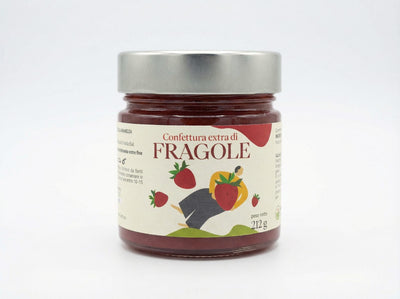
- → Confetture Extra Strawberries (breakfast)
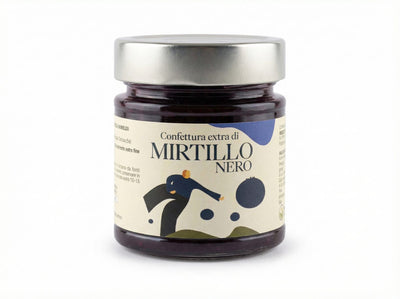
- → Confetture Extra Black Blueberry — WineHunter Rosso 2024 (yoghurt + dessert)
- → Confetture Extra Apricots (pastry + tarts)
- → Confetture Extra Wild Berries (breakfast + dessert)
- → Marmellata Extra Sfusato Lemons — WineHunter Gold
- → Dolce Risveglio Kit — all 8 confetture
In summary
A quality artisan Italian confetture is recognised in ten seconds by looking at the jar: fruit percentage above 50 %, three-line ingredient list (fruit + sugar + lemon), declared origin, mentioned processing technique, honest price (€6–10 per jar). Industrial €2–3 jars are not bad confetture—they are different products, made with different raw materials and methods. The choice depends on what you are looking for: if you want a spoonful of real Italian seasonal fruit cooked as it once was, you need to seek out a serious artisan producer and accept the price that reflects what is inside.
For those who want to try serious Italian artisan level in a single box, our Dolce Risveglio Kit gathers eight different references—all above 50 % fruit, all vacuum-cooked at low temperature, all without preservatives or thickeners.