
How to store opened jam: practical rules and shelf life
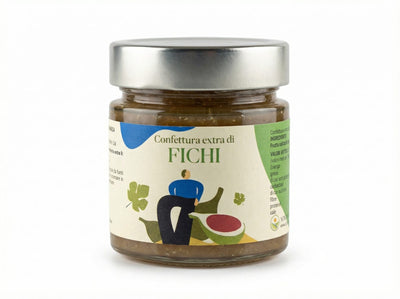
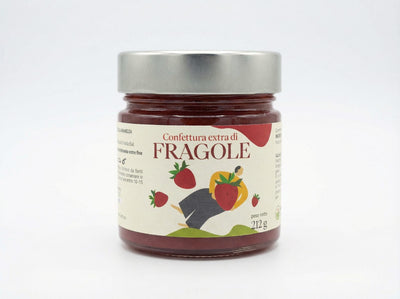
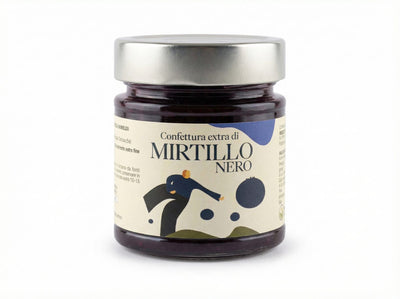
You open the jar in the morning, take a spoonful for your rusk and put it back: so far so simple. But where should jam be stored after opening? How long does it really last? And how do you tell when it is best not to eat it any more? Here is a practical guide, valid for jams, preserves and jellies, both industrial and artisan like ours from Cilento, made without preservatives.
Fridge or pantry: where it goes after opening
The rule is simple and has no exceptions: once opened, the jar goes in the fridge. As long as it is sealed, the vacuum and pasteurisation keep the product stable at room temperature, in the pantry, away from light. The moment you break the seal, however, air comes into contact with the surface and with it come yeasts, moulds and bacteria that are always present in the environment.
The cold of the fridge (ideally between 4 and 6 °C) drastically slows their growth. This applies to all types: fruit-rich extra preserves, citrus marmalades, jellies. Artisan ones without preservatives, in particular, need the fridge even more than industrial ones, precisely because they contain no additives that extend their shelf life.
How long does opened jam really last
There is no single number: shelf life depends above all on the sugar concentration and the quality of the product. Sugar, besides sweetening, acts as a natural preservative by binding water and making it less available to microorganisms. This is why a very sugary preserve lasts longer than a low-sugar one or a product with lots of fruit and little sugar.
As practical guidance, once opened and always kept in the fridge:
- Classic jams and preserves (well sweetened): they generally keep well for 3-4 weeks, often even longer if handled with care.
- Reduced-sugar preserves or artisan products with lots of fruit: best consumed within 1-2 weeks.
- Jellies: similar timing to classic preserves, but always check the surface before use.
These are rough estimates: always trust your eyes and your nose more than the calendar. A jar treated badly can spoil in a few days, one handled with care can last even longer.
The 6 practical rules to get it right
The difference between a jam that lasts weeks and one that goes mouldy in a few days almost always lies in how it is handled. Here are the six rules we live by every day.
1. Always use a clean spoon
Never take jam with a spoon wet with milk, moistened by bread or already used for something else. Even a single dirty spoon contaminates the entire jar, introducing microorganisms that then proliferate. Keep a dedicated, dry spoon.
2. Always close the jar, cleaning the rim
Before screwing the lid back on, clean the rim of the jar if it is smeared with jam: mould grows first on the threads of the lid and on the rim. Close it well, tightly, and put it back in the fridge right away.
3. Do not leave the jar open at room temperature
Avoid keeping it out of the fridge for the whole breakfast. Open it, serve what you need, close it and put it away right away. Every minute spent open in the warmth is time handed to yeasts and moulds.
4. Do not put a still-warm jar back in the fridge
If you have just opened a jar kept in a warm place, do not wait: put it in the fridge as soon as possible. Do avoid repeated hot-cold swings, though, which encourage condensation to form on the surface, the ideal environment for moulds.
5. Use up already-opened jars first
If you have more than one open in the fridge, finish the one you started longest ago before opening another. A small habit that reduces waste and lets you enjoy every preserve at its best.
6. Check the surface every time
Before each use, take a look at the surface and give it a sniff. Two seconds are enough to notice in time if something is wrong, avoiding dipping your spoon into an already compromised product.
Signs of spoilage: when to throw it out
Even following all the rules, sooner or later every jar comes to an end. Here are the signs that it is time to stop eating it:
- Mould: white, green, grey or black spots or films on the surface or the rim. Removing the visible part is not enough: the roots of the mould reach deep, so the whole jar goes in the bin.
- Fermentation: bubbles, foam, a sour or alcoholic smell and a taste that “fizzes” signal that yeasts and bacteria have taken over. The jam must be discarded.
- Abnormal texture and colour: a slimy surface, a colour much darker than usual or strange separated liquids are other warning signs.
When in doubt, the golden rule always applies: if the look, the smell or the taste seem strange to you, do not risk it and throw it away. A well-made, well-stored preserve rewards you with weeks of good breakfasts: all it takes is a clean spoon and a place in the fridge.
From our workshop in Cilento
 |
From our range
Confettura di FichiArtisan, without preservatives.
€ 7,90
Discover →
|
Kit Benvenuto — 6 vasetti artigianali
The selection to get to know us: 6 sweet and savoury jars, 2 award-winners (Great Taste 2025 and WineHunter Gold). Free shipping included.
Discover → 29,70 €Free shipping in Italy from € 27 · 4.9★ on Google