
The Best Marmalades: How to Really Judge Them (and What the Tests Actually Look For)
Share
Searching for "best marmalades" leads to two kinds of results: consumer magazine rankings and blog lists. These are different things, and neither replaces the one criterion that truly matters — being able to read a jar on your own, in ten seconds, standing in front of the shelf.
What comparative tests actually measure
Consumer association tests, like those by Altroconsumo in Italy or equivalent magazines in Germany and France, follow a fairly consistent framework. There are five recurring criteria:
- Declared fruit content, verified in laboratory. This carries the most weight because it is also the easiest to measure objectively.
- Total sugars per 100 g of product.
- Additives: added pectins, acidity regulators, preservatives, flavourings, colourings.
- Contaminants and residues of plant protection products.
- Sensory evaluation by trained panel: colour, consistency, aroma, recognisable fruit flavour.
The structural limitation of these tests is the sample: they analyse almost exclusively mass-market products, because these must be available everywhere. Artisan producers with limited distribution remain almost entirely outside the comparison — which says nothing about their quality, only that they were not in the basket.
International competitions: a different kind of judgment
Beside laboratory tests, there are blind-jury competitions where the measure is not compliance but gustatory excellence. The two references that matter in our sector are the British Great Taste Award and the WineHunter Award in Merano.
The difference is substantial: a comparative test tells you whether a product delivers what it promises; a blind-jury competition tells you whether an expert taster, who does not know what they are eating, finds it remarkable. If you want to understand how a jury thinks, we have collected the seven parameters used by international judges and the map of awarded Italian confetture.
The ten-second test: how to judge for yourself
You do not need a laboratory. You need to turn the jar and read three lines.
1. The fruit percentage
It is mandatory on the label and the most informative number that exists. Below 45% fruit, by law, you cannot use the term "extra". Mass-market confetture typically fall between 45 and 55 g of fruit per 100 g. Above 100 g of fruit per 100 g of finished product — yes, it is possible, because water evaporates during cooking — you enter another category of product.
2. The ingredient list
The shorter, the better. Fruit, sugar, lemon juice is the ideal list. Every additional entry — pectin, citrate, sorbate, flavouring — is a technological shortcut: legitimate, but a sign of a product built to cost little and last long, not to taste of fruit.
3. The colour in the jar
A confettura cooked for a long time at high temperature turns brown. A vivid colour, close to that of fresh fruit, indicates shorter cooking or lower temperature. It is the most reliable visual signal before you open the jar.
If you want the extended version of these criteria, with the most common mistakes, you will find everything in the practical guide to choosing a quality confettura.
"Best brands": the question is poorly framed
There is no absolutely best brand, only the best brand for a purpose. A confettura for crostata must hold up to baking without liquefying. One for a cheese board must stand up to aged pecorino without disappearing. One for breakfast must be spreadable when cold. These are three different products, and the winner of a generalist test is not automatically the best for your purpose.
The most useful criterion, if you must choose one brand to keep in your pantry, is consistency: a producer who declares high fruit percentages across the entire range, not only on the flagship product, and who does not change recipe from batch to batch.
Where Minnelea confetture stand
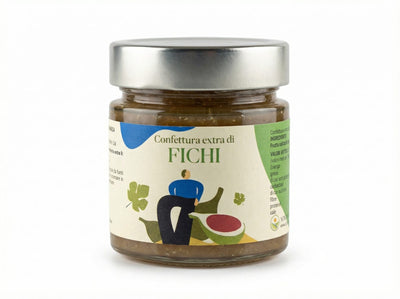
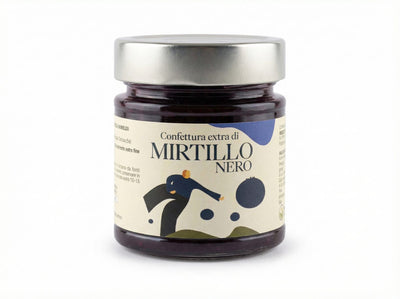
For transparency: we do not appear in mass-market tests, because we are not a mass-market product. Our references are blind-jury competitions — the white fig confettura received the Great Taste Award and the WineHunter Gold, the blackcurrant the WineHunter Rosso.
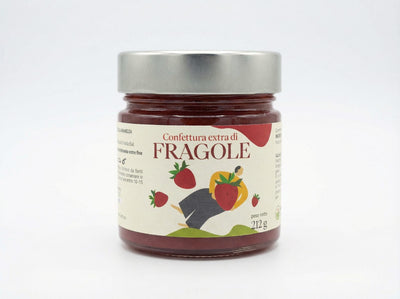
On the three criteria of the ten-second test: fruit percentage between 66 and 130 g per 100 g of product depending on the variant, ingredient list of three items (fruit, cane sugar, lemon juice), vacuum cooking below 60 °C that preserves colour. You can verify this directly on the label of our artisan confetture and marmalades in the catalogue, and on the awarded products you will find the recognitions listed variant by variant.
Frequently asked questions
Are the most expensive marmalades better? Price follows mainly the fruit percentage and the cost of raw materials: more fruit means more kilos of fruit per jar, and therefore higher cost. But a high price guarantees nothing on its own. Read the label anyway.
What is the difference between marmellata and confettura in tests? Under EC Regulation 2001/113, "marmellata" is reserved for citrus, "confettura" for all other fruit. Tests treat them in separate categories precisely because the reference parameters differ. We discuss this in detail in the article on the difference between marmellata and confettura.
Is it worth trusting online rankings? Only if they declare their method. A ranking that does not explain how it chose products and what it measured is an opinion, often commercial. Consumer association rankings at least publish their protocol.