
Bottling Tomatoes Like Nonna: What Still Holds True — and What We Do Better Today
If you’re searching for “bottling tomatoes like Nonna,” you’re rarely after just a recipe — you’re chasing a scent: the late-summer steam in the kitchen, rows of glass jars, the soft “pop” of the lids at dusk. The good news: the ritual works today just as it did sixty years ago. The honest news: we now do two things differently — and for good reason. Here’s both.
 | From our selection Fig JamHandmade, no preservatives. € 7,90 Discover → |
What Nonna got right (and what stays)
The choice of tomato. Nonna bottled pomodori da salsa, never salad tomatoes — fleshy, low in water. That wisdom is unchanged.
The timing. She bottled at peak ripeness, often the very day of harvest. Flavour can’t be added later — only preserved.
The calm. No shortcuts: sterilise the jars, wipe the rims, don’t rush the water bath. Bottling was a day-long project, not a side task — and that alone prevented sloppy mistakes.
The family rule. Bottling was a group effort — the kids turned the passapomodoro. If you bottle today, reclaim this: it’s work that brings joy with two hands and frustration with one.
What we do better today (two rules)
1. Acidity is mandatory, not optional. Modern tomatoes are bred lower in acid than those of 1970. Today’s food-safety advice: 1–2 tsp lemon juice per jar before sealing. Nonna often didn’t need it with her old varieties — we do. It adds no taste and is the only real insurance against the one serious risk of bottling.
2. Respect the water-bath times. “Until the lids pop” was Nonna’s yardstick; we now know the vacuum tells us nothing about sterility inside. At least 35–40 minutes from the boil, jars fully submerged — measured, not guessed. All methods in detail are in the complete bottling guide.
The family recipe (Nonna’s way, updated)
- Wash 5 kg of ripe pomodori da salsa, quarter them, and simmer in their own juice for 15 minutes in a large pot.
- Pass through the passapomodoro (the passata technique) — children welcome to crank.
- Return the passata to the pot, reduce uncovered for 20 minutes, salt to taste. If you like: one basil leaf per jar.
- Update: add 2 tsp lemon juice to each sterilised jar.
- Fill while hot, seal, water-bath for 40 minutes. In the evening, enjoy the popping concert — that part can stay.
The truth about the Nonna feeling
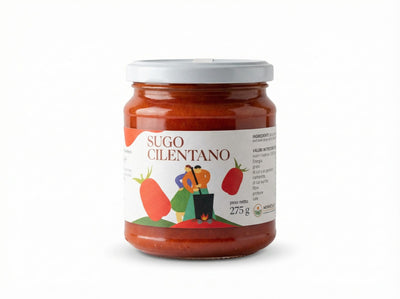
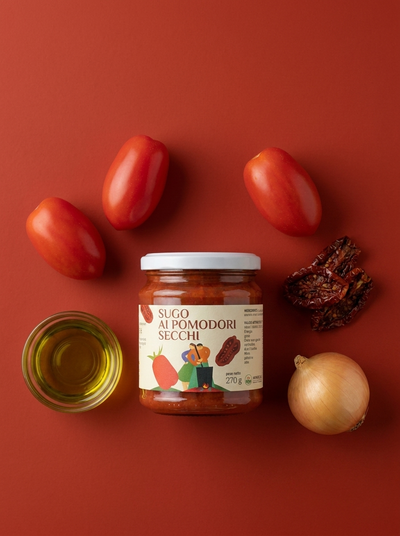
Here’s the thought that keeps this tradition relaxed instead of romanticised: Nonna’s bottling wasn’t romance, it was necessity — and as soon as good alternatives appeared, even Nonna used them without sentiment. In southern Italy the same tradition survives as conserva di famiglia — and the very same families also buy jars from producers they trust. Our Sugo Cilentano is made exactly by this family principle: ripe tomatoes, olive oil, small batches, no additives. Bottle once a year for the ritual — and stock the pantry with honest jars for everyday life: Nonna would probably have done the same, pragmatically.
Frequently asked questions
Weck jars with rubber rings or screw-top jars? Both work. Weck shows opened jars more honestly (the lid falls off), screw-tops are more practical. Important: always use new, undamaged rings and lids.
Nonna’s jars from the attic — can I use them? The jars yes (intact and sterilised), old rubber rings and scratched lids no. Ten cents for a spare part versus a risk — simple math.
How long do the jars keep? Properly bottled, 12 months and more. Nonna’s cellar rule still applies: dark, cool, and anything cloudy or hissing goes straight into the bin, untasted.