
Pasta Sauce: The 7 Italian Sauce Families — and Which Pasta Each One Wants
Italian cuisine boasts hundreds of pasta sauces — yet they all belong to just seven families. Once you know the families, you can classify any recipe, improvise freely, and never again pair the wrong pasta with the wrong sauce. Here is the complete map, featuring the most important members and the logic behind every match.
 | From our selection Fig JamHandmade, no preservatives. € 7,90 Discover → |
Family 1: Tomato (sugo rosso)
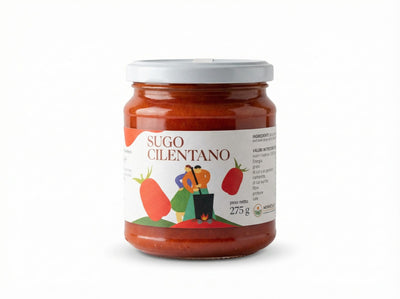
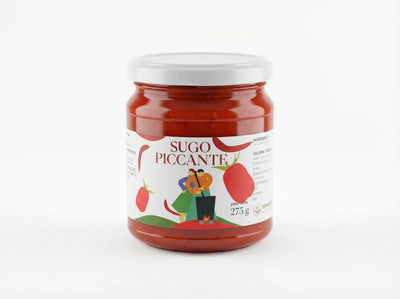
The mother of all families: from a quick salsa to a long-simmered sugo. Key players: Pomodoro, Arrabbiata, Puttanesca, Marinara. The foundation is laid in our authentic tomato-sauce recipe; the pantry-ready version comes as a slow-cooked Sugo Cilentano (mild) or Sugo Piccante (spicy). Pasta to match: Spaghetti, Penne, Rigatoni.
Family 2: Oil & Garlic (in bianco)
The fastest family — olive oil as the sauce itself: Aglio e Olio, with anchovies, with pangrattato (toasted crumbs). Lives or dies by the quality of the oil. Pasta to match: long, slender shapes — Spaghetti, Linguine.
Family 3: Cheese & Egg
The Roman dynasty: Cacio e Pepe, Gricia, Carbonara. No cream, anywhere — the silkiness comes from cheese, starch and (for Carbonara) egg yolk. Technically the most demanding family: temperature is everything. Pasta to match: Spaghetti, Rigatoni, Tonnarelli.
Family 4: Ragù (meat sauces)
Slow-braised meat: Bolognese, Neapolitan ragù, sausage ragù, white ragù. Time is the main ingredient — the original Bolognese needs three hours. Pasta to match: wide egg pasta (Tagliatelle, Pappardelle), large tubes.
Family 5: Vegetable
The underestimated family of cucina povera: Norma (aubergine), broccoli orecchiette, zucchini carbonara without egg, pumpkin cream with sage. Here the vegetables are not a side dish — they are the sauce. Pasta to match: structured short shapes — Orecchiette, Fusilli, Penne.
Family 6: Fish & Seafood
Vongole, shrimp-zucchini, tuna, anchovy sauces. Iron rule: no cheese on fish pasta. Instead: good breadcrumbs, lemon zest, parsley. Pasta to match: Linguine and Spaghetti, almost exclusively.
Family 7: Pesto (cold-emulsified sauces)
The only family that never sees heat: Pesto Genovese (the original recipe), red pesto from sun-dried tomatoes, Sicilian almond pesto. Off the stove, loosened with a splash of pasta water. Pasta to match: Trofie, Trenette, Fusilli.
The pairing logic in one sentence
Smooth, fluid sauces love smooth long pasta; chunky, robust sauces love structured short pasta; rich sauces love egg pasta. For the full taxonomy, see Italian Pasta Shapes & Rules.
The 7-family pantry strategy
Three families are always ready from the cupboard (jarred tomato, oil & garlic, red pesto), two from fridge basics (cheese family, vegetables with whatever’s on hand) — only ragù and fish need planning. Practically speaking: with a jar of Sugo, good olive oil, Parmigiano and a box of bronze-cut pasta in the house, every evening is a potential pasta night. This isn’t food romance; it’s how Italian kitchens really work.
Frequently asked questions
Which sauce is best for beginners? Tomato — it forgives everything except high heat. Next, oil & garlic, then the cheese family (temperature discipline!).
Cream sauce — which family? A German extension of the cheese family. Rare in Italy (exceptions: some northern classics with panna), but no one forbids it — three parts tomato, one part cream is the tastiest compromise.
How many sauces should you master? One per family is enough for a lifetime of pasta: Pomodoro, Aglio e Olio, Cacio e Pepe, a ragù, a vegetable sauce, Vongole, Pesto. Seven dishes, infinite variations.