
Tomato Sauce from Tomato Paste: The Pantry Method That Actually Works
It’s 7:30 p.m., the fridge is empty, but a tube of tomato paste is lurking in the cupboard. Can it become a real tomato sauce? Yes—if you know two things: tomato paste must be roasted (raw, it tastes metallic and bitter), and the ratio to water decides whether you end up with sauce or red water. Here’s the method, its strengths, and its honest limits.
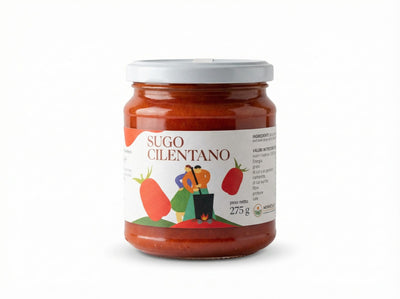
 | From our selection Cilento Tomato SauceHandmade, no preservatives. € 5,00 Discover → |
The Recipe (4 servings, 20 minutes)
Ingredients:
- 1 small can/tube tomato paste (140–200 g, triple-concentrated ideal)
- 400–500 ml water (or vegetable stock for more depth)
- 5 Tbsp olive oil
- 1 onion or 2 garlic cloves
- Pinch of sugar, salt, oregano or basil
Method:
- Sweat onion/garlic in the oil until translucent.
- The decisive step: Add the tomato paste and roast for 2–3 minutes over medium heat, stirring constantly, until it darkens and smells sweet. This roasting caramelises the sugars and turns the raw tinny note into depth—skip it and you’ll taste the difference immediately.
- Deglaze gradually with water, stirring smooth. Target consistency: like passata.
- Simmer gently for 10–15 minutes, then season. A pinch of sugar is legitimate here—unlike with good fresh tomatoes, concentrate has an acid overload.
Ratio rule of thumb: 1 part paste to 2.5–3 parts water. More water = soup, less = pizza spread.
What the paste sauce can—and can’t—do
It can: rescue a spontaneous pasta night, serve as a base for chilli and braises, replace pizza sauce (thicken it), and sit in the cupboard for months.
It can’t: replace the fruit. Tomato paste is concentrate—it lacks freshness, texture and the natural sweetness of whole tomatoes. The paste sauce is solid weekday cooking; it will never be the classic sugo from whole tomatoes. For the honest Plan B in the cupboard, there’s actually a better solution: a jar of ready-simmered Sugo Cilentano waits just as patiently, is hot in 5 minutes and brings the whole fruit with it—same spontaneity, entirely different result.
The umami cousin: paté instead of paste
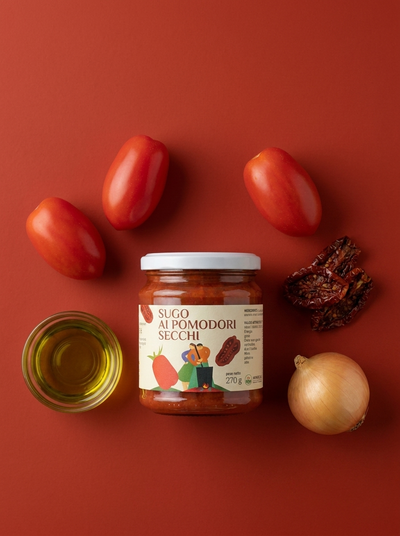
An upgrade using the same logic: paté from sun-dried tomatoes behaves like tomato paste (concentrated, spoonable, long shelf life), but brings roasted aromas, sweetness and olive oil built in. Two tablespoons whisked with pasta water make a no-cook sauce that tomato paste would need three supporting actors to achieve. If you cook “from the cupboard” often, keep both side by side.
3 pro tricks for the paste sauce
- A splash of milk or a knob of butter at the end rounds off the concentrate’s acidity (the Hazan logic).
- Simmer with a Parmigiano rind—umami top-up from the cheese drawer.
- Half a ladle of pasta cooking water at the end turns a smooth sauce into one that clings to the noodles.
Frequently asked questions
Single or triple concentrate? Triple (triplo concentrato) delivers more flavour per spoon—dilute with more water. Single concentrate needs half the water.
How long does opened tomato paste keep? Tube: weeks in the fridge. Can: transfer to a jar, cover the surface with oil, 1 week—or freeze tablespoon portions.
Can I freeze the sauce? Yes, 3 months—though its main advantage is that the ingredient itself waits indefinitely.