

Sides
Sweet-and-sour pickled gherkins: the recipe that stays crisp
Gherkins stay crisp only if the work before the jar is done well: remove the blossom end, dry-salt, add a vine leaf for tannin and never go above 85 °C. Here is the refrigerator version, with the sweet-and-sour brine in the right proportions of vinegar, sugar, mustard and dill, plus instructions to turn it into a pasteurized preserve.

Method
- Lava i cetriolini e strofinali uno a uno con una spazzolina: sulla buccia restano terra e spore di muffa. Scarta subito quelli già flaccidi, perché non torneranno sodi.
- Taglia 3-5 mm dall'estremità del fiore, quella priva dell'attacco del picciolo: è il gesto più importante della ricetta. Nel dubbio elimina entrambe le punte.
- Mescola i cetriolini con i 25 g di sale in una ciotola capiente e lasciali riposare 3 ore a temperatura ambiente, scuotendoli ogni tanto. Butta tutta l'acqua che perdono.
- Sciacquali sotto acqua fredda corrente e asciugali bene con un canovaccio: l'acqua ormai è uscita e il sale in eccesso se ne va.
- Risciacqua due vasetti da 500 ml e i loro coperchi con acqua bollente e lasciali scolare capovolti su un canovaccio pulito.
- Porta a bollore l'aceto con l'acqua, lo zucchero e i 12 g di sale, fai sobbollire 2 minuti e togli dal fuoco. Aspetta 5 minuti: bollente non si versa su un cetriolo crudo.
- Metti la foglia di vite sul fondo di ogni vasetto, sistema i cetriolini in piedi, perché verticali ne entrano di più e restano sommersi, e distribuisci fra loro senape, alloro, aneto, pepe e cipolla.
- Versa la salamoia fino a 1 cm sotto il bordo, coprendo del tutto i cetriolini, e batti il vasetto sul piano per far salire le bolle d'aria. Se un cetriolino sporge spingilo sotto: quel che resta all'asciutto ammuffisce.
- Lascia raffreddare con il coperchio soltanto appoggiato, poi chiudi bene e metti in frigorifero.
- Aspetta almeno 3 giorni prima di aprire il primo vasetto. Sono al meglio fra il decimo e il quattordicesimo giorno e si conservano 4-6 settimane in frigorifero.
Minnelea products for this recipe
The preserves used in this recipe.
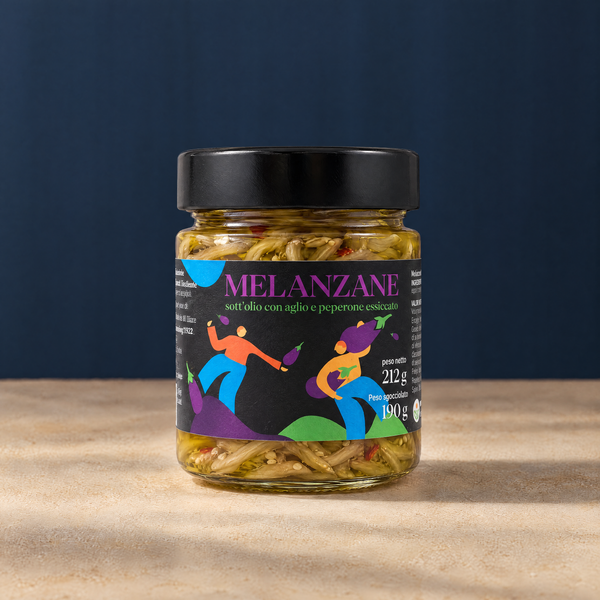
Minnelea
Artisan Eggplant in EVOO – Traditional Antipasto
€7,90
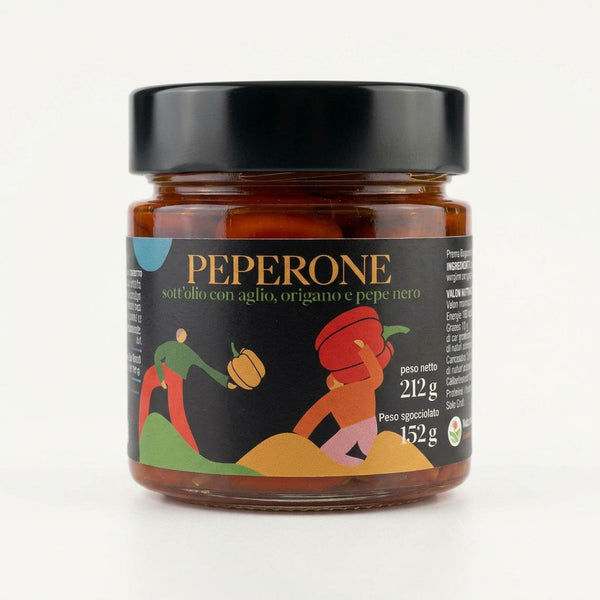
Minnelea
Artisan Peppers in EVOO – Mediterranean Antipasto
€7,90
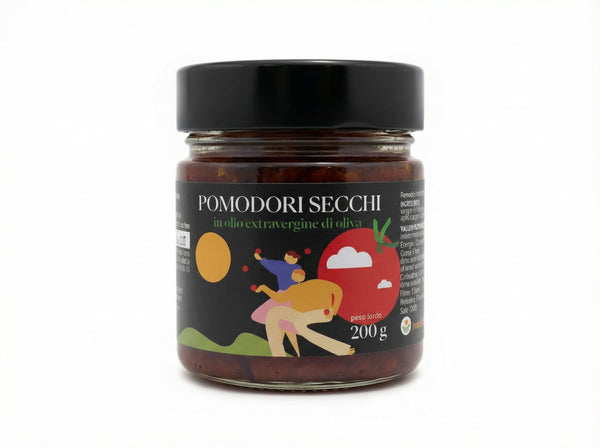
Minnelea
Artisan Sun-Dried Tomatoes in EVOO – Gourmet Antipasto
€7,90

Minnelea
Aperitivo Kit – 4 Antipasti in Olive Oil
€27,90
• Gherkins turn soft for three precise reasons: pectinase concentrated in the blossom end, which breaks down pectin between cells even inside the jar; heat above 85 °C, which makes cell walls give way; insufficient salt or salt added too late, which lets cucumber water escape into the brine, dilutes the vinegar and collapses the tissue.
• Four remedies, in this order of importance: cut 3-5 mm from the blossom end, the one without the stem attachment, and when in doubt remove both tips; always dry-salt; place a vine or horseradish leaf on the bottom for tannin; never exceed 85 °C during pasteurization.
• Dry-salting is the step missing from most recipes: 30 g salt per kilo of gherkins, 3 hours at room temperature or overnight in the refrigerator, shaking occasionally, then rinse and dry. Alternatively, a brine of 80 g salt per liter of water for 12 hours, more delicate flavor and identical effectiveness. Salt without iodine or anti-caking agents: iodine clouds the liquid.
• The tannin from vine, cherry, oak, blackcurrant or horseradish leaves inhibits the enzymes that break down pectin; one bag of unflavored black tea per liter of brine does the same job, but must be removed after boiling or it turns bitter. It remains a second line of defense, however: no leaf saves a jar with the blossom end intact.
• Which cucumbers to use: a pickling variety, not small salad cucumbers - thick skin, reduced seeds, firm flesh. The ideal size is 5-8 cm, because the brine reaches the center in a few days; 3-5 cm cornichons are firmer but take longer to clean. Use them within 24 hours of harvest: a cucumber already limp does not become firm again, and two hours in ice water only partly recover it. If you only find large cucumbers, you will not make whole gherkins but sticks: do not peel them, because the hold is in the skin, cut them in half lengthwise, remove the central seed part with a spoon, the most watery part, and make 1 cm pieces to salt four hours instead of three.
• Brine proportions: 1 part vinegar and 1 part water for the refrigerator version, 2 parts vinegar and 1 part water for the pasteurized preserve, which with 5% vinegar reaches about 3,3% acidity, well below pH 4,0. Sugar 150-250 g per liter, with classic sweet-and-sour around 200 g; salt in the brine 20 g per liter in addition to the salting salt. White wine or apple cider vinegar at 5%, never balsamic and never below 5%.
• Classic Dutch spices, per 500 ml jar: 1 teaspoon yellow mustard seeds, the signature of sweet-and-sour and, whole, they keep the liquid clear; 1 bay leaf (one, not two); 1 teaspoon dill seeds or a fresh umbel; half a small onion in rings or four pearl onions; 6 whole black peppercorns. Cloves, mace and coriander with restraint: one clove is enough for the whole jar, with two it tastes like Christmas sweets. Ground pepper clouds the liquid and garlic in acid can turn blue-green.
• Refrigerator version: no sterilization, no thermometer and maximum crispness because the gherkin never heats up. It is the one described above, and remains the best choice if the jars will be consumed within a few weeks.
• Pasteurized version, for 4 jars of 500 ml: 1,6 kg gherkins, 50 g salt for salting, and a brine of 800 ml vinegar at 5%, 400 ml water, 350 g sugar and 25 g salt, with the spices multiplied by four. Sterilized and still warm jars, boiling brine to 1 cm from the rim, clean rim and new lids, then water bath on a kitchen towel with water well above the lids: bring to 82 °C and keep between 82 and 85 °C for a full 30 minutes. Above 85 °C you lose crispness, below 80 °C you lose safety. Without a thermometer you can do 10 minutes in boiling water: still safe, but paid for in texture.
• Resting times before opening: the refrigerator version is edible after 3 days and at its best between the tenth and fourteenth; pasteurized jars should be left alone at least 4 weeks, better 6.
• Storage: refrigerator version 4-6 weeks in the refrigerator; pasteurized and closed 12 months in a cool, dark place, because light fades the color; pasteurized and opened 4 weeks in the refrigerator, always submerged and taken with a clean fork. After 24 hours, check every lid: it must be concave and must not click, and the jar that clicks goes in the refrigerator and is eaten first. Cloudy liquid from iodized salt or ground spices is harmless; with bubbles, a swollen lid or a yeasty smell, discard without tasting. Hollow gherkins are those that were too large or kept too long and usually float: eat those first.
• Allergens: contains mustard. Gluten-free, dairy-free, nut-free, egg-free; suitable for vegetarians and vegans.
• Variations: by removing the sugar and staying with 1 part vinegar and 1 part water, you get a dry table pickle; replacing half the dill with fennel seeds gives a sweeter note; four pearl onions instead of onion rings make the classic mixed jar.
• Let us say it openly: Minnelea does not produce gherkins. Making them at home costs an afternoon, a kilo of cucumbers and a bottle of vinegar, and there is no reason to put a price on that. We are a farm in Cilento and what we preserve does not go under vinegar but under oil: on a board, the two things complete each other, the acid of the gherkin cuts the fat and the vegetable in oil brings the full part.
A Minnelea recipe built around vegetables in oil: we do not make gherkins, but the aubergines and peppers we put in the jar are cooked under vacuum at low temperature, with short ingredients and no preservatives, for the same reason why here we do not exceed 85 °C - heat costs structure.
• Four remedies, in this order of importance: cut 3-5 mm from the blossom end, the one without the stem attachment, and when in doubt remove both tips; always dry-salt; place a vine or horseradish leaf on the bottom for tannin; never exceed 85 °C during pasteurization.
• Dry-salting is the step missing from most recipes: 30 g salt per kilo of gherkins, 3 hours at room temperature or overnight in the refrigerator, shaking occasionally, then rinse and dry. Alternatively, a brine of 80 g salt per liter of water for 12 hours, more delicate flavor and identical effectiveness. Salt without iodine or anti-caking agents: iodine clouds the liquid.
• The tannin from vine, cherry, oak, blackcurrant or horseradish leaves inhibits the enzymes that break down pectin; one bag of unflavored black tea per liter of brine does the same job, but must be removed after boiling or it turns bitter. It remains a second line of defense, however: no leaf saves a jar with the blossom end intact.
• Which cucumbers to use: a pickling variety, not small salad cucumbers - thick skin, reduced seeds, firm flesh. The ideal size is 5-8 cm, because the brine reaches the center in a few days; 3-5 cm cornichons are firmer but take longer to clean. Use them within 24 hours of harvest: a cucumber already limp does not become firm again, and two hours in ice water only partly recover it. If you only find large cucumbers, you will not make whole gherkins but sticks: do not peel them, because the hold is in the skin, cut them in half lengthwise, remove the central seed part with a spoon, the most watery part, and make 1 cm pieces to salt four hours instead of three.
• Brine proportions: 1 part vinegar and 1 part water for the refrigerator version, 2 parts vinegar and 1 part water for the pasteurized preserve, which with 5% vinegar reaches about 3,3% acidity, well below pH 4,0. Sugar 150-250 g per liter, with classic sweet-and-sour around 200 g; salt in the brine 20 g per liter in addition to the salting salt. White wine or apple cider vinegar at 5%, never balsamic and never below 5%.
• Classic Dutch spices, per 500 ml jar: 1 teaspoon yellow mustard seeds, the signature of sweet-and-sour and, whole, they keep the liquid clear; 1 bay leaf (one, not two); 1 teaspoon dill seeds or a fresh umbel; half a small onion in rings or four pearl onions; 6 whole black peppercorns. Cloves, mace and coriander with restraint: one clove is enough for the whole jar, with two it tastes like Christmas sweets. Ground pepper clouds the liquid and garlic in acid can turn blue-green.
• Refrigerator version: no sterilization, no thermometer and maximum crispness because the gherkin never heats up. It is the one described above, and remains the best choice if the jars will be consumed within a few weeks.
• Pasteurized version, for 4 jars of 500 ml: 1,6 kg gherkins, 50 g salt for salting, and a brine of 800 ml vinegar at 5%, 400 ml water, 350 g sugar and 25 g salt, with the spices multiplied by four. Sterilized and still warm jars, boiling brine to 1 cm from the rim, clean rim and new lids, then water bath on a kitchen towel with water well above the lids: bring to 82 °C and keep between 82 and 85 °C for a full 30 minutes. Above 85 °C you lose crispness, below 80 °C you lose safety. Without a thermometer you can do 10 minutes in boiling water: still safe, but paid for in texture.
• Resting times before opening: the refrigerator version is edible after 3 days and at its best between the tenth and fourteenth; pasteurized jars should be left alone at least 4 weeks, better 6.
• Storage: refrigerator version 4-6 weeks in the refrigerator; pasteurized and closed 12 months in a cool, dark place, because light fades the color; pasteurized and opened 4 weeks in the refrigerator, always submerged and taken with a clean fork. After 24 hours, check every lid: it must be concave and must not click, and the jar that clicks goes in the refrigerator and is eaten first. Cloudy liquid from iodized salt or ground spices is harmless; with bubbles, a swollen lid or a yeasty smell, discard without tasting. Hollow gherkins are those that were too large or kept too long and usually float: eat those first.
• Allergens: contains mustard. Gluten-free, dairy-free, nut-free, egg-free; suitable for vegetarians and vegans.
• Variations: by removing the sugar and staying with 1 part vinegar and 1 part water, you get a dry table pickle; replacing half the dill with fennel seeds gives a sweeter note; four pearl onions instead of onion rings make the classic mixed jar.
• Let us say it openly: Minnelea does not produce gherkins. Making them at home costs an afternoon, a kilo of cucumbers and a bottle of vinegar, and there is no reason to put a price on that. We are a farm in Cilento and what we preserve does not go under vinegar but under oil: on a board, the two things complete each other, the acid of the gherkin cuts the fat and the vegetable in oil brings the full part.
A Minnelea recipe built around vegetables in oil: we do not make gherkins, but the aubergines and peppers we put in the jar are cooked under vacuum at low temperature, with short ingredients and no preservatives, for the same reason why here we do not exceed 85 °C - heat costs structure.