
The Best Ready-Made Pasta Sauces: How to Choose by Reading the Label
Share
Ready-made sauce has a bad reputation that it has only partially earned. From one jar to the next, the difference is no small matter: it is the difference between real tomato cooked once and reconstituted concentrate mixed with water, thickeners, and coloring. The problem is that from the shelf, the two products look alike. Here is how to tell them apart without tasting.
Four Signs That Separate a Good Sauce from a Mediocre One
1. The First Ingredient
It must be tomato, not "tomato concentrate" and not "reconstituted tomato pulp." Concentrate is tomato that has had its water removed for cheaper transport and storage; adding water back during production never returns it to its original state. It is not an illegitimate ingredient, but if it comes first on the list, you know what kind of sauce you are holding.
2. The Length of the List
A well-made sauce has five or six ingredients: tomato, oil, salt, garlic or onion, herbs. Every entry beyond the sixth is almost always a technological function — thickener for consistency, acidity regulator for stability, sugar to compensate for unripe tomato, yeast extract or flavoring to provide savoriness that the tomato alone cannot deliver.
Pay particular attention to added sugar: in sauce, it serves to mask tomato harvested unripe or of poor quality. A ripe, seasonal tomato carries its own sweetness.
3. Which Oil
"Sunflower oil" or the generic "vegetable oil" signal a cost-cutting choice. Extra virgin olive oil costs many times more and changes the result in the pan, because in sauce, oil is not a detail: it is the vehicle of flavor.
4. The Color and Separation in the Jar
A uniform, brilliantly bright red, identical in every jar of the batch, tends to indicate correction. An artisan sauce has a more muted, slightly variable color, and often shows a small separation of oil on the surface: this is not a flaw, but the absence of emulsifiers.
There Is No "Best": There Is the Best for That Dish
This is the most common mistake in rankings. A sauce should be chosen according to its purpose:
- For everyday pasta, you need a balanced, not overly assertive sauce that will not tire the palate. A simple tomato and basil is unbeatable.
- For homemade pizza, you need a sauce that is not too thick and not too seasoned, so it does not burn in the oven.
- For a quick dish with character — penne all'arrabbiata, spaghetti late at night — you need heat that deliberately covers.
- As a base to enrich (quick ragù, parmigiana, baked pasta), you need a concentrated sauce that can stand up to the addition of other ingredients without disappearing.
Those who seek one good jar for everything almost always end up with a product that is mediocre at everything.
The Practical Test: Taste It Cold
The quickest way to judge a ready-made sauce is to taste a teaspoon at room temperature, before heating it. Heat and pasta forgive much; the cold spoon does not. If cold you taste the tomato, it will work beautifully in the pan. If you taste mostly salt, acidity, or a vaguely herbaceous aroma that belongs to no specific herb, you have your answer.
What "Artisan" Means on a Sauce
The word is unprotected, so only what lies behind it matters. The useful questions are three: where does the tomato come from, how much time passes between harvest and processing, and was it cooked only once. A tomato processed fresh within hours of harvest and cooked once is a different product from one that has undergone concentration, storage, and reconstitution. We explored this further in our article on artisan ready-made sauce.
Our Four Sauces, and What They Are For
For transparency on our method: Italian tomatoes hand-peeled and processed fresh in small batches, extra virgin olive oil, simple aromatics, no preservatives, coloring, or added thickeners. The ingredient list is short because there is nothing to correct.
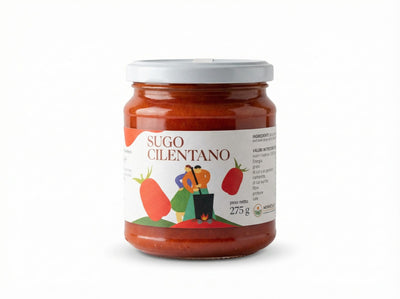
- Sugo Cilentano — the everyday sauce, balanced, works with any pasta shape.
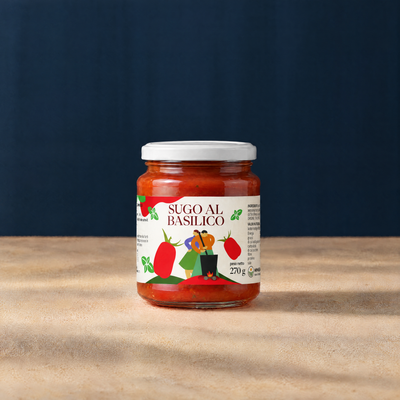
- Sugo al Basilico — the most delicate, excellent on homemade pizza as well.
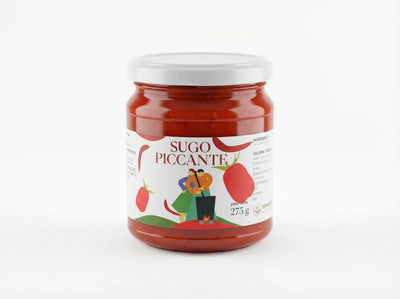
- Sugo all'Arrabbiata — with chili, for those who want character.
- Sugo ai Pomodori Secchi — the most intense, ideal as a base to enrich.
Find them all in our artisan ready-made sauce collection, with 24-48 hour shipping.
Frequently Asked Questions
How far does one jar of sauce go? A standard jar dresses approximately 3-4 portions of pasta. If you use much less, the sauce is likely too concentrated or too salty: a good sauce is meant to be used generously.
Is ready-made sauce or passata to be seasoned better? It depends on time. Passata gives more control but requires at least twenty minutes of cooking and a soffritto; ready-made sauce is designed for the five minutes while the pasta boils. A good ready-made sauce beats a passata cooked hastily and poorly.
How long does an open jar last? In the refrigerator, covered, about 5 days. If you cover it with a thin layer of oil on the surface, it lasts a day or two longer. It freezes beautifully in portions.