
Jam zonder toegevoegde pectine en met veel fruit: het verschil proef je
Jam zonder toegevoegde pectine bindt alleen door het fruit en het koken: geen geleermiddel in poedervorm, geen shortcuts. Het resultaat is een zachte textuur en een smaak die van het fruit is, niet van de gel die het bijeenhoudt. Dit verandert er echt — en daarom loont het de pot om te draaien en het etiket te lezen.
 |
Uit ons assortiment
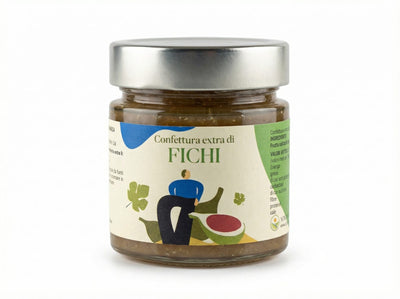
VijgenjamHandgemaakt, zonder conserveringsmiddelen.
€ 7,90
Ontdek →
|

Wat is pectine en waarom zit het overal in
Pectine is een vezel die van nature in fruit zit, vooral in appels en citrusvruchten. Op zich geen gebrek: het is het gebruik dat het verschil maakt. De industrie voegt pectinepoeder toe om het product in enkele minuten te laten opstijven: minder fruit, minder kooktijd, kortere productietijden, altijd identieke textuur. Daarom hebben zoveel soorten jam — ook van merken die zich als ambachtelijk presenteren — dezelfde compacte, gelatineuze textuur en een smaak die meer aan snoep doet denken dan aan fruit.
En daar zit het ongemakkelijke punt: als een "ambachtelijke" jam toegevoegde pectine op het etiket heeft en een ingrediëntenlijst uit een industrieel handboek, wat is er dan nog ambachtelijk aan, behalve de prijs?
Hoe jam zonder toegevoegde pectine bindt
Op de oudste manier die er is: met meer fruit en met tijd. Het langzame koken in kleine batches laat het water verdampen en concentreert de natuurlijke suikers en de pectine die al in het fruit zit, tot het geheel vanzelf bindt. Het vraagt meer grondstof, meer uren en meer aandacht — fruit is nooit gelijk van oogst tot oogst, en wie kookt moet dat aanvoelen. Het is de methode die we voor alle jam en marmelade van Minnelea gebruiken: Italiaans fruit, suiker, langzaam koken. Verder niets.

Het verschil in de pot
- Textuur: zacht, smeerbaar, met herkenbare stukjes fruit — geen compacte gel die je met het lepeltje snijdt.
- Smaak: meer fruit in de pot betekent dat de dominante smaak het fruit is, niet de gegeleerde suiker.
- Kleur en natuurlijke variatie: elke batch kan licht verschillen, omdat fruit verschilt. Een teken van echtheid, geen gebrek.
- Etiket: kort. Fruit en suiker. Lees je geleermiddel, zuurteregelaar en glucose-fructosestroop, dan heb je een ander soort product voor je.
Zo herken je hem bij aankoop
- Draai de pot om: de ingrediëntenlijst zegt alles in drie regels.
- Kijk naar het vermelde fruitgehalte: hoe hoger, hoe meer de smaak van fruit zal zijn.
- Kantel de pot: jam zonder toegevoegde pectine beweegt langzaam, industriële gel blijft stokstijf.
- Bij het proeven: hij moet smaken naar het fruit waaruit hij is geboren, met zijn natuurlijke frisheid.
Waar te vinden
Alle jam en de citroenmarmelade van Minnelea worden gemaakt zonder toegevoegde pectine, in kleine batches, met Italiaans fruit. Je vindt ze in de webshop — en heb je een delicatessenwinkel, kaaswinkel of wijnwinkel, dan ook in de groothandel met exclusiviteit per regio.
Veelgestelde vragen
Is toegevoegde pectine slecht?
Nee, het is een veilig en toegelaten ingrediënt. De kwestie is niet veiligheid maar resultaat: toegevoegde pectine maakt het mogelijk minder fruit en minder kooktijd te gebruiken, en dat proef je in smaak en textuur.
Waarom is jam zonder toegevoegde pectine duurder?
Omdat er meer fruit in zit en er langer gekookt wordt in kleine batches: meer grondstof en meer tijd per pot.
Zijn marmelade en jam hetzelfde?
Volgens de Europese regels is marmelade alleen van citrus; de rest is jam. Inhoudelijk verandert er niets: beide kunnen met of zonder toegevoegde pectine worden gemaakt.