
Cilento Fine Foods for Delicatessens and Gastronomy
Those seeking genuine Cilento fine foods for their range will find the most reliable path is ordering directly from a verified producer. As an Azienda Agricola rooted in Cilento, Minnelea delivers handcrafted antipasti, confetture, and sauces with full traceability, shipped directly to Germany. Alternatively, specialised premium importers with proven DOP or Slow Food portfolios offer a second credible route, as do authorised distributors with direct producer verification.
Three Immediate Steps for Buyers:
- Request certification: Demand written confirmation of DOP (PDO) or IGP status from your supplier, and verify the consortium number.
- Insist on batch numbers: Every delivery must carry a batch or lot number matching the manufacturer's technical data sheet.
- Order samples: Always request a sample shipment with analysis certificate and allergen list before placing your first bulk order.
Slow Food Presidia such as Menaica anchovies or the white fig of Cilento are produced in limited quantities. Those wishing to secure these specialities for their permanent range should guarantee availability by pre-ordering directly from the producer.
Table of Contents
- Why Cilento Fine Food Is a Strategic Choice for Your Business
- Which Cilento Products Prove Their Worth in Range and on the Menu
- How to Properly Verify Certificates, Seals and Labels
- Five Verification Questions Against Counterfeits and "Italian Sounding"
- How German Retailers and Hospitality Professionals Source Reliably
- Packaging Formats, Shelf Life and Margin Expectations
- Key Insights
- Carmine on What Truly Defines Cilento Fine Food in the Premium Market
- Minnelea: Handcrafted Cilento Fine Food, Direct to Your Business
- Further Resources for Sourcing and Compliance
Why Cilento Fine Food Is a Strategic Choice for Your Business
Cilento is no ordinary provenance. Ancel Keys, the founder of Mediterranean diet research, lived and worked here for decades. The region is considered one of the birthplaces of Mediterranean eating, and scientific reviews confirm the connection between this dietary pattern and measurable health benefits. For fine food retailers and hospitality professionals, this is no academic detail—it is a tangible selling point.
"Cilento is one of the few regions in Italy where the Mediterranean diet is still lived. The combination of olive oil, legumes, fresh vegetables and fish has a tradition stretching back centuries." Portanapoli on the food culture of Cilento
Authenticity translates directly into margin in the premium segment. Products with verified regional origin, artisan production and Slow Food accreditation justify retail prices that industrial mass production cannot achieve. For concept stores and delicatessens differentiating through range depth, Cilento specialities represent a strategic investment, not a niche decision.
Which Cilento Products Prove Their Worth in Range and on the Menu
The core range of Cilento fine foods is broader than many buyers expect. Here are the essential product categories with specific usage guidance:
- Extra Virgin Olive Oil (EVOO): Cold-pressed from local cultivars such as Rotondella and Pisciottana; harvesting and pressing methods in Cilento follow strict quality standards with low free acidity thresholds. Ideal as table oil and for tasting.
- Regional Cheese Specialities: Mozzarella in Mortella (wrapped in myrtle leaves) is a handcrafted speciality with pronounced seasonal character; Caciocavallo Podolico as an aged product for cheese boards.
"Products like Menaica anchovies and the white fig are not mass-produced goods. Their limited availability is not a disadvantage—it is the strongest selling point." Nuovo Cilento on typical products of the region
Learn more about typical Cilento products and their history on the Minnelea blog.
How to Properly Verify Certificates, Seals and Labels
Three seals dominate the market for protected origin products from Cilento. The EU regulation on geographical indications distinguishes them clearly:
| Seal | Meaning | Verification Point |
|---|---|---|
| DOP / PDO | All production phases within the origin region | Consortium number on label |
| IGP / PGI | At least one production phase within the region | Verify registration number |
| Slow Food Presidium | Artisan tradition, endangered variety/method | Presidium list on slowfood.com |
For B2B purchasing, the following documents are mandatory: manufacturer's technical data sheet, analysis certificate (acidity for olive oil, microbiological values for antipasti), complete allergen list per EU Food Information Regulation, and batch or lot number for each delivery.
Pro tip: Check the label distinction between "Produced in Italy" and "Packed in Italy". Only the former guarantees that raw materials and processing actually originate from the source region. The EU Food Information Regulation (EU) No. 1169/2011 governs this labelling obligation bindingly.
Slight variations in colour and consistency between batches are not quality defects in natural products, but rather marks of authenticity from traditional production. Explaining this to your customers builds trust rather than raising doubts.
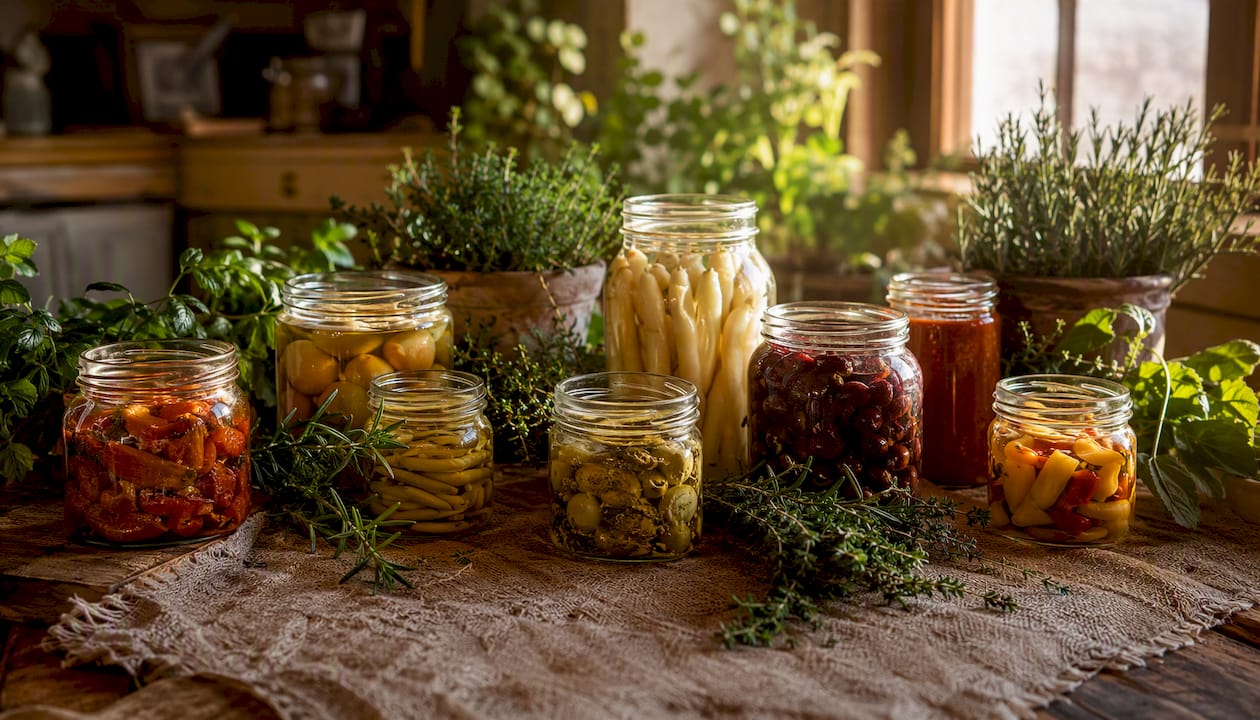
In-depth information on DOP and IGP seals from Southern Italy is available on the Minnelea blog.
Five Verification Questions Against Counterfeits and "Italian Sounding"
"Italian Sounding" describes products that suggest Italian origin through names, colours or imagery without possessing it. Here is how to protect yourself:
- Is the consortium number present? DOP and IGP products carry a registered consortium number. If absent, the protected designation is unverifiable.
- Is the trade name correct? "Extra Virgin Olive Oil" is a legally defined category with quality thresholds. Missing the word "extra" indicates a lower grade.
- Is raw material origin declared? For olive oil, the origin of the olives must be stated. "Blend of EU olive oils" is not Cilento oil.
- Manufacturer or importer/packer? The label must name the food business operator. A German packer with an Italian-sounding brand name is not a producer.
- Is the price plausible? Handcrafted antipasti in genuine EVOO at unusually low prices per 180 ml jar are a warning signal. Premium products have production costs reflected in their price.
Warning signals at a glance:
- Label in only one language without Italian manufacturer address
- Missing best-before date or batch number
- Phrasing such as "Italian style" or "recipe from the South"
- Missing allergen list despite EU legal requirement
Ask your supplier directly upon first enquiry: "Can you send me the technical data sheet and consortium number for this product?" Reputable manufacturers respond within 24 hours.
How German Retailers and Hospitality Professionals Source Reliably
Three main routes are available, each with a different risk profile.
Direct purchase from the producer offers maximum traceability and often exclusivity for a region or range. The effort is higher: language barriers, minimum order quantities (MOQ) direct from the producer, customs clearance and logistics fall to the buyer. For businesses without experience in direct import from Italy, this is a genuine entry barrier.
Specialised premium importers handle customs, warehousing and quality control. The downside: product selection is pre-filtered, and margin is shared across more stages.
Brand suppliers like Minnelea combine both advantages: direct producer, own production in Cilento, ordering through a German online shop with clear product documentation and B2B terms.
Pro tip: Always agree a trial order with written quality assurance upon first B2B contact. Establish delivery cycles, MOQ, packaging specifications and payment terms in writing before placing an annual order.
For direct import from Italy, the EU Food Information Regulation serves as the compliance framework: German-language labelling, complete allergen declaration and correct nutritional table are mandatory for the German market.
Packaging Formats, Shelf Life and Margin Expectations
| Product Type | Typical Pack Size | Best Before | Storage |
|---|---|---|---|
| Antipasti in EVOO | 180 ml, 314 ml | 24 months | Cool, dark, dry |
| Extra Virgin Olive Oil | 250 ml | 24 months | Dark |
| Confetture/Spreads | 100 g, 250 g | 24 months | Dry, refrigerate after opening |
| Dried Figs | — | — | Dry, airtight |
| Anchovies (Menaica) | 100 g | — | Cool, dark |
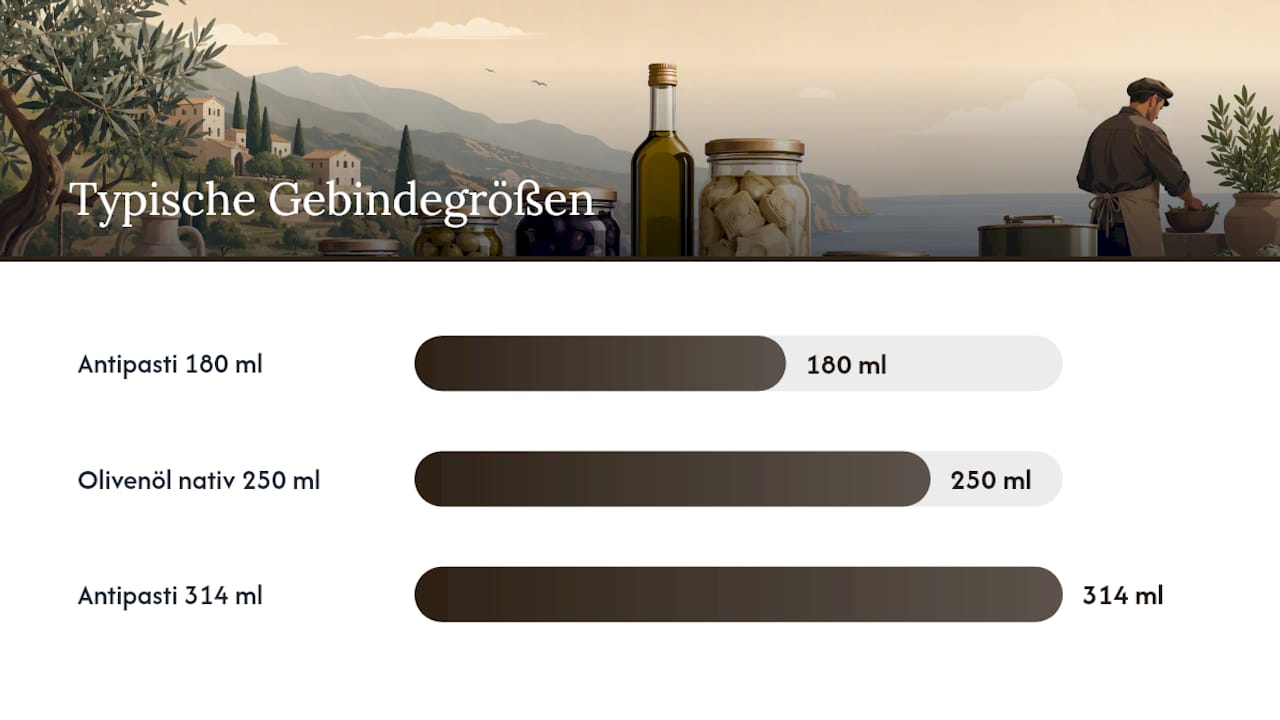
For premium products from Cilento, retail prices in the specialist trade are realistic depending on product type and pack size. Trade margins in specialist retail typically fall between 40–60%; in hospitality, ingredients are calculated with higher markups.
Important storage notes:
- Extra Virgin Olive Oil loses aroma through light and heat; dark storage is not a recommendation but a quality obligation.
- Refrigerate antipasti jars after opening and consume within 5–7 days.
- Apply first-in-first-out (FIFO) consistently, especially with seasonally limited batches.
Key Insights
Genuine Cilento fine food is recognised by buyers through DOP or Slow Food seals, batch numbers and the "Produced in Italy" statement on the label.
| Topic | Details |
|---|---|
| Sourcing route | Direct purchase from verified producers like Minnelea secures traceability and quality documentation. |
| Certificate verification | Request DOP/PDO, IGP/PGI and Slow Food Presidium status in writing; verify consortium number. |
| Counterfeit protection | Check "Produced in Italy" vs. "Packed in Italy"; missing batch number is a clear warning signal. |
| Storage | Store Extra Virgin Olive Oil in darkness; apply FIFO consistently with seasonally limited batches. |
| Minnelea | Minnelea delivers handcrafted antipasti, confetture and sauces from Cilento directly to Germany, with B2B terms and sample ordering. |
Carmine on What Truly Defines Cilento Fine Food in the Premium Market
Many retailers search for the next "authentic" product and end up with well-marketed mass goods bearing a Southern Italian label. Cilento works differently. The region has not built a strong export tradition because its producers long managed without one. What arrives today as fine food in German shops is often the result of decades of artisan continuity, not marketing decisions.
What convinces me about Cilento products: they carry their origin not as decoration but as a production condition. A jar of Menaica anchovies is not "inspired by" a tradition. It is the tradition. For buyers who can explain this to their customers, this is an advantage no wholesaler can replicate.
Those with B2B questions about range, sample orders or delivery conditions will find a direct contact at Minnelea.
Minnelea: Handcrafted Cilento Fine Food, Direct to Your Business
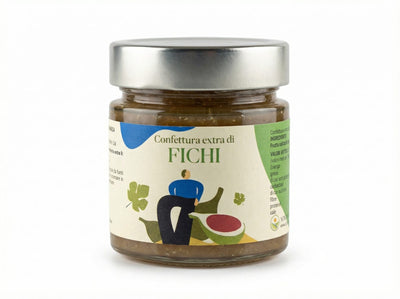
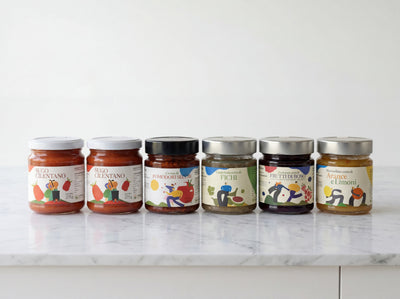
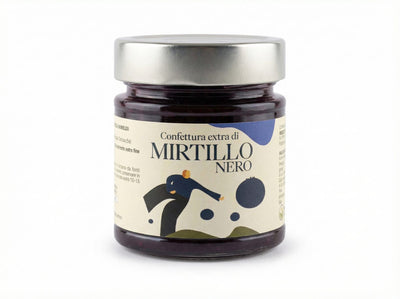
Minnelea produces in small batches in Cilento and delivers directly to Germany. The range includes Melanzane sottolio in Extra Virgin Olive Oil, Peperoni sottolio, handcrafted confetture from white figs and other regional fruits, and Mediterranean sauces. Every product comes with complete manufacturer documentation, batch number and allergen list.
For B2B buyers, Minnelea offers sample orders, flexible packaging options and delivery to Germany through its own online shop. No minimum order value for the first sample delivery. Contact us through the shop, state your range objectives, and we will send you a product selection with technical data sheets. The next step is an order directly at minnelea.com.
Further Resources for Sourcing and Compliance
| Source | Purpose | Use in Purchasing Process |
|---|---|---|
| EU Commission: Geographical Indications | DOP/IGP definitions and register database | Verify consortium numbers and protected status |
| EUR-Lex: Regulation (EU) No. 1169/2011 | Legal framework for food labelling | Clarify labelling obligations for the German market |
| Slow Food International | Presidium list and criteria | Verify Slow Food status of a product |
| Nuovo Cilento Cooperative | Regional product list with seasonal guidance | Range planning and direct contact with producers |
| Minnelea Blog | Product backgrounds, recipes, ingredient guides | Selling points and storytelling for the point of sale |
For a deeper introduction to ingredients of Southern Italian cuisine and the particularities of Cilento products, we recommend the Minnelea blog series. There you will also find backgrounds on individual products that can be used directly as shelf talkers or menu descriptions.
Recommendation
- Discovering Cilento Specialties: The Gourmet Guide – Azienda Agricola Minnelea
- Fine Food Range Planning Explained: A Guide for Retailers – Azienda Agricola Minnelea
- What to Eat in Cilento: Typical Specialities – Azienda Agricola Minnelea
- What Is Cilento Cuisine? Tradition, Ingredients & Signature Dishes – Azienda Agricola Minnelea