
How to Taste Italian Confettura Like a Pro: The Artisan Guide
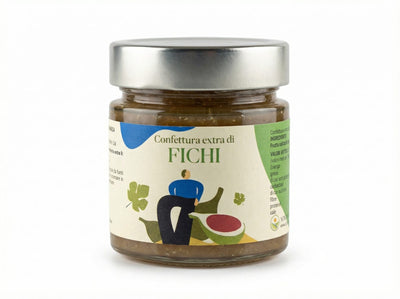
 | From our selection Fig JamHandmade, no preservatives. € 7,90 Discover → |
Tasting Italian confettura properly means engaging every sense to grasp the full depth and authenticity of this handmade treasure. A confettura from Cilento or a blood-orange marmellata from San Vicario is no ordinary breakfast spread. It is a mirror of its region, its fruit, and the care taken in its creation. Once you understand the difference between confettura and marmellata and know what to look for, a new dimension of pleasure opens up.
What defines authentic Italian confettura?
Authentic Italian confettura is judged by three pillars: fruit content, origin of raw materials, and production method. These factors decide whether a jar is true artisan quality or merely meets industrial standards.
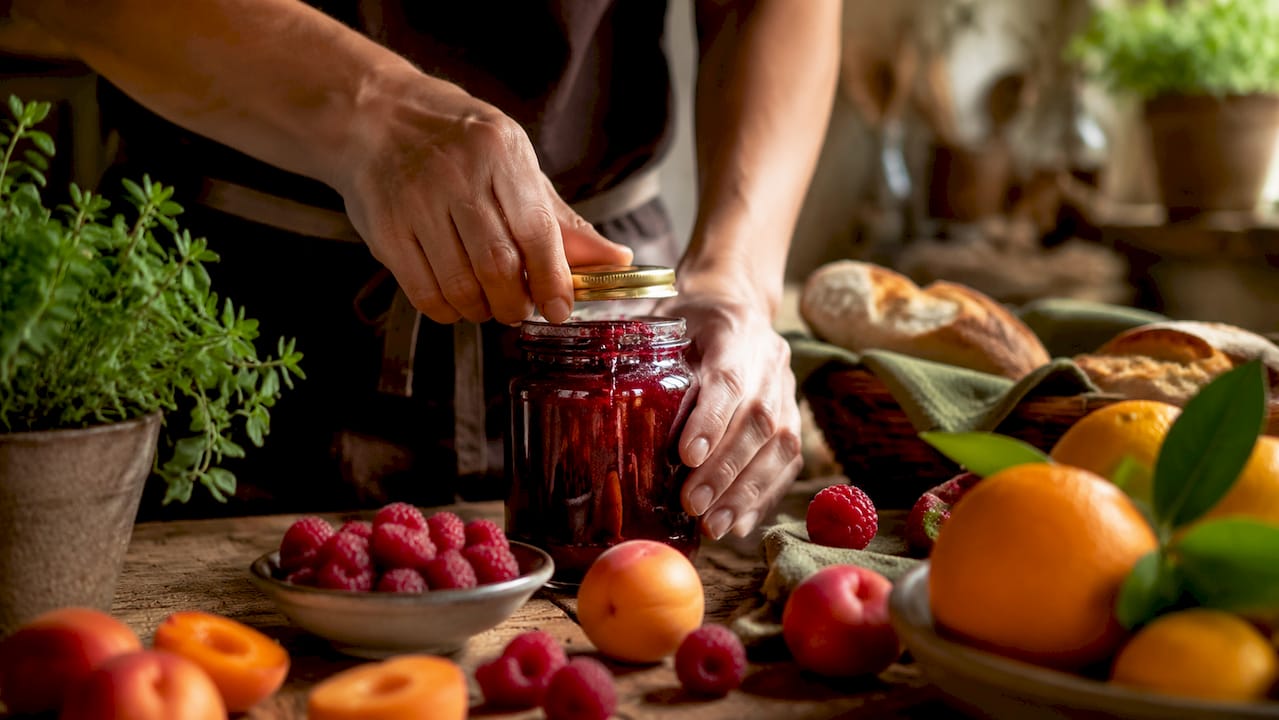
EU directive 2024/1438 requires "extra" confetture to contain at least 45 g of fruit per 100 g. Artisan producers far exceed this, often reaching 60–70 g or even 120 g. The higher the fruit content, the more vivid and honest the flavour.
Another hallmark is the use of fresh—not frozen—fruit. Over 90 % of industrial products rely on frozen raw material, dulling aroma and nutrients. Freshly processed fruit delivers lively, multi-layered notes you notice immediately.
Regional specialties—Sicilian blood oranges, Etna apples—carry unmistakable terroir. The flavour spectrum of Italian confetture reflects not only the fruit but also the soil, climate, and traditional recipes of each area.
Key quality markers at a glance:
- Fruit content in premium jars is well above the legal 45 g/100 g.
- Fruit base is fresh, never frozen, for a brighter aromatic profile.
- Production method uses open copper kettles that preserve aroma better than industrial shortcuts.
- Provenance of fruit from defined areas—Sicily, Campania, Cilento—is a reliable authenticity cue.
- Distinction between confettura (all fruit except citrus) and marmellata (citrus only) is legally clear and sensorially obvious.
Pro tip: Read the label carefully. If fruit is first on the ingredient list and sugar is modest, the jar delivers on its promise. Minnelea prints the fruit percentage right on the label.
How should I prepare for a proper tasting?
Preparation determines whether you truly taste the confettura or are distracted by outside influences. When sampling an Italian confettura, keep a few simple rules in mind.
Serving temperature is crucial. Strawberry or fig confetture open up best at room temperature, while citrus marmellate can be served slightly chilled to soften the peel’s bitterness. Too cold and the aromas stay locked; too warm and freshness fades.
Neutral palate cleansers—plain white bread or still water—ensure no competing flavours skew your judgement. Coffee, perfume, or strong spices nearby will distort perception, so keep the setting calm and neutral.
For texture analysis, use a small spoon or narrow knife to test consistency directly. Transparency and colour intensity are best judged in daylight: a vivid red strawberry or deep amber lemon already signals quality. A brownish hue suggests over-cooking or poor fruit.
Pro tip: Never taste more than five varieties in a row. Palate fatigue sets in quickly; after the sixth sample you lose the ability to detect nuance. Pause between jars and sip still water.
How to taste Italian confettura step by step
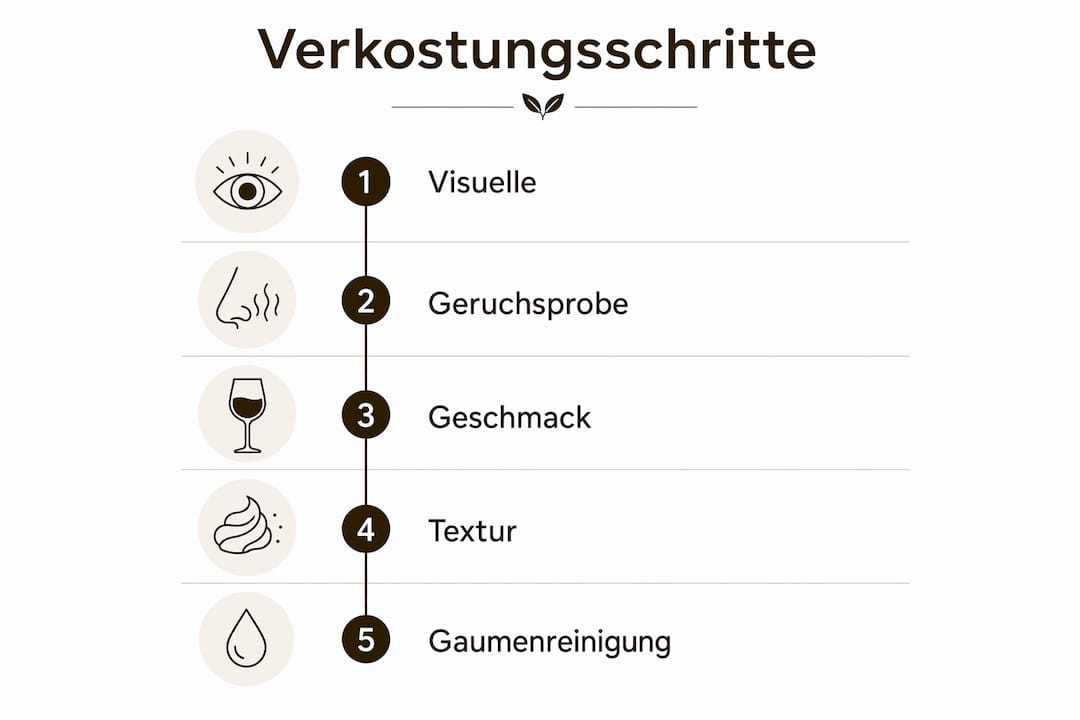
Professional tasting unfolds in four clear phases—visual, olfactory, gustatory, and textural—that together create a complete sensory picture. Master the sequence and you will experience Italian confettura with new eyes, nose, and palate.
Step 1: Visual assessment
Look at the confettura first in the jar, then on the spoon. Colour should be bright and translucent, never dull or cloudy. Fresh, high-quality products show luminous hues. Fruit pieces or an even texture without discolouration are good signs; brown or oxidised tones point to over-cooking or inferior fruit.
Step 2: Aroma test
Hold the spoon just beneath your nose and inhale gently. A fine product smells freshly fruity, almost like the ripe fruit itself. Cooked or caramel notes may be present in artisanal jars but should never mask the fruit. Citrus marmellate such as San Vicario’s Sicilian orange carry delicate peel bitterness—an unmistakable sign of true marmellata.
Step 3: Taste
Place a small amount on your tongue and let it spread before swallowing. First assess sweetness: is it balanced or one-dimensional? Next, notice acidity, which in good confetture enlivens the sweetness and creates a vibrant equilibrium. The finish reveals quality most clearly: a lingering, fruity echo seconds after swallowing signals high fruit content and gentle processing.
Step 4: Texture
Spread the confettura on plain white bread and observe. A good product spreads evenly without running or breaking. Chunky textures show real fruit pieces; a silky feel indicates puréed fruit. Professionals also use the cold-plate test to check set: if a drop holds its shape, the consistency is spot-on.
Pro tip: For savoury confetture such as Cipolla Tropea (red onion), the approach shifts. Taste the sweet-acid balance deliberately alongside a sliver of aged Pecorino; the confettura only reveals its full potential in this pairing.
How to pair Italian confettura with other foods
The best pairing is one where neither the confettura nor its partner dominates; they lift each other. When pairing confettura with cheese, follow a simple rule: sweet meets salty, fruity meets savoury.
The table below shows tried-and-tested matches:
| Confettura | Recommended pairing | Why it works |
|---|---|---|
| Citrus marmellata (Sicily) | Brioche, ricotta, mascarpone | The peel’s bitterness enlivens the creaminess of the cheese |
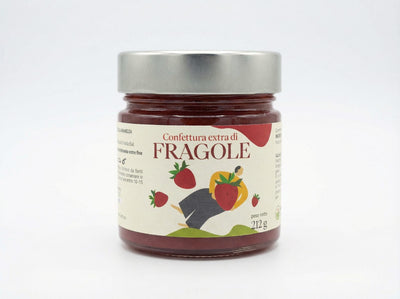
| Strawberry confettura (Cilento) | White bread, burrata, vanilla ice cream | The berry’s freshness harmonises with mild, creamy notes |
| Fig confettura | Gorgonzola, Taleggio, walnut bread | The fig’s sweetness softens the blue cheese’s bite |
| Cipolla Tropea (savoury) | Aged Pecorino, salami, meat terrine | The onion’s sweetness balances the saltiness of cured products |
| Apricot confettura | Fontina, Manchego, puff-pastry | The apricot’s bright acidity lifts the nutty notes of the cheese |
Savoury confetture such as Tropea red onion shine alongside aged cheese and salami. They speak to different senses than sweet versions and are perfect on a cheese board or antipasti spread.
Sweet confetture also have a place in the kitchen: fig or apricot versions refine game sauces, fill crostate, or melt over a warm cheese crostino to a glossy caramel finish. The confettura sings in the kitchen, not just at breakfast.
Pro tip: Always serve confettura and cheese at room temperature. Cold cheese withholds its aromas and the pairing falls flat. Remove both from the fridge at least 30 minutes before serving.
Common tasting mistakes to avoid
The most frequent error is serving temperature. Too cold and the confettura’s aromas stay locked, leaving only sweetness without depth. Too warm and freshness is lost.
Another misconception is expecting extreme sweetness as a quality marker. Artisan products aim for balanced sweetness, not a one-dimensional sugar bomb. Knowing the exact fruit percentage signals premium craft; expect a more complex flavour structure.
Common pitfalls that diminish enjoyment:
- Too much bread at once masks the confettura’s character and weighs down the palate.
- Confusing marmellata and confettura sets false expectations: if you don’t expect bitterness in an orange marmellata, you’ll be surprised.
- Tasting too many jars in succession overwhelms the palate and makes nuanced judgement impossible.
- Aromatic distractions such as coffee, perfume, or spices nearby will skew perception.
"A confettura that tastes too sweet has too little fruit. One that lacks sweetness was poorly made. Balance is the craft."
Key takeaways
To taste Italian confettura properly you need a clear sequence, a neutral palate, and knowledge of fruit content, production method, and the distinction between confettura and marmellata.
| Topic | Details |
|---|---|
| Fruit content as quality signal | Artisan confetture far exceed the legal minimum of 45 g/100 g, often reaching up to 120 g. |
| Four tasting phases | Visual check, aroma test, taste, and texture analysis together create a complete picture. |
| Temperature & preparation | Room temperature and a neutral palate cleanser are prerequisites for clear sensory evaluation. |
| Confettura vs. marmellata | Marmellata is citrus-based with peel bitterness; confettura covers all other fruits and is legally distinct. |
| Cheese pairings | Sweet confetture pair with mild cheeses, savoury versions with aged Pecorino or Gorgonzola. |
What years of tasting have taught me
Once you have compared an artisan strawberry confettura from Cilento with a supermarket jar, the difference is not subtle—it is fundamental.
I remember my first encounter with a 130 % fruit strawberry confettura. The aroma alone felt like walking through a June strawberry field. The colour glowed deep ruby, almost translucent. And the taste? A vivid acidity carrying the sweetness, and a finish that lingered for minutes. No industrial product can replicate that because it lacks the time and the fruit.
What continually surprises me: many gourmets I know underestimate savoury confetture. A spoonful of Cipolla Tropea on aged Pecorino is one of the most intense flavour experiences in Italian cuisine. The onion’s sweetness caramelises on the tongue, the cheese adds salt and spice, and the result is unforgettable harmony.
My honest advice: don’t start with five jars at once. Take a single confettura, give it time and attention, and let it tell you where it comes from. That is the heart of tasting.
— carmine
Discover artisan confetture from Cilento
Minnelea makes its confetture and marmellate in small batches on the family estate in Cilento, southern Italy. Each variety is built from fresh, regionally selected fruit and produced without industrial shortcuts.

If you want to experience Italian confettura at the highest artisan level, Minnelea offers a curated range: from strawberry confettura at 130 % fruit to a broad selection of artisan confetture and handmade marmellate. Perfect as gifts for food lovers, additions to a cheese board, or the foundation for your own home tasting.
FAQ
What is the difference between confettura and marmellata?
Marmellata is citrus-only and carries the characteristic bitterness of the peel. Confettura is made from all other fruits and is legally distinct from marmellata.
How much fruit should a good confettura contain?
EU law stipulates a minimum of 45 g fruit per 100 g. Artisan products often reach 60–70 g or more, which is immediately evident in the taste.
Which cheeses pair with Italian confettura?
Sweet confetture pair well with mild cheeses such as Fontina or Taleggio; savoury versions like Cipolla Tropea shine alongside aged Pecorino or Gorgonzola.
How do I prepare my palate for tasting?
A bite of plain white bread or a sip of still water reliably cleanses the palate between samples. Avoid coffee, spices, and aromatic foods during the session.
Why does artisan confettura taste different from industrial products?
Artisan confetture are made from fresh fruit in open copper kettles that protect the aromatic profile. Industrial products mostly rely on frozen fruit and rapid processes that diminish flavour and nutrients.
Further reading
- Types of Southern Italian Confetture & Marmalade – Azienda Agricola Minnelea
- The Benefits of Seasonal Ingredients in Confetture: 2026 Guide – Azienda Agricola Minnelea
- Artisanal Fruchtkonserven: Was steckt wirklich dahinter? – Azienda Agricola Minnelea
- Types of Artisanal Fruit Preserves: The Complete Guide – Azienda Agricola Minnelea