
The Benefits of Seasonal Ingredients in Confetture: 2026 Guide
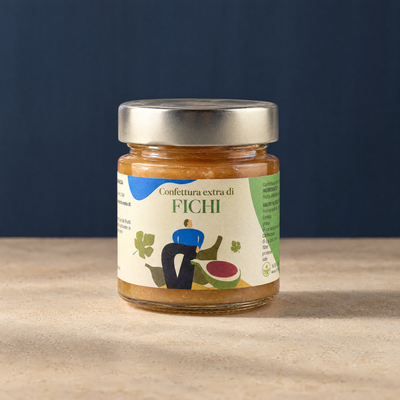
 | From our selection Fig JamHandmade, no preservatives. € 7,90 Discover → |
Seasonal ingredients in confetture deliver more vibrant flavour, higher nutrient density and a far gentler environmental footprint than imported or year-round produce. These advantages arise because fruit is harvested at peak ripeness and travels straight to the pot without long hauls or cold storage. In Germany, strawberries in June, cherries in July or plums in September give you a spread that outshines industrial jams in taste, colour and texture. Minnelea, the premium food brand from Cilento in southern Italy, has built its entire confetture line on this principle: small batches, hand-selected fruit, perfect ripeness.
1. Why seasonal ingredients decide the quality of confetture
Seasonal fruit grown outdoors in Germany is harvest-fresh and richer in nutrients than long-stored or imported produce. In practice, raspberries, redcurrants and cherries available locally from June onwards bring an aromatic depth that frozen or Spanish imports simply cannot match.
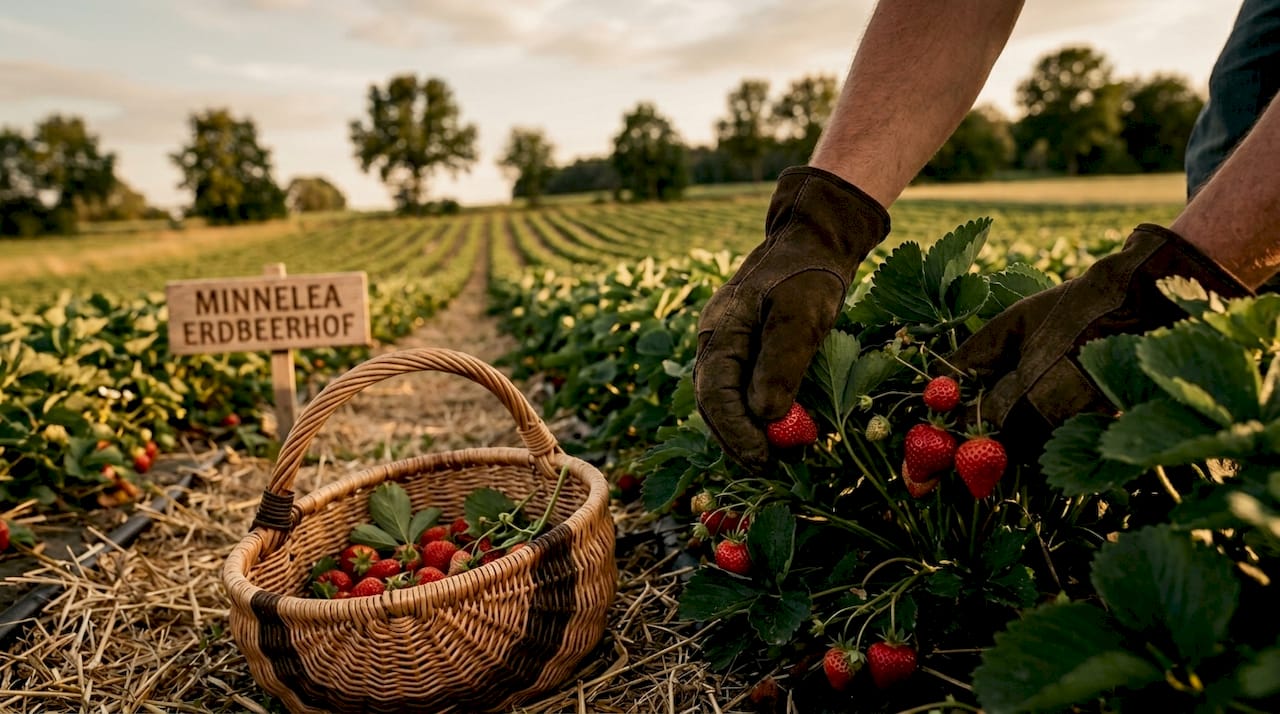
The difference is especially clear when the fruit sets. Ripe berries contain more natural pectin, improving the confetture’s texture and reducing the need for additives. A strawberry harvested fully ripe caramelises in the pot in a way that a fruit picked green and ripened in transit never will.
When buying, keep an eye on provenance:
- Choose open-field produce at peak season, not greenhouse fruit from early spring
- Favour regional markets and farm shops, where the harvest is often picked the same morning
- Use colour and scent as quality indicators: ripe fruit smells intense and shows saturated hues
- Reject bruises or mould, as they interfere with the setting process
Pro tip: Buy or pick fruit for confetture the very morning you cook. The shorter the time between harvest and pot, the more pectin and aroma are preserved.
2. Health benefits of seasonal fruit in confetture
Seasonal fruit carries more vitamins and minerals than produce that has spent weeks in cold storage. Vitamin C, for example, degrades continuously during storage. If you cook redcurrants or strawberries right after harvest, the finished spread retains a markedly higher share of these nutrients.
Another benefit lies in the sugar-to-fruit ratio. Fully ripe fruit brings its own sweetness, allowing you to reduce added sugar. Reduced-sugar products contain significantly less sugar per portion and are healthier than standard industrial spreads. This is not a marginal difference; it matters for anyone consciously managing sugar intake.
| Feature | Seasonal confetture | Industrial confetture |
|---|---|---|
| Fruit content | High, often over 50 % | Often at the legal minimum |
| Added sugar | Can be reduced thanks to natural sweetness | Standardised, usually high |
| Vitamin content | Higher due to short storage | Reduced by storage and processing |
| Additives | Minimal to none | Often preservatives, colourings |
| Flavour profile | Intense, fruity, natural | Uniform, often flat |
Further health arguments for seasonal confetture:
- Lower pesticide load in regional open-field produce compared to intensively grown imports
- More polyphenols in fully ripe fruit, with antioxidant benefits
- No need for preservatives, as fresh fruit with sufficient sugar and acid is naturally shelf-stable
- Ingredient transparency, whether you cook yourself or choose products like Minnelea’s that clearly state origin and fruit content
If you’d like to delve deeper into the sugar-to-fruit ratio in spreads, Minnelea offers a detailed overview of fruit percentages in jams and confetture.
3. Ecological benefits of seasonal ingredients in confetture making
The environmental footprint of seasonal confetture is markedly better than that of industrial products with imported ingredients. Heated greenhouse tomatoes generate over 2 kg CO₂-equivalent per kilogram; seasonal open-field produce is far lower. The same applies to berries, stone fruit and other confetture staples.
A common misconception is that regional origin is always greener than imports. That is not universally true. The production method is more decisive than the transport route for the environmental balance. Open-field produce from Spain, trucked north, can be more climate-friendly than German greenhouse fruit.
Not every seasonal fruit is automatically sustainable. Check whether it was grown outdoors or in a greenhouse before buying if you want to make truly sustainable confetture.
For a good ecological balance when cooking, we recommend these priorities:
- Buy open-field produce at peak season, not greenhouse fruit out of season
- Favour local growers when open-field cultivation and season align
- Ship or truck transport is less burdensome than air freight; trucked produce from southern Europe is often acceptable
- Cook large batches at once to save energy
- Re-use jars and check lids regularly for a tight seal
Seasonal cooking also conserves resources because no energy-intensive cold storage for months is required. A homemade cherry confetture made in July has a far better climate balance than an industrial product manufactured year-round from frozen fruit.
4. Flavour superiority: why seasonal confetture tastes different
Eating with the seasons heightens culinary pleasure through more intense flavour. This is not marketing; it’s chemistry: fully ripe fruit contains more sugars, more fruit acids and more volatile aroma compounds than fruit picked early.
A strawberry confetture made from sun-ripened open-field berries sings on morning toast. The fruit has had time to develop its aromas, and cooking concentrates that depth further. Industrial products relying on year-round fruit never reach this profile, no matter how much sugar or flavouring is added.
Seasonal availability also encourages discovery of new fruits. If you cook mirabelles in August, quinces in October and rose hips in November, you build a repertoire that goes far beyond strawberry and apricot. Each season brings new textures, colours and aromas.
Pro tip: Blend two fruits that share a season for more complex flavour. Raspberry and redcurrant in July are perfect partners: raspberry brings sweetness, redcurrant brings acidity and natural pectin.
5. Practical tips for making confetture with seasonal ingredients
The sugar-to-fruit ratio is the key technical parameter when cooking. Südzucker’s Gelierzucker 1plus1 is designed for home confetture and allows predictable setting with a 1 kg fruit to 1 kg sugar ratio, simplifying planning considerably.
For reduced-sugar recipes, different rules apply. Less sugar demands precise adherence to setting parameters, or shelf life and texture suffer. Fully ripe seasonal fruit helps, as its higher natural pectin supports the set.
| Method | Sugar-to-fruit ratio | Shelf life | Best for |
|---|---|---|---|
| Gelling sugar 1:1 | 1 kg sugar to 1 kg fruit | 12 to 18 months | All fruit, beginners |
| Gelling sugar 2:1 | 500 g sugar to 1 kg fruit | 6 to 12 months | Ripe, pectin-rich fruit |
| Gelling sugar 3:1 | 333 g sugar to 1 kg fruit | 4 to 6 months | Very ripe fruit, quick use |
Other practical points:
- Sterilise jars: boil jars and lids for 10 minutes before filling
- Test the set: drop a teaspoon of confetture onto a cold plate; if it wrinkles, the texture is right
- Fill hot and seal immediately: invert the jar for 5 minutes to create a vacuum
- Store cool and dark: properly sealed jars keep for up to 18 months
From 14 June 2026, new requirements apply to minimum fruit content in confetture. Extra strawberry confetture must contain at least 500 g strawberries per kilogram. Anyone selling or gifting confetture who wants to use correct labelling should know this rule. For more on planning a 2026 range, Minnelea offers a guide to ranging premium marmalade.
6. Storage and shelf life of homemade confetture
Properly stored confetture made from seasonal fruit lasts far longer than many people think. The key is the combination of sufficient sugar, acid and an airtight seal. Together these create an environment where micro-organisms cannot thrive.
Opened jars belong in the fridge and should be used within four weeks. Unopened jars that were correctly sterilised and vacuum-sealed keep for 12 to 18 months in a cool, dark place. This makes summer cooking a sensible winter strategy.
A common mistake is storing jars near heat sources such as the stove or radiator. Heat accelerates the breakdown of colour, aroma and vitamins even in sealed jars. A cool cellar or dark cupboard is best. For more on storage, Minnelea shares practical tips on keeping handmade jam fresh.
7. Seasonal calendar: which fruits are in season when in Germany
A clear seasonal calendar is the most important tool for anyone who makes confetture regularly. Season determines not only flavour but also price and availability.
| Month | Peak-season fruit | Ideal for |
|---|---|---|
| May–June | Strawberries, rhubarb | Strawberry confetture, rhubarb spread |
| July | Raspberries, cherries, redcurrants | Raspberry confetture, cherry jam |
| August | Blueberries, mirabelles, apricots | Blueberry spread, mirabelle confetture |
| September | Plums, damsons, blackberries | Plum confetture, blackberry jelly |
| October–November | Quinces, rose hips, apples | Quince jelly, rose-hip confetture |
Using seasonal varieties not only delivers better flavour but also lower prices at peak season. A kilo of strawberries in June often costs half the May price at the weekly market.
Pro tip: Plan your cooking season in spring. Note which fruits you want to process in which month and buy jars, gelling sugar and lemon juice in advance. You’ll be ready when the season starts.
8. Homemade vs. bought confetture: when does each make sense?
Homemade confetture from seasonal ingredients is hard to beat in flavour and quality. It gives you full control over fruit content, sugar level and ingredients. Anyone who values spreads without additives finds the clearest answer in cooking it themselves.
At the same time, cooking is time-consuming. If you lack time or want fruit from regions that don’t grow in Germany, turn to artisan producers that follow the same principles. Minnelea, for example, processes fruit from Cilento in small batches, with high fruit content and no artificial additives.
The comparison shows: homemade is especially worthwhile for strawberries, raspberries and cherries at peak season, when fruit is abundant and affordable. For specialities such as bergamot marmalade or fig confetture from southern Italy, a premium producer is the better choice. Anyone interested in reduced-sugar fruit spreads will also find suitable recipe ideas there.
Key takeaways
Seasonal ingredients in confetture deliver superior flavour, more nutrients and a better environmental balance because fully ripe fruit contains more natural pectin, vitamins and aroma compounds than stored or imported produce.
| Point | Details |
|---|---|
| Flavour & aroma | Fully ripe seasonal fruit delivers deeper flavour and richer caramelisation during cooking. |
| Nutrient content | Short storage preserves more vitamins and minerals in the finished spread. |
| Environmental balance | Peak-season open-field produce generates far less CO₂ than greenhouse or air-freighted fruit. |
| Sugar reduction | Fully ripe fruit brings more natural sweetness, allowing lower added sugar. |
| Legal changes | New minimum fruit requirements for confetture in Germany apply from June 2026. |
My assessment of seasonal ingredients in confetture
What has surprised me most after years of working with fruit spreads and confetture is how much difference the harvest moment makes. Not the recipe, not the gelling sugar, not the cooking time. The harvest moment.
I have made strawberry confetture with identical sugar levels and gelling parameters: once with fully ripe open-field strawberries from the weekly market, once with supermarket fruit from Spain in March. The result was incomparable. The seasonal version had a depth and colour the other simply could not reach.
I also learned that sustainability in preserving is more complex than “local equals good”. Whether a fruit was grown outdoors or in a greenhouse is often more important than how far it travelled. That is an insight I pass on to anyone who cooks consciously.
The trend is clearly toward more transparency, less sugar and higher fruit content. The new legal requirements from 2026 reflect this. Anyone who starts cooking seasonally with high fruit content now is on the right side—both in flavour and in law.
— carmine
Minnelea confetture: artisan quality from Cilento
If you want to enjoy the benefits of seasonal ingredients without cooking yourself, Minnelea offers a range that embodies these very principles.

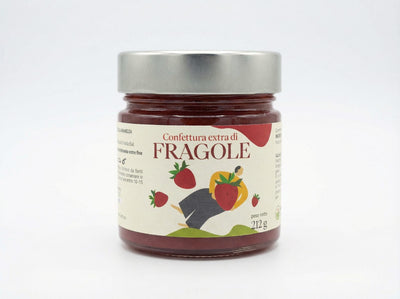
Minnelea processes select fruit from Cilento in southern Italy in small batches, with high fruit content and no artificial additives. The strawberry confetture with 130 % fruit content shows what is possible when seasonal quality meets artisan skill. The entire Minnelea confetture collection includes fruit spreads developed for delicatessens, gourmet retailers and connoisseurs in Germany. Authentic Mediterranean flavour, direct to your breakfast table.
FAQ
What are seasonal confetture?
Seasonal confetture are fruit spreads made from fruit naturally available at harvest time in the given region. They are characterised by higher fruit quality, more intense flavour and better nutrient density.
Which fruits are best for homemade confetture?
Strawberries, raspberries, cherries and redcurrants are especially popular in Germany and deliver the best quality from June to August. Pectin-rich fruit such as redcurrants and quinces set particularly well.
How much sugar do I need for seasonal confetture?
With gelling sugar 1plus1, the standard recommendation is 1 kg sugar to 1 kg fruit. With fully ripe seasonal fruit you can switch to 2:1 or 3:1 gelling sugar to reduce the sugar content.
What changes in Germany from 2026 for confetture?
From 14 June 2026, new legal minimum fruit contents apply to confetture. Extra strawberry confetture must contain at least 500 g strawberries per kilogram. In addition, confetture may officially be called marmellade again.
Is homemade confetture healthier than bought?
Homemade confetture from seasonal fruit allows control over fruit content and sugar level and contains no artificial additives. Industrial products often have standardised high sugar levels and less fruit than artisan alternatives.