
Aubergines in oil: nutritional values, how to use them and food pairings
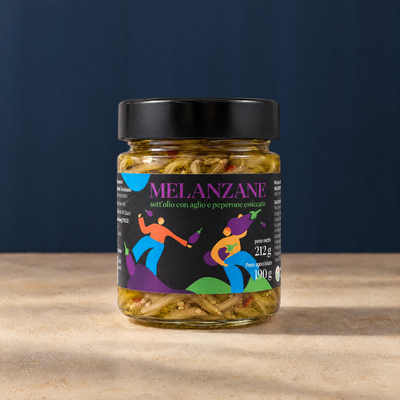
Aubergines in oil are one of the oldest and most versatile Italian preserves. Meaty, fragrant and ready to use, they bring the flavours of a southern Italian summer to the table even in December.
 | From our selection Aubergines in Olive OilHandmade, no preservatives. € 7,90 Discover → |
This guide looks at what is inside a jar, how to use them without weighing down a dish, and the pairings that always work.
What are aubergines in oil?
Aubergines (long, oval or round varieties) sliced or diced, blanched or grilled, salted and preserved in oil (usually extra virgin) with garlic, chilli, oregano and vinegar. Variants include julienne strips, whole small aubergines, and versions stuffed with tuna and capers.
Production follows Italian regulations on preserves, in particular EU Regulation 2073/2005 for microbiological safety. Aubergines, being naturally low in pH, require careful attention to botulism risk during production: serious producers use rigorous HACCP protocols and final pH monitoring.

Average nutritional values (per 100 g)
Indicative values based on CREA food composition tables. Always check the label on the specific jar.
| Component | Average value per 100 g |
|---|---|
| Energy | ~150–180 kcal |
| Fat | 13–16 g (of which saturates ~2 g) |
| Carbohydrates | 3–5 g (of which sugars 2–3 g) |
| Protein | 1–2 g |
| Fibre | 2–3 g |
| Salt | 1–1.8 g |
Almost all the caloric content comes from the preservation oil. Draining well significantly reduces the actual calories per serving: a typical board portion (30 g), well drained, weighs about 25 g and provides around 40–55 kcal.
What they bring to cooking
The initial cooking (grilling or blanching) reduces the "sponge" effect typical of raw aubergine, which would otherwise absorb enormous amounts of oil in the pan. Preservation locks in the flavour: the garlic and oregano migrate into the oil over months in the pantry, creating an aromatic condiment that is ready to use.
They are not a health food. They are a quality pre-cooked ingredient — one that lets you put on the table in 5 minutes what would take 40 minutes starting from a fresh aubergine.
Five practical ways to use them
1. Revisited Caprese bruschetta
Toasted rustic bread, aubergines in oil, fresh ricotta, a grating of lemon zest. An antipasto in 3 minutes.
2. Summer cold pasta
Short pasta boiled and cooled, drained aubergines in oil, cherry tomatoes, diced mozzarella, basil, jar oil as the dressing. A complete summer dish.
3. Express parmigiana
Alternating layers of drained aubergines in oil, mozzarella, tomato sauce and Parmesan. Bake for 15 minutes. A quick take on the classic.
4. Gourmet sandwich
Semolina bread, aubergines in oil, mild prosciutto crudo, pecorino shavings, rocket. From a simple lunch to a gourmet experience.
5. Mixed antipasto board
On the antipasto board with preserved vegetables, aubergines bring the dark colour and soft texture that balances red peppers and lighter artichokes.
Food pairings
| Category | Pairing |
|---|---|
| Cheeses | Ricotta, buffalo mozzarella, smoked scamorza, primo sale, chèvre |
| Charcuterie | Prosciutto crudo, capocollo, spicy salami |
| Bread | Semolina bruschetta, focaccia, pitta |
| Pasta | Penne, fusilli, paccheri (cold or warm) |
| Wine | Greco di Tufo, Falanghina, southern rosé, young Aglianico |
Storage
Sealed jar, cool dry pantry: 24–36 months. Once opened: 7–10 days in the fridge, always covered with oil, using clean utensils. If the oil level drops below the aubergines, top up with extra virgin olive oil to prevent oxidation and contamination.
Aubergines in oil versus pickled aubergines
Oil-preserved aubergines retain softness and sweetness. Pickled aubergines are crunchier and more acidic. More details in our article on the difference between oil-preserved and pickled vegetables.
Frequently asked questions
How many calories do aubergines in oil have?
Around 150–180 kcal per 100 g, but thorough draining significantly reduces the intake. A board portion (30 g, drained) provides around 40–55 kcal.
Are they suitable for a vegan diet?
Yes, the base ingredients (aubergine, vegetable oil, salt, garlic, vinegar, herbs) are vegan. Check the label for variants that may contain anchovies in brine.
Do they contain gluten?
No, the base ingredients are naturally gluten-free. Always check the label for a specific declaration, especially if you are coeliac.
Can they be frozen?
Not recommended. Aubergines that have already been cooked and preserved in oil lose their structure when frozen. Better to open jars only as needed.
Can the jar oil be reused?
Yes, it is enriched with herbs (garlic, oregano, chilli). Use it to dress pasta, pizza and bruschetta, or as a flavoured substitute for plain oil in any dish where you want an extra aromatic note.
How long do they last once opened?
7–10 days in the fridge, covered with oil, in a sealed container. Always use clean utensils.
Sources
CREA — Food composition tables
EU Regulation 2073/2005 on microbiological safety of preserves
ISS — Guidelines on botulism prevention
Related articles
Peppers in oil: how to choose them
Oil-preserved vs pickled vegetables
Antipasto board: how to compose it
Try our aubergines in oil — Italian artisan preparation.