
Peppers in oil: nutritional values, calories and why to always keep them in the pantry
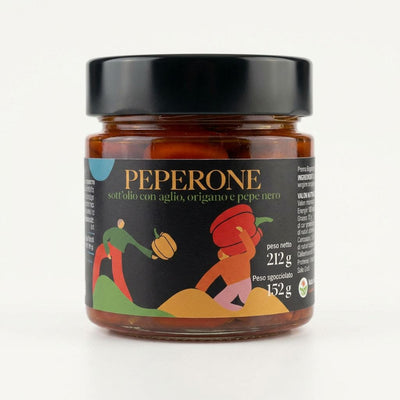
Peppers in oil are one of the most beloved Italian preserved vegetables from southern Italy. Sweet, colourful and ready to use, they earn a spot in every well-stocked pantry — and for good reason. They sit at the crossroads of convenience and gastronomic identity.
 | From our selection Peppers in Olive OilHandmade, no preservatives. € 7,90 Discover → |
This guide looks at what they contain nutritionally, how many calories they have, and how they fit into everyday cooking. For the buying guide and how to choose and serve them in 8 ways, there is a dedicated article.
What are peppers in oil?
Peppers in oil are peppers — usually red or yellow — that have been cooked (roasted, grilled or blanched), peeled, sliced into strips and preserved in olive oil, with salt, herbs and sometimes a splash of vinegar.
Production follows EU Regulation 2073/2005 on microbiological safety of preserves. Minnelea peppers follow the artisan process of southern Italian preserves, without any PDO claims as we are not members of a specific protection consortium.

Average nutritional values (per 100 g)
The values below are indicative and based on data from CREA — Centro di Ricerca per gli Alimenti e la Nutrizione. Always check the actual nutrition label on your jar.
| Component | Average value per 100 g |
|---|---|
| Energy | ~110–140 kcal |
| Fat | 8–11 g (of which saturates 1–2 g) |
| Carbohydrates | 5–7 g (of which sugars 4–6 g) |
| Protein | 1–1.5 g |
| Fibre | 1.5–2.5 g |
| Salt | 0.8–1.5 g |
| Vitamin C | residual after cooking |
The calorie content comes mainly from the preservation oil. The actual amount consumed depends on how much oil remains on the pepper when served.
What they bring to cooking
Peppers in oil are a concentrated source of flavour. The pre-cooking partially reduces vitamin C — which is heat-sensitive — but preserves the colour, texture and aromatic compounds characteristic of the pepper. The preservation oil, when extra virgin and good quality, contributes to the monounsaturated fat intake typical of the Mediterranean diet.
They are not a health food — they are a pantry condiment. Treat them as such: they enrich and complete a dish, but are not a replacement for a fresh seasonal vegetable.
Real calories per serving
A typical portion on a charcuterie board is 30–40 g (3–4 small strips), corresponding to around 35–55 kcal. On bruschetta or in a sandwich the portion rises to 50–60 g (50–85 kcal).
For those tracking calories closely, the practical tip is to drain the oil thoroughly before serving: a good drain significantly reduces the total calorie intake.
Storage and shelf life
Sealed jar, cool and dry pantry: good until the date printed on the label (typically 24–36 months). Once opened, store in the fridge covered with oil and use within 7–10 days. Important: always use clean utensils to avoid microbial contamination.
Food pairings
| Category | Pairing |
|---|---|
| Cheeses | Fresh ricotta, primo sale, chèvre, smoked scamorza |
| Charcuterie | Mild prosciutto crudo, bresaola, capocollo |
| Bread | Rustic bruschetta, warm focaccia |
| Wine | Southern Italian rosé, aromatic white (Fiano), young red |
| Dishes | Rice salad, cold pasta, frittata, gourmet sandwich |
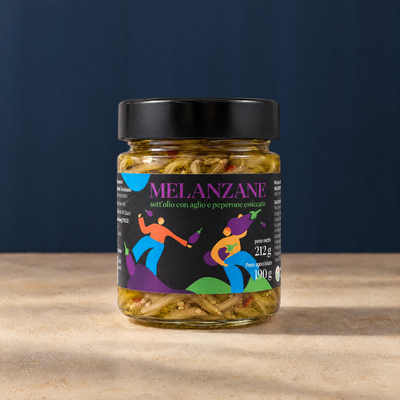
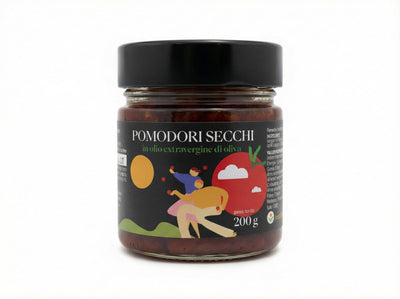
For the antipasto board with preserved vegetables, mixing colours and textures creates visual balance: red peppers alongside pale artichoke hearts and darker aubergines are appealing before the first bite.
Peppers in oil versus pickled peppers
Peppers in oil and pickled peppers are very different products in both process and flavour profile. Oil-preserved peppers retain sweetness and softness; pickled peppers bring acidity and crunch. We explain the difference between oil-preserved and pickled vegetables in a dedicated article.
Frequently asked questions
How many calories do peppers in oil have?
Around 110–140 kcal per 100 g, but the actual value varies considerably depending on the amount of oil. A board portion (30–40 g), well drained, provides around 35–55 kcal.
Are peppers in oil suitable for a vegan diet?
Yes. The ingredients are simply peppers, vegetable oil, salt and optional herbs. Always check the label to rule out added animal-derived ingredients (rare in traditional Italian products).
Do they contain gluten?
No, the base ingredients (peppers, oil, salt, natural herbs) are naturally gluten-free. Always check the label for a specific "gluten-free" declaration or absence of cross-contamination traces, especially if you are coeliac.
Can they be frozen?
Not recommended. The structure of peppers already cooked and preserved in oil does not hold up to freezing: after thawing they become mushy and the oil separates. Better to open jars only as needed.
How long do they last once opened?
7–10 days in the fridge, covered with oil, in a sealed container. Always use clean utensils when serving.
Are they a substitute for fresh peppers?
No, they are a different product. Fresh peppers are superior for vitamin C content and crunch. Preserved peppers in oil are a gastronomic condiment, not a nutritional replacement for raw vegetables.
Sources
CREA — Food composition tables (crea.gov.it)
EU Regulation 2073/2005 on microbiological safety of preserves
EU Regulation 1924/2006 on nutrition and health claims
Related articles on Minnelea
How to choose and serve peppers in oil
Difference between oil-preserved and pickled vegetables
Antipasto board: how to compose it
Try our peppers in oil — Italian artisan preparation.