
Why Calabrian Citrus Fruits Are So Special
Calabrian citrus fruits carry a more intense aroma than most of their counterparts, thanks to three factors that rarely coincide elsewhere: a distinctive coastal microclimate, strictly regional varieties, and centuries-old artisanal growing practices. Nowhere is this clearer than with bergamot: the overwhelming majority of global production comes from a narrow, roughly 100 km stretch of coastline in the province of Reggio Calabria. For fine food producers and anyone seeking artisanal marmalades or confettura with genuine depth, this very concentration makes all the difference. The peel, juice, and essential oils of these fruits carry aromas that unfold in the jar like no other citrus.
Contents
- Which Varieties and Growing Regions Make Calabria So Special
- Why Calabria's Terroir So Profoundly Shapes the Taste
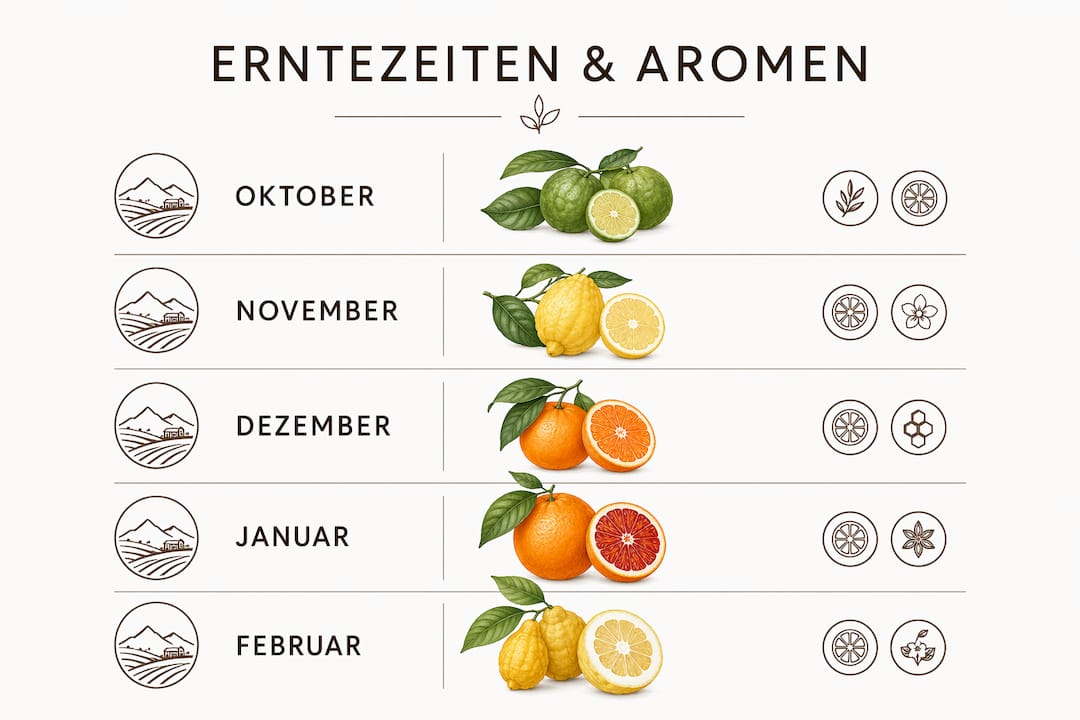
- Harvest Times and Flavour Profiles for Fine Food Planning
- Why Fine Food Producers Prefer Calabrian Fruit
- The Health Benefits of Calabrian Citrus Fruits
- How to Recognise Authentic Calabrian Citrus Specialities in Germany
- Key Takeaways
- What We Value About Calabrian Citrus at Minnelea
- Experience Calabrian Aromas from Minnelea
Which Varieties and Growing Regions Make Calabria So Special
Calabria is not a uniform citrus landscape, but a mosaic of microregions, each with its own speciality. Anyone buying authentic Calabrian citrus should know these distinctions:
- Bergamot grows exclusively along the Ionian coast around Reggio Calabria; the essential oil from its peel carries PDO certification and is as prized in perfumery as in fine food.
- Clementines PGI come from the plains of Sibari, Corigliano, Lamezia, and the Locride; the PGI certification protects varietal purity and growing methods.
- Tarocco blood oranges thrive in the Sibari plain and along the Crati river; their anthocyanin colouring develops through cool nights and makes them ideal for marmalades with deep, rich colour.
- Lemons from Rocca Imperiale and the Riviera dei Cedri also carry PGI designation; their thick, fragrant peels are the preferred raw material for candied specialities.
This diversity is no accident. A large portion of Calabrian citrus groves concentrates in a relatively small number of municipalities, creating an exceptionally dense expertise in cultivation and processing.
Why Calabria's Terroir So Profoundly Shapes the Taste
The Aspromonte massif and the Sila plateau shield the coastal strips from cold northern winds; the Ionian Sea brings steady humidity and moderates temperature swings. The result is a microclimate of gentle warmth that slows ripening and encourages aromatic development in the peel. Essential oils that evolve over weeks rather than days become more concentrated and complex.
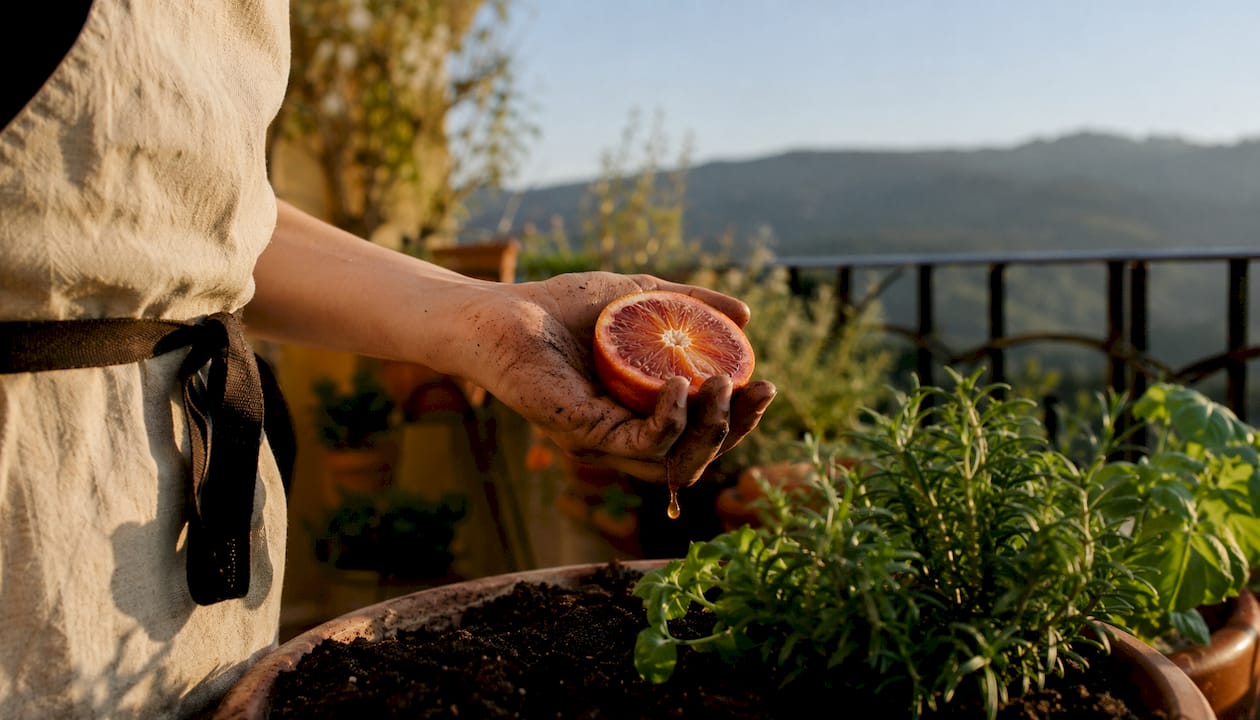
With blood oranges, another mechanism comes into play: cool autumn nights trigger anthocyanin synthesis, giving Tarocco its ruby-red hue and part of its sweetness. Bergamot, meanwhile, only fully develops its characteristic peel oils along this narrow coastal strip; even cultivation attempts in other Mediterranean regions yield a weaker aromatic profile.
Pro tip: For marmalades, favour fruit from early harvest when the peel is still firm and essential oils are at peak concentration. Those working with zest or peel oil should specifically ask for batches harvested before the first frost risk.
Local producers emphasise that centuries of farming practice and the microclimate together create the true difference—not the variety alone. For clementines, the PGI regulations even mandate planting distances from mandarins to prevent cross-pollination and seed formation. A small detail with significant impact: seedless fruit streamlines marmalade production.
Harvest Times and Flavour Profiles for Fine Food Planning
Each variety has a precise harvest window that determines which aromas and textures are available for processing.
| Variety | Harvest Window | Flavour Profile |
|---|---|---|
| Clementine PGI | October to February | Sweet, low acidity, virtually seedless, thin peel |
| Bergamot PDO | Typically harvested between late autumn and spring | Intensely floral-citrus, marked bitter notes |
| Tarocco blood orange | Harvested in the cooler season | Sweet-fruited, ruby red, variable anthocyanins |
| Rocca Imperiale lemons | Two harvest waves per year | Powerfully tart, thick fragrant peel |
Clementines ripen remarkably early from October onwards, making them the first Calabrian citrus of the season. For marmalade makers, this means: buying in October secures fruit at peak freshness with lively acidity that balances the sweetness.
Organoleptic properties that directly influence recipes:
- Peel thickness: Thick peels (Rocca Imperiale, bergamot) deliver more pectin and bitter aromas; thin peels (clementine) suit milder confettura.
- Seed content: Seedless clementines simplify processing; Tarocco may contain some seeds depending on the harvest year.
- Sugar-acid balance: Tarocco and clementine are sweeter and need less added sugar; bergamot and lemons require careful dosing to manage bitterness.
- Aroma concentration: Bergamot and Rocca Imperiale lemons release intense fragrant notes even in small quantities of peel, making them ideal for aromatic speciality marmalades.
Why Fine Food Producers Prefer Calabrian Fruit
Higher aroma concentration in peel and juice yields more intense, complex confettura that distinguishes itself from mass-market products on the shelf. This is the core reason artisan producers specifically seek out Calabrian batches.
| Variety | Primary Application | Distinctive Advantage |
|---|---|---|
| Bergamot | Fragrant marmalades, liqueurs, tea biscuits | Unique floral-citrus aroma, too tart raw, incomparable when processed |
| Tarocco | Orange marmalade, fruit sauces | Deep colour, natural sweetness, low sugar requirement |
| Rocca Imperiale lemon | Candied peel, lemon marmalade | Thick peel with high pectin content, intense fragrance |
| Clementine PGI | Mild confettura, fresh cheese accompaniment | Seedless, easy processing, balanced sweetness |
Bergamot only reveals its true value in processing: raw, it is too tart and alkaline for direct consumption, yet in marmalades, liqueurs, or as grated peel, it sings with an intensity no other citrus aroma can match. Producing just one litre of essential oil requires vast quantities of fruit, which explains its value as a fine food ingredient.
For artisan marmalades, the rule is: small batches from a single grove deliver more consistent aromas than mixed deliveries. Anyone wanting to make orange marmalade with genuine depth benefits from knowing the variety, harvest month, and grove of origin. And for candied peel, the peel thickness of Rocca Imperiale lemons makes the decisive difference in texture and fragrance.
The Health Benefits of Calabrian Citrus Fruits
Calabrian citrus fruits provide above-average amounts of vitamin C and flavonoids such as hesperidin, which can be communicated as additional health benefits. Scientific studies confirm the antioxidant effects of these compounds.
- Vitamin C: Supports the immune system and promotes collagen formation; clementines and Tarocco are particularly rich sources.
- Hesperidin: A flavonoid showing anti-inflammatory properties and supporting vascular health.
- Antioxidants: Help reduce cell damage from free radicals; also relevant for balanced nutrition in everyday life.
- Anthocyanins (Tarocco): Secondary plant compounds with potentially anti-inflammatory effects.
Note: These are general nutritional information, not medical claims. For individual health questions, professional advice is recommended.
How to Recognise Authentic Calabrian Citrus Specialities in Germany
Checking the origin designation is the first and most important step. PGI and PDO are legally protected EU terms, not marketing language.
- Verify the origin designation: PGI (Protected Geographical Indication) or PDO (Protected Designation of Origin) on the label are reliable quality signals for clementines, bergamot oil, and lemons.
- Ask about harvest month: Reputable suppliers state the harvest month or at least the season; missing information suggests mixed or unclear origin.
- Clarify processing location: Products processed in Calabria retain more aromatic intensity than those processed after long transport distances.
- Request batch numbers: Small batches with batch numbers enable traceability back to the grove—a sign of artisanal care.
- Respect seasonal buying windows: Clementines from October, bergamot from November, Tarocco from December; outside these windows, fresh products are often from cold storage.
- Note packaging and minimum quantities: High-quality fine food rarely comes in bulk; small, carefully labelled units with producer names are a good sign.
- Use dealer relationships and reviews: Speciality retailers with direct producer contacts offer more reliable provenance than anonymous marketplaces.
When buying lemon marmalade or bergamot products, also ask whether the peel is untreated, as only untreated peel is suitable for zest, candied products, and aromatic confettura.
Key Takeaways
Calabrian citrus fruits owe their superiority to the interplay of coastal microclimate, strictly regional varieties, and artisanal cultivation control—tangible in every spoonful of confettura.
| Topic | Details |
|---|---|
| Terroir as aroma source | Aspromonte shelter and Ionian Sea concentrate essential oils in the peel. |
| Bergamot concentration | Over 95% of global production comes from a ~100 km coastal strip near Reggio Calabria. |
| Use harvest windows | Clementines from October, bergamot from November, Tarocco from December for best processing quality. |
| PGI/PDO as buying signal | EU origin protection on the label is the most reliable quality marker in the German market. |
| Minnelea recommendation | Discover artisan marmalades in small batches with Calabrian citrus aromas directly in the Minnelea shop. |
What We Value About Calabrian Citrus at Minnelea
Anyone who has tasted bergamot marmalade made from authentic Calabrian fruit immediately understands why we at Minnelea are so selective in our raw material sourcing. The question is not whether Calabrian citrus is better, but why so many fine food products ignore this difference.
Our conviction: terroir is not a marketing term, but a measurable reality in the peel. Processing small batches from a single grove yields a consistency of aromatic profile that simply cannot be reproduced in mixed bulk deliveries. This is why we take harvest month, region, and batch size as seriously as the recipe itself when selecting ingredients for our artisan specialities.
What sometimes surprises me about debates on "authentic" origin: many buyers check for organic certification, but hardly anyone asks about harvest month. Yet with citrus fruit, harvest timing is often more decisive than the cultivation system. A bergamot harvested too early delivers a flat aromatic profile, however it is certified. We have learned to ask precisely these questions, and recommend this to anyone who takes artisan fine food seriously.
Experience Calabrian Aromas from Minnelea
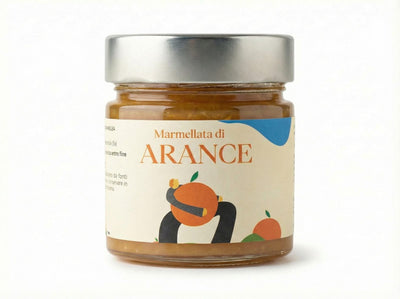
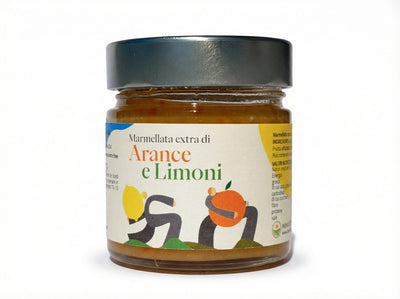
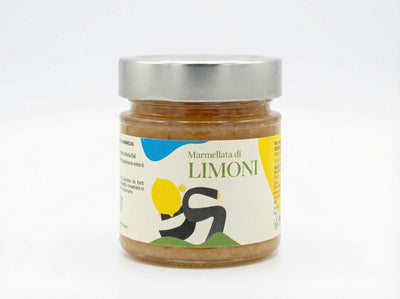
Those who wish to taste rather than merely read about these aromas will find artisan marmalades and Mediterranean specialities at Minnelea that express southern Italian citrus in small batches. Our products are created with regional ingredients, traditional recipes, and the commitment that every jar carries genuine provenance.

Whether as a gift box for fine food enthusiasts or as an addition to a premium range: the Cilento Orange and Lemon Marmalade demonstrates how intensely southern Italian citrus can perform in the jar. For retailers and end customers wanting to discover the full spectrum of Mediterranean fine food, our artisan antipasti are also worth exploring. Browse the Minnelea shop and order your favourite products directly.