
Wild Herbs of Cilento: Varieties and Their Gifts
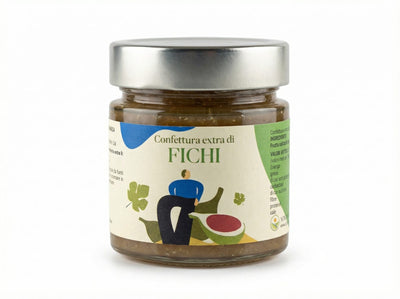
 | From our selection Fig JamHandmade, no preservatives. € 7,90 Discover → |
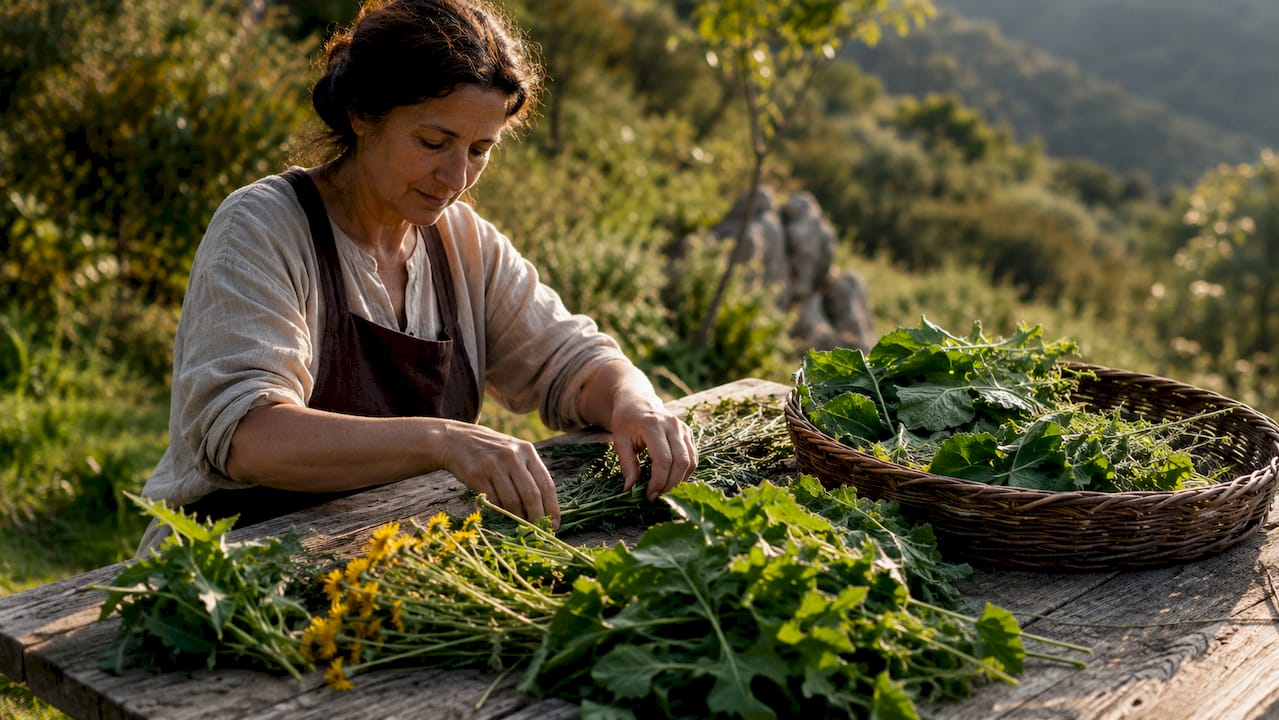
Wild herbs are plants that flourish without human intervention, prized for their resilience, vivid aromas and exceptional vitamin content. In southern Italy’s Cilento region they meet extraordinary biodiversity, a living culinary tradition and an ingrained respect for nature. Ask what wild herbs of Cilento are and you quickly realise the answer is not merely botanical—it is a holistic experience of landscape, heritage and flavour. Framed by the Parco Nazionale del Cilento, Vallo di Diano and Alburni, edible greens, healing plants and fragrant wildlings have been gathered, prepared and celebrated for generations.
What are wild herbs in the Cilento region?
Known botanically as spontaneous plants, wild herbs grow without cultivation or care. Unlike supermarket basil or parsley, they develop aroma and nutrients under open skies, gifting them an intensity no greenhouse can replicate. The Lower Saxony Chamber of Agriculture confirms that wild herbs are often richer in nutrients and flavour than their cultivated cousins. In short, bringing them into the kitchen adds a depth no shelf-bought herb can match.
Cilento offers these plants ideal conditions. The Parco Nazionale del Cilento spans a mosaic of Mediterranean habitats, from coastal Aleppo-pine woods to inland mountain meadows. This ecological variety explains why the botanical richness here is so remarkable. Wild herbs in Cilento are therefore more than ingredients—they are living witnesses to a landscape inhabited and cared for over millennia.
Typical wild herbs of Cilento: varieties and how to recognise them
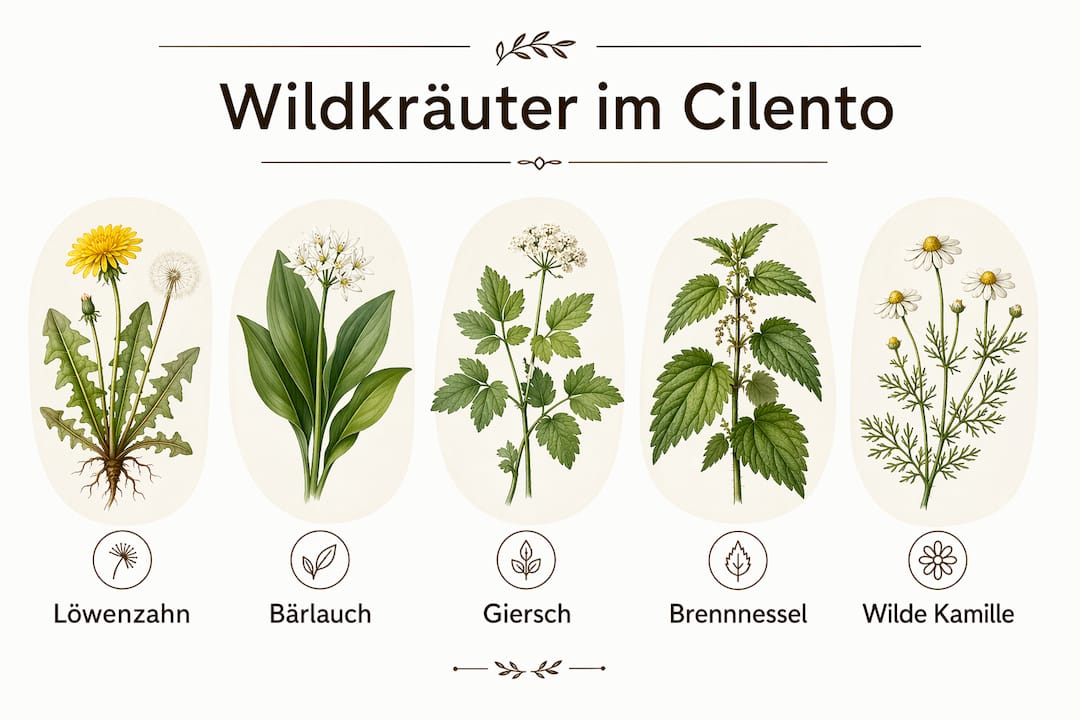
Cilento hosts an impressive range of edible wild herbs that carpet forests, meadows and stream banks. Among the best-known are dandelion (Taraxacum officinale), ground-elder (Aegopodium podagraria), wild chamomile (Matricaria chamomilla), wild garlic (Allium ursinum) and nettle (Urtica dioica). Each has a distinctive look and flavour that Cilento cooks deploy with purpose.
| Wild herb | Appearance | Flavour | Use |
|---|---|---|---|
| Dandelion | Toothed leaves, yellow flower | Lightly bitter, fresh | Salads, pesto, teas |
| Wild garlic | Broad glossy leaves, white flower head | Intensely garlicky | Soups, spreads, sauces |
| Wild chamomile | Delicate leaves, white petals around a yellow centre | Mild, floral, gently sweet | Teas, infusions, cosmetics |
| Nettle | Toothed leaves with stinging hairs | Earthy, spinach-like after blanching | Soups, vegetable dishes, teas |
| Ground-elder | Three-part leaves, white umbel flowers | Mild, parsley-like | Salads, vegetable sides |
Special caution is needed with look-alikes. Wild garlic, for instance, closely resembles lily-of-the-valley and autumn crocus, both toxic. Correct identification is paramount; the surest clue is the unmistakable garlic scent released when the leaf is crushed.
Typical wild herbs of Cilento can be recognised by:
- Dandelion: rosette at ground level, hollow stem exuding white latex, toothed leaves
- Wild garlic: broad glossy leaves with strong garlic aroma, thrives in damp deciduous woods
- Wild chamomile: finely divided leaves, apple-like scent, found on meadows and verges
- Nettle: stinging hairs on leaves and stem, opposite leaves, prefers nitrogen-rich soils
Pro tip: On your first outings always carry an up-to-date field guide with colour photos—such as Steffen Guido Fleischhauer’s “Kosmos Wildkräuterführer”—or join a guided herb walk in Cilento before foraging alone.
Safe foraging: what to watch for in Cilento
Safety begins with one clear rule: harvest only plants you can identify with absolute certainty. This is especially true in Cilento, where botanical diversity is vast and toxic species grow beside edible ones. When in doubt, leave it. This mindset safeguards your health and fosters respectful interaction with nature.
Location is equally critical. Always pick in unpolluted spots well away from roads, verges and intensively farmed land. Exhaust fumes and pesticides accumulate in plant tissues and cannot be fully washed away. Inside the Parco Nazionale del Cilento, remote forest paths and mountain meadows provide ideal, low-contamination sites.
Sustainable harvesting means taking only what you truly need. Removing at most one third of a plant’s leaves or shoots leaves it enough strength to regenerate. Follow these principles:
- Collect only plants identified with certainty
- Choose sites far from roads and industrial areas
- Never take more than one third of any plant
- Do not pick protected species inside the National Park
- Use natural-fibre baskets so seeds can spread during transport
Events such as “Cuogli e Mangia” in Ascea on 25 April 2026 combine safety know-how with hands-on experience. Guided walks show participants on the spot which plants are edible and how to gather them responsibly—knowledge and enjoyment in perfect balance.
Pro tip: Book one of the guided herb walks in Cilento before venturing out alone. Local botanists know not only the edible species but also the cleanest, best harvesting spots.
How are wild herbs used in Cilento’s kitchen?
Cilento’s cuisine weaves wild herbs into dishes in ways that go far beyond mere seasoning. They are headline ingredients that lend depth, gentle bitterness and aromatic freshness. Dandelion leaves slip into spring salads, blanched nettles are treated like spinach, wild garlic lends sauces and spreads a silky garlic note without the harshness of a clove.
Regional specialities fold wild herbs into seasonal dishes and artisanal products that mirror Cilento’s culinary heritage. Typical preparations include:
- Blanching: briefly blanch nettles or ground-elder in salted boiling water, then use as a vegetable side or pasta filling
- Raw use: add young dandelion leaves or sorrel straight into salads, dressed simply with good olive oil and lemon
- Infusions and teas: steep chamomile, thyme and mint as herbal teas, often sweetened with local honey
- Pesto and spreads: blend wild garlic with pine nuts, Parmesan and extra-virgin olive oil into a velvety pesto
- Herb blends: dry wild herbs to create seasoning mixes for meat, fish and vegetables
The festival “Aprile alle Erbe” in San Mauro Cilento blends natural history, culture and local tradition for anyone wanting to dive deeper into the world of edible herbs. Such events show that wild herbs in Cilento are not just ingredients but cultural expressions of a region that knows and loves its land.
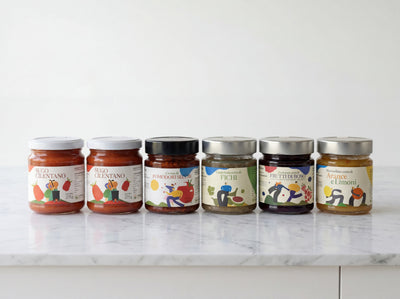
Modern interpretations go further. Local producers turn wild herbs into confettura, herb oils, antipasti and sauces that bottle the aroma of the region. These products let you taste Cilento at home without setting foot in the forest.
Health aspects: what is proven, what is tradition?
Wild herbs are recognised as nutrient-dense foods delivering vitamins, minerals and secondary plant compounds in concentrated form. Dandelion, for example, contains more vitamin C than many cultivated vegetables; nettles provide iron comparable to meat. This nutrient density makes them a valuable addition to a balanced diet.
In Cilento wild herbs have long been used as “officinal” plants—healing and useful plants harvested and processed by traditional methods. A celebrated example is Camomilla Antica di Gioi, an old chamomile variety from the village of Gioi prized for its potent essential oils. These plants are part of the region’s cultural heritage, used in teas, tinctures and herbal blends.
Distinguishing between traditional health claims and scientifically proven benefits is sensible. Wild herbs are valuable foods and culturally significant plants, but they do not replace medical treatment.
Health claims about wild herbs should always be viewed critically. Many traditional uses are culturally valuable and empirically tested, yet not always backed by clinical studies. Using wild herbs as part of a healthy diet is unproblematic; using them as medicine should involve medical advice.
Where to experience and buy wild herbs in Cilento
The best way to start is with a guided walk. Local operators and the National Park regularly organise herb tours where botanists and cooks lead you through the landscape, sharing knowledge on the spot. These outings are ideal for beginners, combining safety with pleasure.
Options for a deeper dive into Cilento’s wild herbs include:
- Guided walks: “Cuogli e Mangia” in Ascea (April 2026) and “Aprile alle Erbe” in San Mauro Cilento offer structured tours with tastings
- Workshops and courses: local agriturismi and cookery schools run seasonal herb courses, often paired with hands-on cooking classes
- Markets and farm shops: weekly markets in Vallo della Lucania, Agropoli and Palinuro sell fresh and dried herbs and herb products from local producers
- Online shops: regional producers such as Minnelea offer typical Cilento products for delivery to Germany
If you cannot travel south, high-quality herb products from the region provide an authentic alternative. Confettura of wild fruit, herb oils and antipasti from Cilento bring the region’s aromatic profile straight to your table. Minnelea’s Cilento Grand Reserve is an example of regional flavours captured in artisan form.
Key takeaways
Wild herbs in Cilento are nutrient-rich, intensely aromatic plants that must be gathered only after certain identification, harvested sustainably and woven into both traditional and modern regional cuisine in countless ways.
| Point | Details |
|---|---|
| Definition of wild herbs | They grow without cultivation, are more nutrient-dense than garden herbs and especially aromatic. |
| Safe identification | Collect only plants you can name with certainty; toxic species such as autumn crocus closely resemble edible ones. |
| Sustainable harvesting | Pick only in unpolluted places and never remove more than one third of any plant. |
| Culinary variety | In Cilento wild herbs are turned into salads, pesto, teas, confettura and antipasti. |
| Health and tradition | Wild herbs are valuable foods with cultural significance, but they do not replace medical treatment. |
My take: what truly makes wild herbs in Cilento special
Join a herb walk in Cilento once and you will instantly understand why the region is so special for plant lovers. It is not about ticking off as many species as possible; it is about the conversation between people, landscape and culture that unfolds while gathering and cooking together.
The commonest mistake I see in beginners is impatience. Harvest too quickly, without really looking, and you risk dangerous mix-ups. Learn instead to move slowly through the land, observing every plant mindfully, and you will develop an instinct no book can fully impart. Events like “Cuogli e Mangia” and “Aprile alle Erbe” are invaluable precisely because they create the space for this slow, conscious learning.
What continually fascinates me is the link between wild herbs and Cilento’s artisan food culture. When local producers preserve the flavours of wild plants in confettura, sauces or herb blends, something emerges that transcends the seasons. The taste of Cilento becomes tangible, even for people living thousands of kilometres away. For me, that is the region’s true gift: it teaches us not merely to consume nature, but to understand and cherish it.
— carmine
Discover wild-herb products from Cilento by Minnelea

Minnelea brings the aromatic soul of Cilento straight to your kitchen. Our small-batch, handcrafted products are made from carefully selected regional ingredients—wild fruit, herbs and extra-virgin olive oil from the Parco Nazionale del Cilento. Every jar tells of a landscape where wild herbs have been gathered and transformed for generations. Whether as a gift for food lovers or as a finishing touch to a Mediterranean table, our confettura collection marries authentic flavour with refined craftsmanship. Taste how Cilento feels.
FAQ
What are wild herbs and how do they differ from cultivated herbs?
Wild herbs are plants that grow without human care, distinguished by more intense aroma and higher nutrient density than cultivated herbs.
Which typical wild herbs grow in the Cilento region?
Cilento is home to dandelion, wild garlic, wild chamomile, nettle and ground-elder, among others, thriving in habitats ranging from coastal woods to mountain meadows.
How can you safely identify wild herbs and avoid toxic look-alikes?
Check several features at once—scent, leaf shape and habitat. Wild garlic, for example, smells unmistakably of garlic when crushed, distinguishing it from the toxic autumn crocus.
Where can you book guided herb walks in Cilento?
Events such as “Cuogli e Mangia” in Ascea and “Aprile alle Erbe” in San Mauro Cilento offer guided excursions with tastings, usually between March and May.
Are wild-herb products from Cilento available online?
Yes. Regional producers like Minnelea offer Cilento products—confettura with wild fruit and herb aromas—shipped to Germany and beyond.
Recommendations
- Typical Cilento Products: The Gourmet Guide – Azienda Agricola Minnelea
- Cilento Sun-Dried Tomatoes in EVOO 200g · Minnelea – Azienda Agricola Minnelea
- Cilento Grand Reserve · 12 Jars Award-Winning · Minnelea – Azienda Agricola Minnelea
- Regional Recipes from Southern Italy: Highlights for Gourmet Chefs – Azienda Agricola Minnelea