
Artisanal Italian Jams: the Producer's Guide (2026)
An artisanal Italian jam is something different from a supermarket jam. It is not just marketing: it is a measurable difference, in fruit percentage, type of sugar, cooking technique and absence of additives.
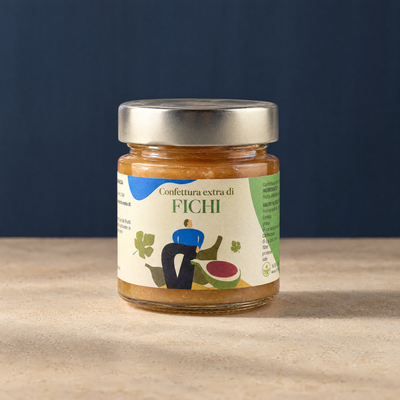
 | From our selection Fig JamHandmade, no preservatives. € 7,90 Discover → |
This guide covers everything you need to know to recognise a good artisanal jam, understand its value and use it in the kitchen.
What the law says
The legal reference is EU Reg. 2001/113:
- Jam: a product made of fruit (not citrus), sugar and possibly water. At least 35 g of fruit per 100 g of product.
- Extra jam: at least 45 g of fruit per 100 g, none of it reduced to purée.
- Marmalade: a term legally reserved for citrus-based products.
- Compote: a less regulated commercial term, usually indicating products with less sugar.
Deep dive on the differences →.
What makes a jam "artisanal"
There is no legal definition of "artisanal" applied to jams, but market consensus means:
- Fresh seasonal Italian fruit processed within 24-48 hours of harvest
- Fruit percentage above 60% (vs 35-45% in standard industrial jams)
- Traditional cooking in copper or steel pots at atmospheric pressure (not industrial vacuum)
- Sugar as a single ingredient (sucrose or cane sugar), not syrups or blends
- No added preservatives — preservation comes from sugar + acidity + hot jarring
- No colourings — the colour is that of the processed fruit
- No added thickeners — gelling comes from natural pectin (usually lemon juice)
- Small-batch production (100-500 jars a day vs the industry's 30,000-100,000)
The most traditional artisanal Italian jams
Fig jams
Dottato, Cilento white, Brogiotto black figs — native varieties giving dense, sweet jams with the characteristic seed texture. Typical of Southern Italy.
Citrus marmalades
Sfusato lemons from the Amalfi Coast, Sicilian oranges, Calabrian bergamot, diamante citron. Under Italian law these are "marmalades" (a term reserved for citrus).
Red fruit jams
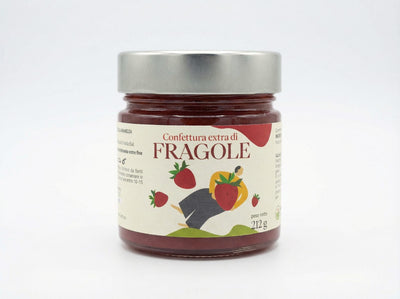
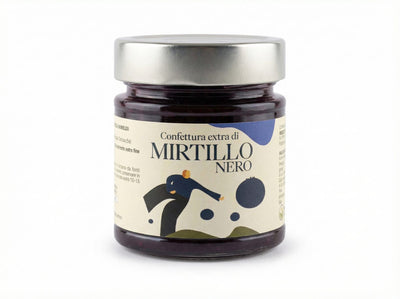
Strawberries, raspberries, blueberries, blackberries, currants. Common in the North (Piedmont, Trentino). Higher acidity, high natural pectin content.
Stone and pome fruit jams
Apricots, peaches, plums, quinces, red apples. The classic "breakfast" jams, from all over Italy.
Niche jams
Chestnuts, marrons, prickly pears, pomegranate, Italian kiwi. Micro-territory productions, often available only in season.
Average nutritional values (per 100 g)
Variable by fruit type and sugar content. Indicative data.
| Type | Calories | Total carbs | Sugars | Fibre |
|---|---|---|---|---|
| Artisanal extra jam (60-70% fruit) | 210-260 | 50-65 g | 40-55 g | 1.5-3 g |
| Standard industrial jam (35-45% fruit) | 240-290 | 60-75 g | 55-70 g | 0.5-1.5 g |
| "No added sugar" jam (with sweeteners) | 130-180 | 30-45 g | 25-40 g | 1-2 g |
Artisanal jams have slightly fewer total calories thanks to the higher fruit percentage (less sugar, more fibre).
How to recognise quality on the label
5 quick checks. Complete practical guide →.
- Declared fruit percentage above 60%
- Only "sugar" or "cane sugar" (not "glucose-fructose syrup")
- Short ingredient list (max 4 items: fruit, sugar, lemon juice, possibly natural pectin)
- No preservatives (absence of E200-E219)
- Specified fruit origin (e.g. "Dottato figs from Cilento", not just "figs")
Replacing supermarket jam
Five concrete reasons to switch to artisanal jams in your pantry. Dedicated article →.
In short: - More real fruit by weight - Less added sugar - No colourings, preservatives, artificial flavourings - Cost per gram of actual fruit more sensible than it seems - Complex flavour vs standardised flavour
Gastronomic pairings
Breakfast
- Toasted wholegrain or semolina bread + artisanal jam + fresh ricotta
- Plain yogurt + a teaspoon of jam + fresh fruit
- Pancakes or crêpes + red fruit jam
Cheese
The rule: sweet ↔ aged/strong.
| Jam | Cheese |
|---|---|
| Dottato figs | Aged Parmigiano, pecorino, sweet gorgonzola |
| Sfusato lemons | Fresh goat cheese, ricotta, buffalo mozzarella |
| Red apples | Pecorino, smoked scamorza |
| Pears | Gorgonzola, buffalo blue, taleggio |
| Red fruits | Brie, camembert, goat cheese |
Deep dive on the art of pairing cheese and jams →.
Desserts
- Shortcrust crostata with artisanal jam
- Cheesecake with a red fruit jam coulis
- Filled biscuits (jam centre)
- Cream gelato with a teaspoon of jam
Meat and game
- Beef fillet with a fig jam reduction
- Duck with orange marmalade
- Guinea fowl with quince jam
The science of artisanal cooking
Traditional cooking at atmospheric pressure (100-104 °C) for long times (40-90 minutes) develops the Maillard reactions that give artisanal jams their complex flavour. Industrial vacuum cooking at lower temperatures (60-80 °C) preserves colours but flattens aromas. Deep dive on vacuum cooking →.
Storage
- Sealed jar: 18-24 months in a cool, dry pantry
- Open jar: 3-4 weeks in the fridge, closed, using clean cutlery
- Never freeze: freezing alters pectin and structure
10 frequently asked questions
How long do they last once opened? 3-4 weeks in the fridge. With no added preservatives, slightly less than industrial ones.
Are they vegan? Almost always. Exceptions: jams with declared honey, a few with butter or cream. Check the label.
Are they gluten-free? Technically yes (base ingredients contain no gluten). Highly sensitive coeliacs should look for formal certification.
Do sugar-free jams exist? Yes, sweetened with erythritol, stevia or concentrated apple juice. They still contain the fruit's natural sugars.
Can I use them in baking? Yes, excellent for crostatas, biscuits, mousses. Baking does not penalise quality jams.
How do I tell if a jam has gone bad? Colour change (excessive darkening), surface bubbles, fermented smell, visible mould. When in doubt, discard.
Are organic and artisanal the same thing? No. Organic certifies how the raw material was farmed, not the processing. Industrial organic jams and non-organic artisanal jams both exist.
How much does an artisanal jam cost on average? €6-12 per 350 g, vs €2-4 for standard industrial ones. The premium reflects fruit percentage, raw material quality, process and production scale.
Can jams be made at home? Yes. You need attention to temperature (at least 104 °C at the core) and sterile jarring. See the dedicated home-preparation articles.
Are artisanal jams "healthier"? They have more fruit, less added sugar, no preservatives. The word "healthier" is regulated by EC Reg. 1924/2006 — the final balance depends on how much you eat.
Related articles in the Jam pillar
- Jam, marmalade, compote: the differences
- How to choose a quality artisanal jam
- Replacing supermarket jam
- Vacuum cooking for jams: the science
- Pairing cheese and jams: the traditional art
- Artisanal Italian jams: quality guide
Explore all Minnelea artisanal jams →