
Limoncello vs Limes: Differences, Flavour, Recipes
 | From our selection Lemon MarmaladeHandmade, no preservatives. € 7,90 Discover → |
Limoncello is an Italian lemon liqueur made from lemon peel, alcohol, water and sugar, usually bottled at 25–32 % ABV, while limes are small green citrus fruits with a tart, herbaceous aroma. Knowing the difference between limoncello and limes leads to better choices in the kitchen and behind the bar. Both bring citrus notes, yet their origin, composition and impact in the glass or on the plate could hardly be more distinct. This article explains how each is made, how they taste and where they shine, with concrete examples from cocktails and desserts.
What is the difference between limoncello and limes?
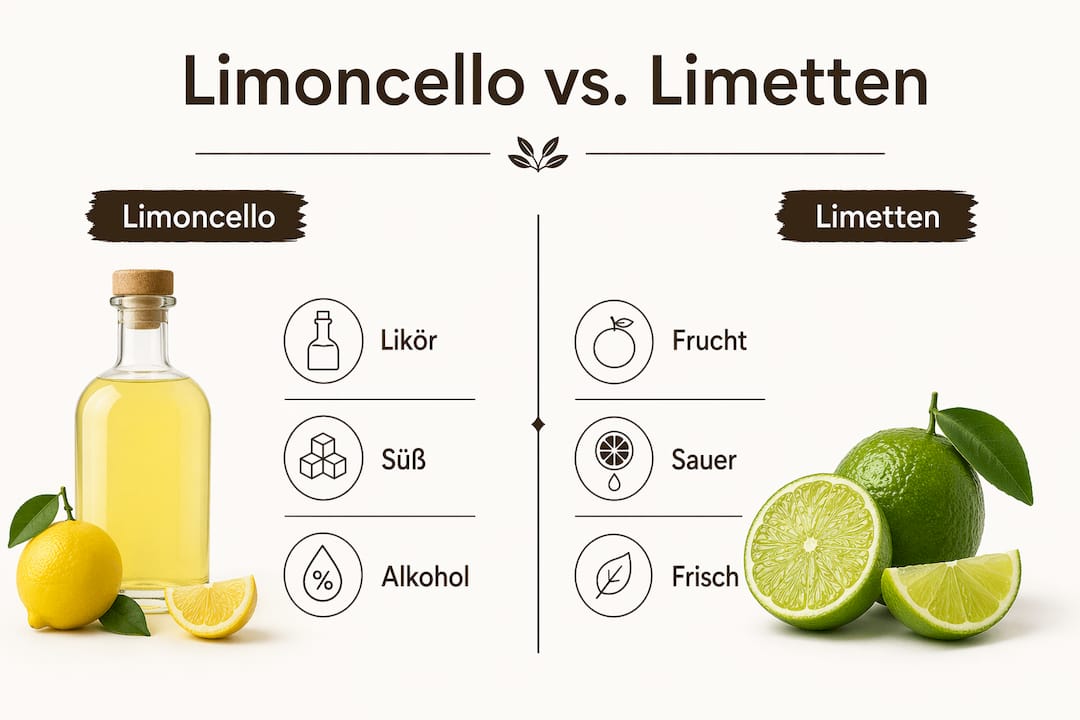
Limoncello is a liqueur, limes are a fruit. That distinction sounds simple, yet it causes surprising confusion. Many misunderstandings arise because “lime” and “lemon” sound similar in some languages, and the name limoncello seems to point to both.
Limoncello is based exclusively on yellow lemons, never on limes. The name comes from the Italian word “limone”, meaning lemon. Limes are distinct citrus fruits, smaller than lemons, green-skinned and endowed with a zestier, more acidic aroma. Limes are smaller, greener and spicier; lemons are larger, yellower and tarter. This botanical difference explains why the two are not interchangeable in recipes.
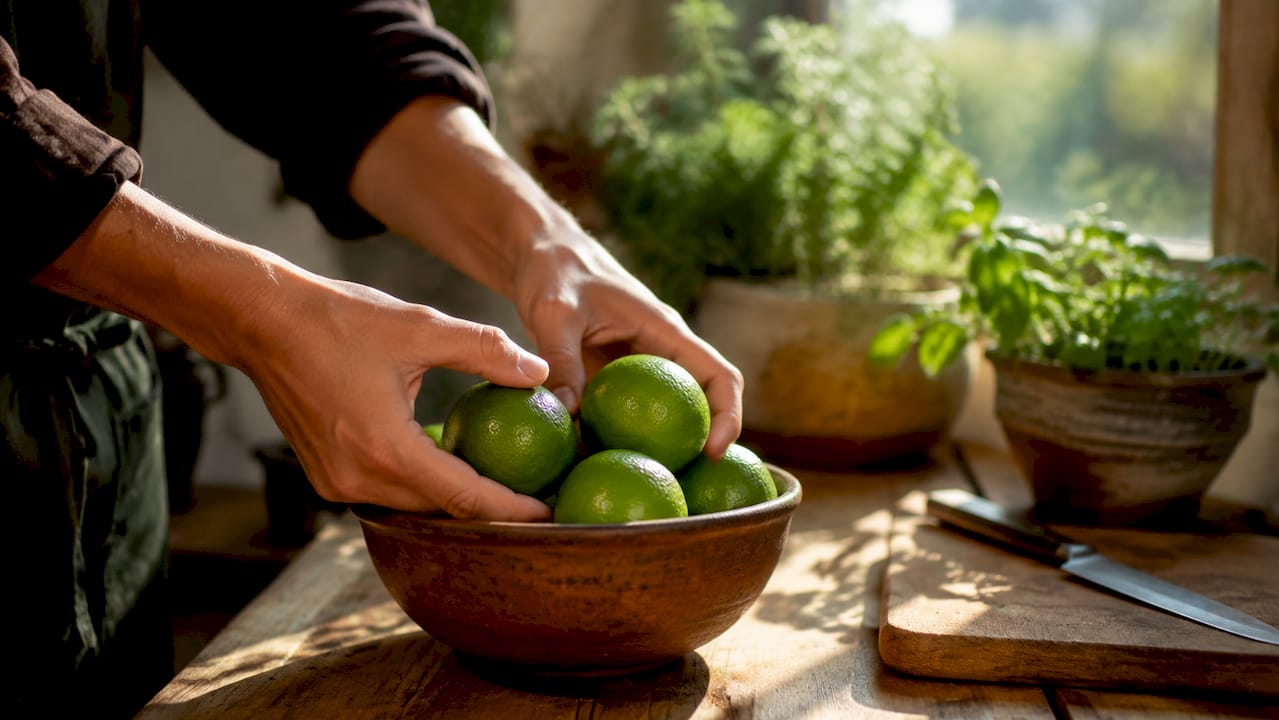
The decisive difference lies in the category: limoncello is a processed product with alcohol and sugar, limes are a fresh ingredient with no sweetness and no alcohol. When a recipe calls for limoncello, don’t automatically reach for a lime, and vice-versa. Understanding this basic difference is the first step toward flawless results.
How is limoncello made, and how do you use limes?
Limoncello production follows a clear principle: lemon peels are macerated in high-proof alcohol, then stretched with a syrup of water and sugar. The result is a liqueur of at least 15 % ABV and at least 70 g sugar per litre. Fine limoncellos from Campania or Cilento use fragrant varieties such as Sfusato Amalfitano.
The crucial step is careful handling of the peel. Only the yellow layer—the flavedo—goes into the alcohol. The white pith (albedo) contains bitter compounds that would ruin the flavour. Precision in peeling decides between excellence and disappointment.
Limes are used in an entirely different way:
- Juice: Freshly squeezed lime juice delivers acidity and brightness to cocktails, marinades and dressings.
- Zest: The outer layer releases essential oils and an intense green aroma into batters, glazes and creams.
- Garnish: Wheels and wedges decorate drinks and give a final burst of freshness when squeezed.
- Syrup: Lime juice simmered with sugar creates an aromatic cordial for cocktails and desserts.
Pro tip: When zesting limes, use only the outermost green layer; the white pith is bitter. A Microplane yields finer zest than a traditional zester.
The processing difference is fundamental: limoncello is created through days or weeks of maceration and sweetening, limes are used fresh and immediately. Limoncello is a concentrated citrus liqueur; limes are a living, fresh product.
How do limoncello and limes differ in flavour when used in cocktails?
Limoncello offers sweet, aromatic citrus notes derived from essential oils in the peel, without the acidity of the juice. Limes, on the other hand, bring pronounced acidity, fresh green aroma and a hint of herbaceous bitterness. Both speak citrus, yet they create completely different sensations on the palate.
In cocktails this difference determines the entire balance of a drink. Here are the classic applications side by side:
- Limoncello Martini: Limoncello, vodka and lemon juice create a sweet, aromatic cocktail with a silky mouthfeel. The liqueur’s sweetness dominates; lemon juice supplies the necessary acidity.
- Caipirinha: Muddled lime wedges and juice with cachaça and sugar produce a tart, refreshing drink. The lime carries all the aromatic weight.
- Mojito: Lime juice, mint, rum and sugar. The lime gives freshness and acidity without adding sweetness.
- Limoncello Spritz: Limoncello with prosecco and soda yields a light, sweet-citrus aperitif. Limes would be out of place here, as they lack the inherent sweetness.
“Choosing between limoncello and lime means deciding whether you want a sweet, aromatic liqueur or fresh acidity with green notes.” Source: Limoncello Tests & Tips
Mouthfeel also differs markedly. Limoncello’s sugar lends a velvety coating to the tongue and lengthens the finish. Lime juice feels cleansing and invigorating, cutting through fat and sweetness. When developing lime cocktail recipes, this property is harnessed to keep drinks bright and lively.
Limoncello and limes in desserts: when to use which
In sweets the two ingredients perform fundamentally different roles. Limoncello brings sweet, boozy depth to creams, tiramisu and parfaits. The essential oils from the lemon peel sing in a mascarpone cream without altering texture. Limes deliver freshness and acidity that balance richness in cakes, glazes and fillings.
Here is an overview of typical dessert applications:
- Limoncello in tiramisu: Replaces coffee or amaretto as the aromatic liqueur, lending a citrusy, gently alcoholic note.
- Limoncello in panna cotta: A few millilitres in the syrup or cream are enough for intense citrus aroma.
- Lime juice in cheesecake: Acidifies the filling and balances the heaviness of cream cheese and cream.
- Lime zest in glazes: Adds a fresh green aroma to icings and buttercreams without extra liquid.
- Lime juice in mousse: Stabilises egg whites and cream through gentle acidity, much like lemon juice.
| Dessert type | Limoncello | Lime |
|---|---|---|
| Tiramisu | Yes, as aromatic liqueur | No, too acidic |
| Cheesecake | Possible, for sweetness | Yes, for freshness and acidity |
| Icing / glaze | Rarely, too liquid | Yes, zest is ideal |
| Panna cotta | Yes, in syrup | Yes, as zest |
| Chocolate mousse | No | Yes, for contrast |
Combining lime zest and juice delivers both aroma and acidity in a dessert. Juice alone would mute the perfume; zest alone would lack the necessary tang. This pairing is the key to balanced, aromatic lime desserts.
Pro tip: Never add limoncello to hot creams—the alcohol evaporates and the aroma is lost. Stir it in only after cooling to preserve the full citrus bouquet.
Can you substitute limoncello for limes, and vice-versa?
Limoncello cannot be swapped 1:1 for lime juice because sweetness, alcohol and mouthfeel differ so greatly. If you must substitute, the recipe needs adjustment. The table below shows how to do it:
| Situation | Substitute | Adjustment |
|---|---|---|
| Limoncello missing in cocktail | Lime juice plus sugar syrup | Add sweetness separately, reduce alcohol |
| Lime missing in dessert | Lemon juice plus a dash of limoncello | Reduce quantity, lower sugar in recipe |
| Limoncello in marinade | Lime juice plus honey | Alcohol omitted, sweetness replaced by honey |
| Lime in cocktail | Limoncello plus splash of lemon juice | Watch sweetness, omit sugar syrup |
The key factor in any swap is sweetness. Limoncello contains at least 70 g sugar per litre; lime juice contains none. Replacing limoncello with lime juice without adding sugar or syrup leaves the drink or dessert flat and overly tart.
When going the other way—lime to limoncello—alcohol enters the equation. In desserts for children or alcohol-free dishes, limoncello is off the table. Instead, use lime juice with a little sugar syrup and a drop of food-grade lime oil to approximate the aroma.
Pro tip: If you want to develop a lime-limoncello recipe, combine the two rather than substitute. A splash of lime juice in a Limoncello Spritz adds a fresh green note without destroying the sweetness.
A common mistake is assuming both ingredients deliver the same citrus flavour. Limoncello is built on zest oil, sugar and alcohol; limes deliver acidity and fresh aroma through juice and zest. These are two distinct flavour profiles that complement, not replace, each other.
Key takeaways
Limoncello is a sweet lemon liqueur based on lemon-peel oils; limes are fresh citrus fruits with acidity and green aroma. The two complement each other in kitchen and bar, but they are not interchangeable.
| Point | Details |
|---|---|
| Fundamental difference | Limoncello is a liqueur; limes are fresh citrus with no alcohol or sugar. |
| Production & processing | Limoncello is made by macerating yellow lemon peel; limes are used fresh as juice and zest. |
| Flavour & impact | Limoncello tastes sweet and aromatic; limes are tart, fresh and herbaceous. |
| Use in desserts | Limoncello for depth and liqueur notes; limes for freshness and acid balance. |
| Substituting in recipes | Possible, but requires adjustments to sweetness, alcohol and ratios. |
My experience with limoncello and limes in the kitchen
I have used both ingredients for years in cocktails and desserts, and the most common mistake I see is impatience when balancing sweetness. Adding limoncello to a cocktail that actually needs lime juice results in a cloying drink lacking freshness. The fault lies not with the limoncello, but with a misunderstanding of each ingredient’s role.
What continually fascinates me: a good limoncello from Cilento, made from Sfusato lemons with intensely fragrant peel, smells of summer and southern Italy in a single sip. Limes, on the other hand, bring a tropical, almost spicy freshness that is irreplaceable in a mojito or a lime tart. Each has its own personality.
My practical advice: if in doubt, taste both ingredients side by side, neat and without distraction. The difference in aroma is immediate. Limoncello is round, sweet and oily on the palate. Lime juice is sharp, fresh and cleansing. Once you know these sensations, the next recipe choice becomes instinctive.
A small mistake I once made: adding lime zest to a batter too early and then baking for a long time. The essential oils evaporate quickly under heat. Add zest as late as possible, or use it post-baking as a glaze to preserve the aroma.
— carmine
Citrus aromas from Cilento: discover Minnelea marmellate
If you love the full spectrum of citrus flavour, Minnelea offers handcrafted products that capture this depth in a jar. Our Cilento lemon marmellata carries the WineHunter Gold and shows how intense the aroma of carefully processed citrus peel can be—much like the finest limoncello.

For those who want to enjoy citrus in all its facets, Minnelea also crafts an orange-lemon marmellata from hand-picked Cilento fruit. Both pair beautifully with cheese, pastries and a glass of limoncello. All citrus marmellate and other Minnelea gourmet marmellate are produced in small batches, free from preservatives and focused on authentic, regional flavour from southern Italy.
FAQ
What exactly is limoncello?
Limoncello is an Italian lemon liqueur made from lemon peel, alcohol, water and sugar, typically 25–32 % ABV. It is produced by macerating yellow lemon peel in alcohol and then diluting with sugar syrup.
Are limes and lemons the same as limoncello ingredients?
No. Limoncello is based on yellow lemons, not limes. Limes are distinct green citrus fruits with a zestier, more acidic aroma than lemons.
Can I replace limoncello with lime juice in cocktails?
A direct swap is not recommended, as limoncello is sweet and alcoholic while lime juice is tart and alcohol-free. If you must substitute, add sugar separately and adjust the alcohol content.
Which desserts pair better with limoncello, which with limes?
Limoncello suits tiramisu, panna cotta and creams where a sweet, boozy note is desired. Limes work better in cheesecakes, glazes and mousses where freshness and acidity balance sweetness.
Why must the white pith never be used in limoncello?
The white inner layer of the lemon (albedo) contains bitter compounds that negatively affect the liqueur’s flavour. Only the yellow outer layer (flavedo) carries the aromatic essential oils that give limoncello its characteristic taste.
Recommendations
- Cilento Lemon Marmalade · WineHunter Gold · Minnelea – Azienda Agricola Minnelea
- Cilento Orange and Lemon Marmalade · Artisan · Minnelea – Azienda Agricola Minnelea
- Sicilian Orange Marmalade: What Sets It Apart? – Azienda Agricola Minnelea
- Artisanal Fruchtkonserven: Was steckt wirklich dahinter? – Azienda Agricola Minnelea