
What Are Caponata Ingredients? The Authentic Guide
 | From our selection Fig JamHandmade, no preservatives. € 7,90 Discover → |
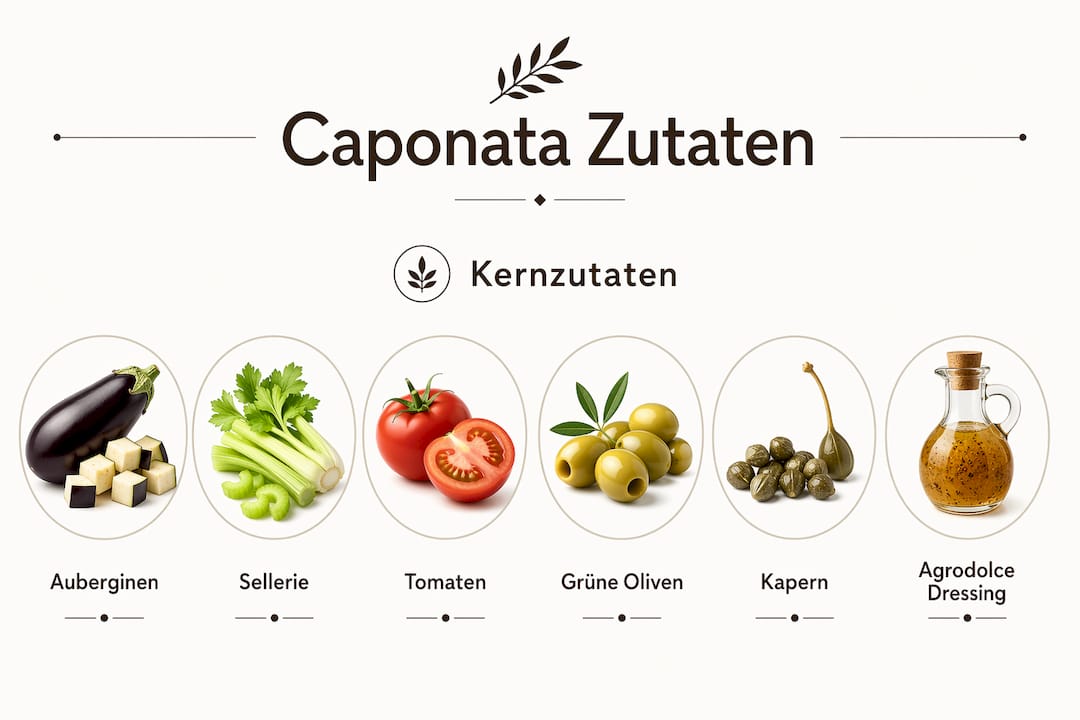
Caponata is a sweet-and-sour eggplant dish from Sicily, whose character emerges from a precisely defined selection of ingredients. The seven main ingredients are eggplant, celery, onions, tomatoes, green olives, capers, and the so-called agrodolce dressing of vinegar and sugar. Anyone wanting to know what are caponata ingredients in the traditional sense will find a complete answer here: with measurements, selection criteria, and the small details that make the difference between a good result and a truly authentic one. We at Minnelea cook this dish with genuine passion and are happy to share what we have learned.
What Are Caponata Ingredients and How Does the List Come Together?
The caponata ingredient list follows a fixed pattern that has proven itself through generations of Sicilian cooking. For four servings, plan for 700–1,000 g of eggplant as the main ingredient, plus 150–300 g celery, 2 tbsp capers, 80–120 g green olives, and 30–60 ml vinegar and 1–2 tbsp sugar for the dressing. These quantities are no accident. They reflect the balance that makes caponata what it is: a dish that tastes simultaneously savory, sweet, sour, and full-bodied.
Onions serve as the aromatic base and tomatoes as the binding agent. Optional but traditionally rooted ingredients are pine nuts and, in some recipes, a small amount of dark chocolate. The typical ingredients of southern Italian cuisine follow the principle that a few high-quality components achieve more than many mediocre ones. Caponata is a prime example of this.
What Role Do Eggplants Play and How Do You Choose Them Properly?
Eggplants are the soul of caponata. Without them, there is no dish. Those searching for caponata without eggplant will find variations with zucchini or peppers, but they leave the realm of classic Sicilian preparation.
Freshness and Variety
For authentic caponata, firm, glossy eggplants with taut skin are ideal. The classic purple variety from the Mediterranean has a mild aroma and few bitter compounds. Soft spots, a dull surface, or a spongy interior are signs of poor freshness and lead to a mushy result.
Draining Before Frying
Draining with coarse salt is not an optional step. Salt draws out excess moisture and reduces bitter compounds before the eggplants go into the pan. Skipping this step risks oil-soaked, soft cubes that fall apart in the finished dish. The eggplants are diced, sprinkled with salt, drained in a colander for 30–60 minutes, then patted dry.
Golden-Brown Frying
Golden-brown frying is the decisive step for texture. The cubes need an almost crusty surface so they keep their shape during the later simmering. Adding too many cubes to the pan at once lowers the temperature and the eggplants steam rather than fry. Better to work in two batches.
Pro tip: Extra virgin olive oil with a high smoke point is best for frying. Using a particularly aromatic oil transfers its character directly to the eggplants.
- Always cut eggplants into uniform cubes of about 2 cm
- Salt and let drain for at least 30 minutes
- Pat dry before they go into the hot pan
- Fry in small amounts over high heat until golden brown
- Don't turn too early so a crust can form
How Is the Agrodolce Dressing Composed?
Agrodolce literally means "sweet-sour" and is the heart of every authentic caponata. The dressing consists of vinegar and sugar, which cook down with the vegetables to form a glossy, aromatic sauce. Balance is everything. Too much vinegar makes the dish sharp and one-dimensional; too much sugar makes it taste like compote.
The recommended base for four people is 3 tbsp vinegar and 1.5 tbsp sugar, followed by 15–20 minutes of simmering. During this time, the aromas meld, the vinegar loses its sharpness, and the sugar caramelizes slightly. The result is a rounded, deep sauce that holds all the ingredients together.
Which Vinegar Types Suit Caponata?
- Red wine vinegar is the classic choice. It brings depth and a light fruitiness.
- White wine vinegar is lighter and milder, suitable for versions with more delicate aromas.
- Sherry vinegar is an elegant variation with a nutty note that pairs well with pine nuts.
Pro tip: Always add the vinegar only after frying all the vegetables. This way it can cook down with the sugar directly in the pan to form a glaze, without souring the vegetables beforehand.
The 15–20 minute simmering time over medium heat is non-negotiable. Removing from the heat too early yields a dish that tastes of raw vinegar. Cooking too long loses the texture of the eggplants. A simple test: the sauce should shine slightly and cling briefly to the spoon when stirred.
What Other Ingredients Complete the Caponata?
Besides eggplant and agrodolce, caponata needs four more ingredients, each fulfilling its own function. Celery, tomatoes, olives, and capers are not mere accessories. Together they shape the aromatic profile of the dish.
Celery, Tomatoes, and Olives at a Glance
| Ingredient | Function | Selection Note |
|---|---|---|
| Celery | Crunchy texture, fresh aroma | Prefer bleached celery, cut into 1 cm pieces |
| Tomatoes | Binding agent, flavor carrier | Fresh plum tomatoes or good canned tomatoes |
| Green olives | Salty seasoning, meaty texture | Pitted olives in brine, not in vinegar |
Tomatoes from southern Italy have a particularly balanced ratio of sweetness and acidity. This makes them the ideal choice for caponata, because they don't disturb the agrodolce balance but support it. Those who pay attention to good tomato quality need less sugar in the dressing.
Capers: Salt Beats Vinegar
Capers in salt deliver more complex umami than those in vinegar. This difference is small but noticeable. Salt-packed capers need to be rinsed for 10–15 minutes before use to regulate the salt content. Using vinegar-packed capers adds an extra source of acidity that can shift the agrodolce balance.
Pine Nuts and Dark Chocolate
Pine nuts appear in many traditional recipes, about 40 g per 1 kg of eggplant. They are briefly dry-toasted before being added to the caponata. This intensifies their nutty aroma and prevents them from softening in the dish.
A small amount of dark chocolate, about 20 g per 600–800 g of eggplant, is a secret of some Sicilian family recipes. It deepens the sweet-sour sauce without making the dish sweet. The cocoa content adds a lightly bitter note that noticeably increases the complexity of the agrodolce dressing.
- Always sauté celery, don't add it raw to the sauce
- Green olives in brine, not in oil or vinegar
- Rinse salt-packed capers, drain vinegar-packed capers
- Toast pine nuts dry, add only at the end
- Finely chop dark chocolate and let it melt in the hot sauce
What Ingredient Mistakes Should Be Avoided?
Caponata forgives little when the basic ingredients are handled incorrectly. The most common mistakes happen not during cooking itself, but in the selection and preparation of ingredients.
Too much tomato sauce is the most widespread error. Tomatoes serve only as a binding agent; the dish should not swim in tomato sauce. Those too generous with tomatoes get a sugo with vegetable pieces rather than a true caponata.
- Wrong capers: Using vinegar-packed capers without draining adds uncontrolled acidity. Always drain or rinse.
- Eggplants not drained: The result is oily, soft cubes without bite. The salting step is not optional.
- Too low frying temperature: Eggplants fried at too low heat absorb oil like a sponge.
- Serving too early: Caponata is never served hot. The flavors need at least an hour of resting time at room temperature, better overnight.
Pro tip: Prepare caponata the day before. Overnight, all the aromas fully meld, and the dish tastes noticeably more rounded and deeper the next day than when freshly cooked.
The resting time is no trick, but chemistry. Vinegar and sugar continue to react with the vegetables, celery releases its aroma, and the olives slightly color the sauce. Those who shorten this process get a technically correct but flavor-wise flat result.
Key Insights
Authentic caponata succeeds only when eggplants are properly prepared, the agrodolce dressing is precisely dosed, and the dish is allowed to rest long enough.
| Topic | Details |
|---|---|
| Core ingredients of caponata | Eggplant, celery, tomatoes, green olives, capers, onions, and agrodolce dressing form the base. |
| Agrodolce balance | 3 tbsp vinegar to 1.5 tbsp sugar with 15–20 minutes simmering time yields the classic sweet-sour note. |
| Preparing eggplants | Salting, draining, and patting dry prevents oily texture and bitterness. |
| Choosing capers correctly | Salt-packed capers deliver more intense umami than vinegar-packed capers and should be rinsed before use. |
| Observing resting time | At least one hour, better overnight, allows all aromas to fully meld together. |
My Honest Assessment of Caponata Preparation
by carmine
I have tasted caponata in many kitchens and prepared it often myself. What surprises me again and again: most mistakes happen not while cooking, but while shopping. Buying cheap capers in vinegar, taking mediocre canned tomatoes, and skipping the draining of eggplants—no matter how carefully you cook, you won't achieve a truly authentic result.
The agrodolce dressing is the moment that decides everything. I have learned to always taste it before adding the vegetables. Too sour? Another half teaspoon of sugar. Too flat? A splash more vinegar. This fine-tuning takes 30 seconds and makes the difference between a good and an unforgettable dish.
What many underestimate: dark chocolate. I was skeptical for a long time. But 20 g of finely chopped chocolate, melted into the hot sauce, gives the dish a depth you can't name but immediately taste. No guest has ever guessed what's in it. Everyone has asked for the recipe.
And then there's the resting time. Caponata served fresh is a different dish than caponata from the next day. I always prepare it the evening before. This is no extra effort, but the simplest way to improve quality without investing more work.
— carmine
Authentic Ingredients for Caponata at Minnelea
Anyone wanting to cook caponata at the right level needs ingredients that can carry the dish. Minnelea offers hand-selected antipasti and specialties from southern Italy made exactly for this purpose.

The pickled eggplants in extra virgin olive oil from Minnelea serve as a ready-made base or as a complement to self-prepared caponata. Those wanting to refine the tomato base will find in the sun-dried tomatoes in olive oil an ingredient that immediately gives the dish more depth. All products are made in small batches in Cilento, with selected ingredients from the region. You can taste this.
FAQ
What Are the Most Important Ingredients for Caponata?
The seven core ingredients are eggplant, celery, onions, tomatoes, green olives, capers, and the agrodolce dressing of vinegar and sugar. For four servings, plan for 700–1,000 g of eggplant as the main ingredient.
Which Capers Are Best for Caponata?
Salt-packed capers deliver more intense umami than vinegar-packed capers and are the preferred choice for authentic caponata. They should be rinsed for 10–15 minutes before use.
Can Caponata Be Prepared Without Eggplant?
Caponata without eggplant is possible, but no longer a traditional Sicilian dish. Variations with zucchini or peppers exist, but they leave the realm of classic caponata variations.
How Long Should Caponata Rest Before Serving?
At least one hour at room temperature, better overnight. During this time, all aromas fully meld and the vegetables maintain the desired consistency.
What Makes the Agrodolce Dressing?
The agrodolce dressing consists of vinegar and sugar in a ratio of about 3 tbsp to 1.5 tbsp for four people. After 15–20 minutes of simmering, a glossy, rounded sauce forms that binds all the caponata ingredients together.
Recommendation
- Typical Ingredients of Southern Italian Cuisine: The Guide – Azienda Agricola Minnelea
- Checklist of Authentic Italian Delicacies: The Guide – Azienda Agricola Minnelea
- Working with San Marzano Tomatoes: Methods and Recipes – Azienda Agricola Minnelea
- Why Tomatoes from Southern Italy Are Especially Good – Azienda Agricola Minnelea