
Types of Southern Italian Confetture & Marmalade
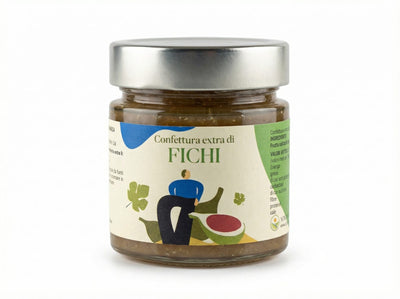
 | From our selection Fig JamHandmade, no preservatives. € 7,90 Discover → |
When most people picture Italian jams, they imagine citrus. Yet the types of Southern Italian confetture reach far beyond the classic orange marmalade. From Sicily and Calabria to Kampanien and Cilento, the South produces fruit spreads whose flavour, fruit content and craftsmanship bear little resemblance to the jars lining German supermarket shelves. Join us on a journey through the most captivating confetture of Southern Europe, from velvety blood-orange to the surprising cactus-fig.
Table of Contents
- Key Take-aways
- 1. An overview of Southern Italian confetture
- 2. Citrus spreads: blood orange, Amalfi lemon & bitter orange
- 3. Berry confetture & rare fruits from the South
- 4. Traditional versus simplified methods
- 5. Comparing popular Southern Italian confetture
- 6. Regional specialities: where each spread originates
- 7. How to spot real quality when buying
- 8. Using Southern spreads in a German kitchen
- My personal take on Southern Italian confetture
- Discover Southern Italian confetture by Minnelea
- FAQ
Key Take-aways
| Point | Details |
|---|---|
| Beyond citrus | Southern Italian confetture include berries, cactus fig and stone fruit—not just citrus. |
| Fruit content as quality marker | Up to 130 g fruit per 100 g finished product signals intensity and craftsmanship. |
| Traditional methods matter | Temperature-controlled cooking locks in texture and authentic Southern aroma. |
| EU labelling change | From June 2026, only citrus spreads may be called “marmellata”; all others become “confettura”. |
| Versatile in the kitchen | Perfect at breakfast, with cheese, or in refined desserts. |
1. An overview of Southern Italian confetture
Southern Italy is not a single landscape. Sicily, Calabria, Kampanien and Cilento each bring distinct climates, soils and fruit traditions, and these differences are mirrored in their regional confetture.
The best-known categories are citrus marmellate, berry confetture, stone-fruit spreads and exotic specialities such as cactus fig or true fig. Each category follows its own logic—different cooking times, sugar ratios and pectin choices. Knowing the differences lets you buy with confidence and savour more deeply.
Pro tip: Always read the ingredient list. The closer fruit is to the top—and the shorter the list—the closer the jar is to traditional craftsmanship.
2. Citrus spreads: blood orange, Amalfi lemon & bitter orange
Citrus confetture are the flagship of Southern Italian preserves, yet no two taste alike. The magic lies in the fruit profile, the way the peel is handled and the balance between bitterness and sweetness.
The key Southern citrus variants:
- Sicilian blood-orange marmellata: Fruity with a gentle bitter note. Sicilian blood oranges typically contain about 45 g fruit per 100 g finished product, use fruit pectin as a gelling agent and have a total sugar content of 60 g per 100 g.
- Amalfi-lemon marmellata: Intensely aromatic, delicately bitter thanks to the peel of the famed Sfusato lemon. Our Cilento lemon marmellata shows how much depth a single fruit can deliver.
- Bitter-orange marmellata: More pronounced bitterness, traditionally studded with candied peel. It recalls English marmalade yet is more aromatically complex.
- Orange-lemon blends: Marry the sweetness of orange with the brightness of lemon. A classic example is the Cilento orange-lemon marmellata.
Production follows a precise pattern. Traditional methods with exact temperature control safeguard the signature aroma and texture. The peel is simmered along with the pulp, releasing essential oils that give the spread its unmistakable perfume.
From 14 June 2026 a new EU rule applies: only products made from citrus may officially be labelled “marmellata”; all others must use “confettura”.
Pro tip: Authentic Southern citrus marmellate reveal themselves by colour: blood-orange spreads glow a deep ruby—no artificial dyes required. If the hue is uniformly orange, suspect blends or colourants.
3. Berry confetture & rare fruits from the South
Here is where many palates are pleasantly surprised. Most consumers underestimate the breadth of Southern Italian confetture, wrongly associating them almost exclusively with citrus. In reality, Southern berry spreads are among the most intense and fruit-rich you will ever taste.
The most remarkable non-citrus confetture:
- Sicilian strawberry confettura: Can reach up to 130 g fruit per 100 g finished product, sweetened only with cane sugar and lemon juice. That’s no typo—water loss during cooking yields more fruit than product.
- Cilento mixed-berry confettura: Aromatic, with natural acidity that balances sweetness perfectly. Our artisanal Cilento forest-berry confettura is made without preservatives.
- Sicilian cactus-fig confettura: One of the South’s most exotic specialities. Cactus figs from Castelbuono grow on volcanic soil, gifting the confettura a unique terroir-driven aroma. The colour is deep violet; the flavour sweetly floral.
- Fig confettura: Caramelises naturally during cooking, finishing with a honeyed note. A sublime partner for Pecorino or Gorgonzola.
- Calabrian bergamot confettura: Grown only in Calabria, its heady perfume recalls fine cologne. Rare, unforgettable.
In German kitchens we especially recommend berry confetture as dessert companions: a spoon of Sicilian strawberry on panna cotta, Cilento forest-berry folded into yoghurt parfait, or cactus-fig on a cheese board with Manchego—the confettura truly sings.
Pro tip: Cactus-fig confettura is still little known in Germany—perfect as a host gift or surprise element on a cheese platter. Buy small jars so you can compare producers.
4. Traditional versus simplified methods
Anyone attempting Southern-style confetture at home faces a fundamental choice: cook traditionally or use modern shortcuts.
The traditional method at a glance:
- Wash, peel if needed, and chop the fruit.
- Mix with sugar in a 1:1 or 1:0.7 ratio and macerate for several hours.
- Bring to the boil and simmer over medium heat.
- Monitor temperature: orange marmellata is cooked to 108 °C for roughly 60 minutes to hit the precise setting point.
- Perform a wrinkle test on a cold plate.
- Fill into sterilised jars and vacuum-seal.
This route demands experience. Temperature decides texture and aroma. Undercook and the confettura stays runny; overcook and it loses fruitiness and colour.
| Feature | Traditional method | Gelling-sugar method |
|---|---|---|
| Fruit content | High, freely adjustable | Set by recipe |
| Cooking time | 45–90 minutes | 4–5 minutes |
| Setting reliability | Experience-dependent | Standardised |
| Sugar level | Freely adjustable | Fixed by mix |
| Aroma retention | Very high at correct temperature | Good due to short cook |
For the German home kitchen, gelling sugar 1plus1 with added pectin and acid offers a reliable, standardised option—especially handy when working with supermarket Sicilian blood oranges or strawberries.
Pro tip: To soften the bitterness of citrus marmellata, blanch the peel twice in fresh water before cooking. This tames the bitter compounds without destroying aroma.
5. Comparing popular Southern Italian confetture
Fruit content is the quickest indicator of texture and aromatic intensity. The table below gives you an at-a-glance guide:
| Confettura type | Fruit content | Flavour profile | Typical use |
|---|---|---|---|
| Blood-orange marmellata | ca. 45 % | fruity, gently bitter | breakfast, pastries |
| Amalfi-lemon marmellata | ca. 40 % | intense, delicately bitter | tea, desserts, fish |
| Sicilian strawberry confettura | up to 130 % | sweet, fresh, intense | desserts, yoghurt, ice cream |
| Forest-berry confettura | ca. 70 % | tangy, aromatic | cheese, pancakes |
| Cactus-fig confettura | ca. 60 % | sweet, floral | cheese board, antipasti |
| Fig confettura | ca. 65 % | caramelly, honeyed | Pecorino, charcuterie |
| Bergamot confettura | ca. 40 % | intense, perfumed | tea, fine pastries |
Notice how citrus spreads cluster around 40–45 % while berry confetture can reach 130 %. This explains why the latter taste more intense and feel softer. Citrus marmellate are denser because of the peel.
For desserts choose strawberry, forest-berry or fig. For breakfast on sourdough, blood-orange or lemon shine brightest. On a cheese board, cactus-fig and fig are the most elegant companions.
6. Regional specialities: where each spread originates
Southern Italy is not uniform. The region defines the character of the confettura more than any other variable.
Sicily is the stronghold of citrus and berry confetture. Volcanic soils around Etna and the Mediterranean climate yield fruit with exceptional sugar concentration. Cactus-fig confettura is a centuries-old tradition here.
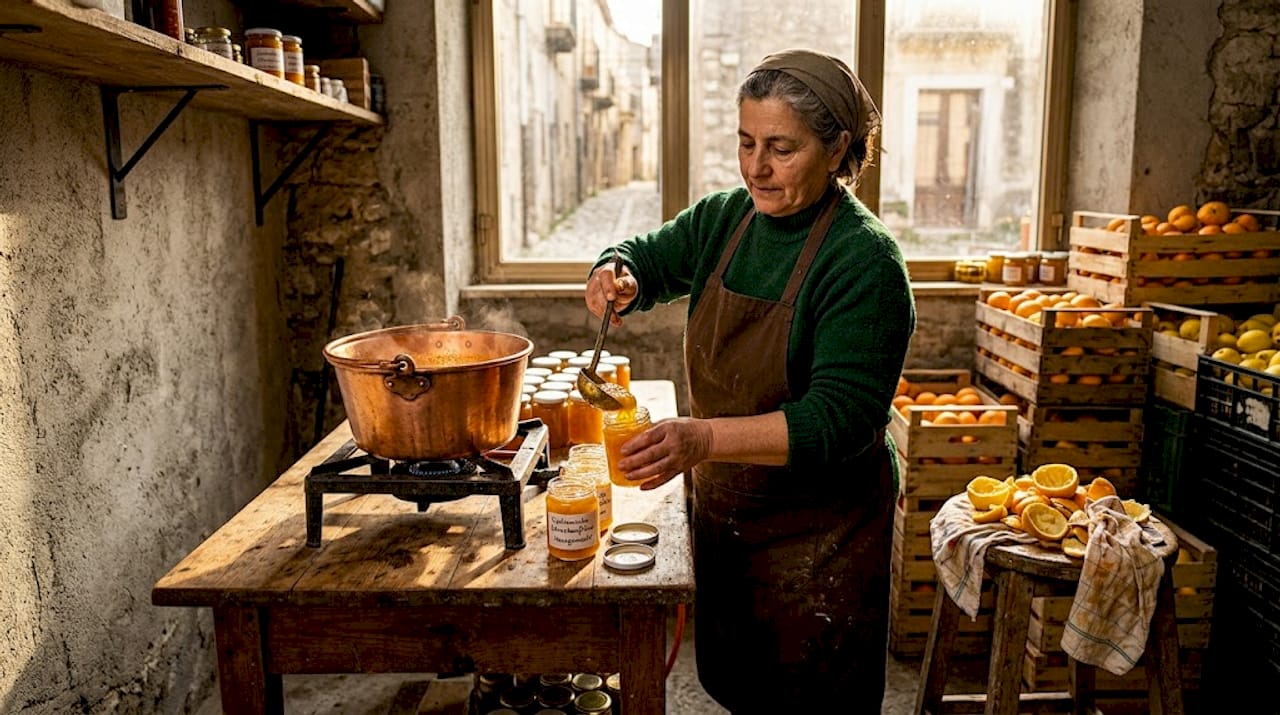
Kampanien and Cilento are famed for lemons—especially the Amalfi Sfusato. Grown on sea-terraced slopes, it develops an incomparable aromatic profile thanks to sea breezes. Confetture from this area carry a natural freshness you recognise instantly.
Calabria produces the world’s only commercial bergamot crop. Bergamot confettura is therefore a true rarity seldom found in German shops. One taste and you understand why Earl Grey smells the way it does.
Apulia delivers fig and almond confetture. Salento figs are especially fleshy and sweet, giving the spread a creamy texture.
7. How to spot real quality when buying
Quality in Southern European confetture can be read in a few clear signs. Once you know them, you’ll never buy a disappointing jar again.
First, the ingredient list. Good Southern confetture list three to four ingredients at most: fruit, sugar, lemon juice, sometimes pectin. Anything beyond that is a red flag.
Second, fruit content. It’s usually printed on the label. Below 40 % for citrus marmellata or 60 % for berry confetture suggests an industrial approach. Artisanal products almost always exceed these levels.
Third, colour. Natural confetture never glows uniformly. Strawberry confettura is deep red, not neon. Blood-orange marmellata is ruby, not orange.
Fourth, texture. Too firm means excess pectin or over-cooking; too runny means under-cooking or too little gelling agent. The perfect Southern spread slides slowly from the spoon yet stays put on bread.
Pro tip: Favour small 200–280 g jars. They let you sample several varieties without commitment and help you discover your personal favourite.
8. Using Southern spreads in a German kitchen
Southern Italian fruit spreads are more versatile than their reputation suggests—they’re not just for breakfast toast.
Lemon marmellata is superb with seared fish. A spoonful on sea bass or branzino just before serving lends Mediterranean brightness. Blood-orange marmellata can be whisked into salad dressings, especially for rocket and goat’s cheese.
Berry confetture are still under-represented in German desserts. Yet a spoon of Sicilian strawberry on vanilla ice cream or in a yoghurt parfait turns the ordinary into the extraordinary. Our Cilento strawberry confettura with 130 % fruit is ideal.
For savoury pairings, serve fig confettura with prosciutto crudo, cactus-fig with Manchego, or bergamot with blue cheese. These combinations are everyday in Southern Italy but still real discoveries in Germany.
My personal take on Southern Italian confetture
I have spent years working with producers in Cilento, Sicily and Calabria. What still surprises me: most people who love good jam have never tasted cactus-fig. That’s a missed opportunity.
My honest observation is that the German market for Southern Italian confetture is still in its infancy. Ask for bergamot confettura in a German deli and you’ll often get blank stares. Yet it is precisely these rarities that true connoisseurs seek.
When I buy, I always read the fruit content before anything else. A product boasting 130 g fruit per 100 g has my immediate attention. Anything lower must justify itself through other merits.
My advice to anyone wanting to explore: don’t start with orange marmellata. Start with cactus-fig or forest-berry. Only then will you grasp what Southern Italian fruit spreads can truly do.
— carmine
Discover Southern Italian confetture by Minnelea
Minnelea crafts small-batch confetture and marmellate in Cilento, Southern Italy, using carefully selected regional fruit. Every jar reflects the South’s terroir—from aromatic Sfusato lemon to the intense Cilento strawberry at 130 % fruit content.

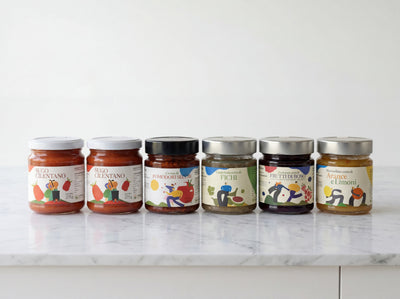
Whether you’re after a classic lemon marmellata, an intensely fruity berry confettura or an elegant gift set for food lovers, the Minnelea confetture range offers the full spectrum of Southern Italian fruit spreads, artisan-made and beautifully packaged. Citrus lovers can also explore a dedicated marmellate collection with traditional Southern recipes.
FAQ
What are the best-known types of Southern Italian confetture?
The most famous include blood-orange marmellata, Amalfi-lemon marmellata, strawberry confettura and cactus-fig confettura. Each Southern region produces its own specialities, differing markedly in fruit content and flavour profile.
What is the difference between marmellata and confettura?
From June 2026, EU-wide rules state that “marmellata” may only label citrus-based spreads, while “confettura” covers all other fruits. This distinction was introduced by EU Directive 2024/1438 and implemented in Italy by Legislative Decree 207/2025.
How high should the fruit content be in a quality Southern Italian confettura?
Premium citrus marmellate typically contain 40–45 % fruit, while Southern berry confetture can reach up to 130 g fruit per 100 g finished product. The higher the fruit content, the more intense the aroma.
Which Southern Italian confetture pair best with cheese?
Fig, cactus-fig and forest-berry confetture harmonise beautifully with cheese. Fig complements Pecorino and Gorgonzola, cactus-fig suits Manchego, and forest-berry enhances robust hard cheeses.
Where can you buy authentic Southern Italian confetture in Germany?
Look in delicatessens, Italian speciality shops and dedicated online retailers such as Minnelea, who ship directly from Cilento and focus on high fruit content and traditional production.
Recommendations
- Cilento Apricot Jam · Artisan · Minnelea – Azienda Agricola Minnelea
- Cilento Orange and Lemon Marmalade · Artisan · Minnelea – Azienda Agricola Minnelea
- Cilento Lemon Marmalade · WineHunter Gold · Minnelea – Azienda Agricola Minnelea
- Cilento Red Apple Jam · Autumn Harvest · Minnelea – Azienda Agricola Minnelea