
Why Sugar and Fruit Content Matter in Marmalade
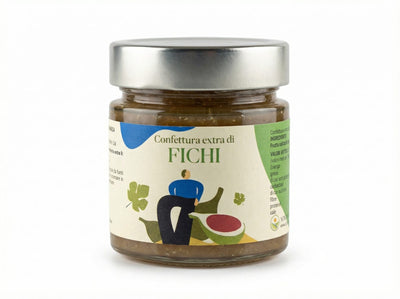
 | From our selection Fig JamHandmade, no preservatives. € 7,90 Discover → |
Many people see sugar in marmalade as nothing more than a sweetener.um. That’s a costly misunderstanding. The intimate link between sugar and fruit content in marmalade can be explained on three levels: shelf life, gel formation, and quality. Without the right balance, your marmalade stays runny, spoils quickly, or falls short of legal standards. From June 2026, new EU minimum fruit levels will redefine the sugar-to-fruit ratio. Once you grasp how the two ingredients work together, you can cook with confidence, flavour, and full compliance.
Table of Contents
- Key Takeaways
- Legal Requirements for Fruit and Sugar in 2026
- The Biochemical Role of Sugar in Marmalade
- Sugar Reduction: Risks and Practical Solutions
- Balancing Fruit Content and Sugar
- My Perspective on Sugar and Fruit Content
- Minnelea: Marmalades with Real Fruit Content
- FAQ
Key Takeaways
| Point | Details |
|---|---|
| Sugar as a technical ingredient | Sugar ensures shelf life and gel formation, not just sweetness. |
| New legal requirements 2026 | From June 2026, a minimum of 450 g fruit per kg for marmalade and 500 g per kg for extra marmalade. |
| Sugar reduction carries risks | Less sugar demands strict hygiene, refrigeration, or special gelling agents. |
| Pectin needs sugar and acid | Classic pectin only sets when enough sugar and lemon juice are present. |
| Fruit variety determines the recipe | Depending on the fruit’s pectin level, the sugar-gelling-agent ratio must be adjusted. |
Legal Requirements for Fruit and Sugar in 2026
Anyone making and selling marmalade must know the new rules from mid-2026. The EU Breakfast Directive 2024/1438 has raised minimum fruit levels and fundamentally changed labelling rules.
The key points are summarised in the table below:
| Product Name | Minimum Fruit Content | Specifics |
|---|---|---|
| Marmalade (general) | 450 g fruit per kg | All fruit types allowed |
| Extra Marmalade | 500 g fruit per kg | Only unprocessed fruit, no pulp |
| Citrus Marmalade | 200 g citrus fruit per kg, of which 75 g peel | Must be explicitly labelled as citrus marmalade |
| Konfitüre (old term) | 350 g fruit per kg | Is being phased out and replaced by “marmalade” |
These changes affect not only the recipe but also the label. According to the new Jam Regulation, country of origin and fruit quantities must be clearly stated.
In parallel, at least 55 % sugar is still required for a product to be called marmalade and to meet the classic shelf-life standard. This figure is not arbitrary. It determines whether sugar can fully deploy its preserving power. If you raise the fruit content without adjusting the sugar, the relative sugar level drops and the entire recipe falls out of balance.
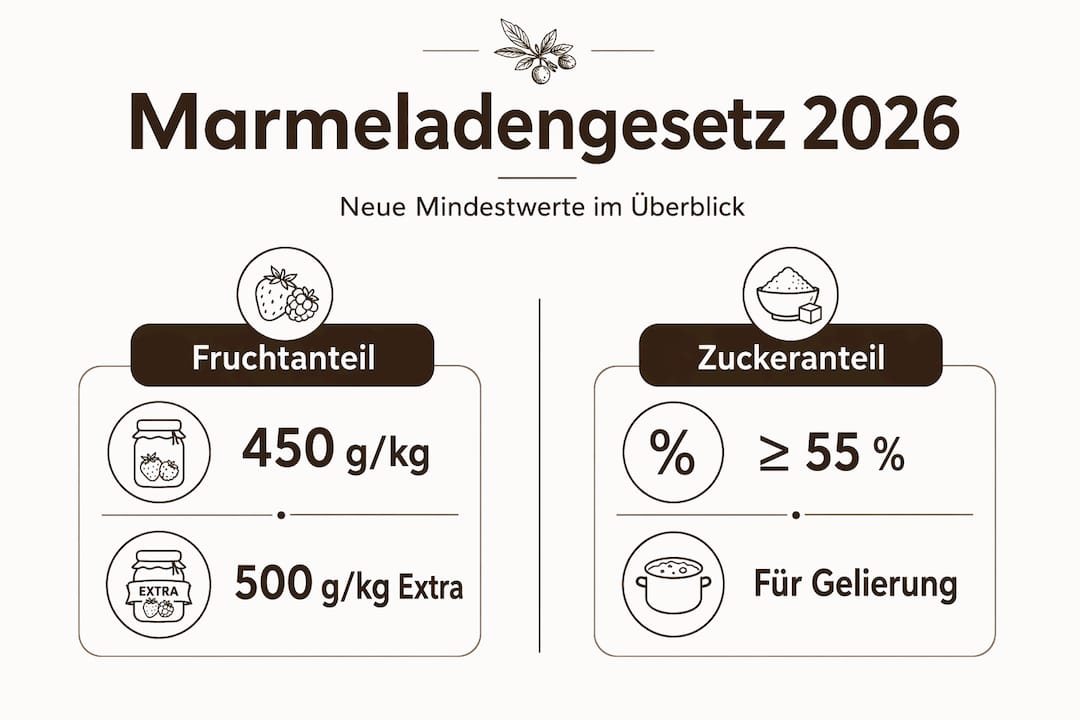
Example: if you used to work with 300 g fruit and 700 g sugar per kilogram, you now need 500 g fruit for extra marmalade. The sugar share drops accordingly. It sounds simple, but it has far-reaching consequences for gel formation, shelf life, and flavour.
The Biochemical Role of Sugar in Marmalade
Sugar is primarily a technical factor for shelf life and texture, not just a sweetener. This is the core truth many home cooks overlook. Once you understand it, you make better choices at the stove.
The key biochemical effects at a glance:
- Water binding by osmosis: Sugar is hygroscopic. It locks up free water and lowers water activity to a level where mould, yeasts, and bacteria can’t survive. This mechanism is called plasmolysis: microorganisms lose water to the sugar-rich environment and die.
- Gel support with pectin: Pectin forms a stable gel only when enough sugar and acid are present. Sugar strips water from pectin and helps the long molecular chains cross-link into a strong network. Without sugar, the marmalade stays runny or sets unevenly.
- Aroma protection: Sugar shields volatile aroma compounds from heat degradation. It binds them chemically and releases them again when the jar is opened. That’s why sugar-rich marmalades often smell more intense than low-sugar versions.
- Colour: Sugar prevents oxidative colour loss. It acts as a buffer between fruit pigments and oxygen. A well-sweetened strawberry marmalade keeps its brilliant red far longer than a very low-sugar one.
Another partner in the system is citric acid: it neutralises the negative charges on pectin chains and is crucial for the setting process. Without acid, even plenty of sugar can’t stabilise the gel.
Pro tip: The jam-sugar ratio tells you directly how your marmalade will taste and last. 1:1 means one kilogram of fruit to one kilogram of sugar: maximum shelf life, bold sweetness. 2:1 and 3:1 reduce the sugar, bring more fruit flavour forward, but shorten shelf life and give a softer texture. In artisanal products with a high fruit content, we usually reach for 2:1 or 3:1 jam sugar and balance it with extra pectin.
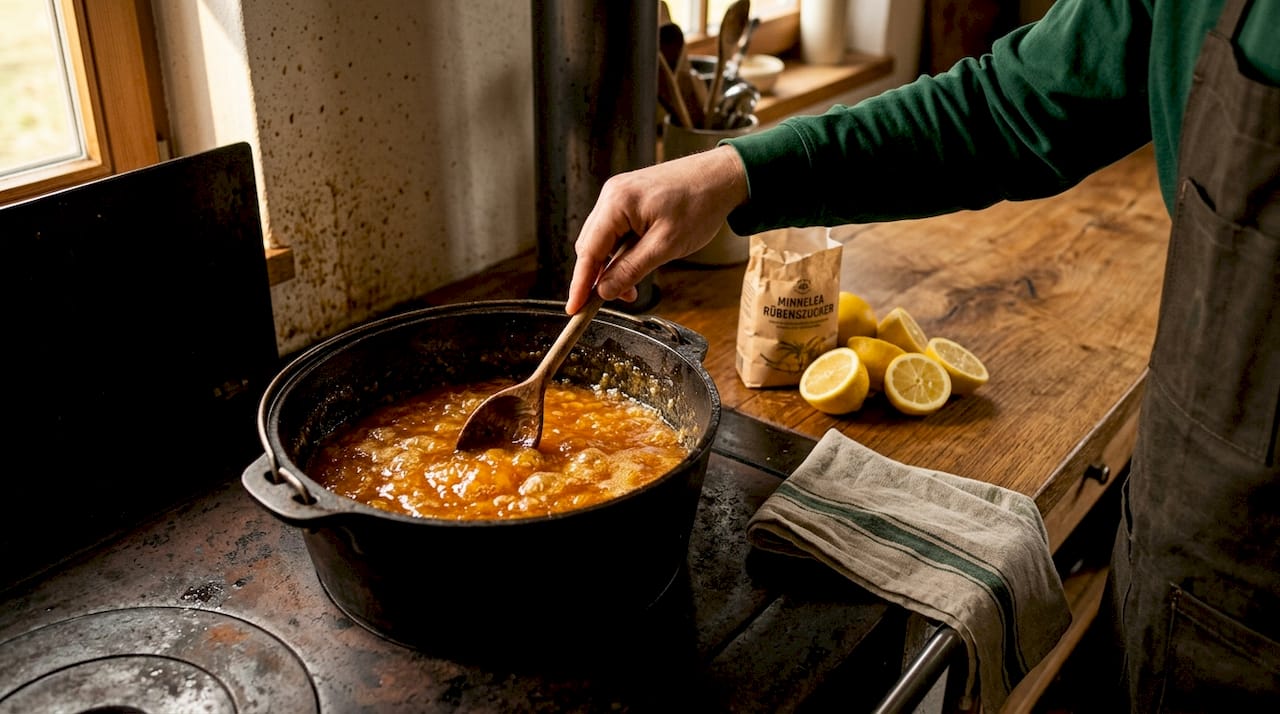
Choosing the right jam sugar is therefore not just a matter of taste. It is a technical decision that affects shelf life, texture, and legal compliance.
Sugar Reduction: Risks and Practical Solutions
The desire for less sugar is understandable. Less sweetness, more fruit flavour, more mindful enjoyment. Yet the consequences of sugar reduction are not trivial. Ignore them and you risk spoiled marmalade, poor texture, or even food-safety issues.
The main challenges when making marmalade with little or no sugar:
- Spoilage: Without sugar, water activity rises. Mould and yeasts find friendlier conditions. Low-sugar products often need preservatives such as sorbic acid to compensate for the missing preservative effect.
- Gelling issues: Classic pectin sets only with enough sugar. For sugar reduction you need special gelling agents such as low-methoxyl or amidated pectins that react with calcium ions instead of sugar. Agar-agar also works as a gelling agent without sugar, but gives a firmer, slightly jelly-like texture.
- Shorter shelf life: Once opened, low-sugar marmalades often keep for only a few days in the fridge. Unopened, their shelf life is much shorter than that of classic products.
- Higher hygiene requirements: Without sugar you need strict hygiene and refrigeration. Jars must be sterile, lids tightly sealed, storage consistently cool.
Pro tip: When canning, a short boil is not enough for shelf life. Sugar binding and sterilisation must work together. If you reduce sugar, sterilise the jars for an extra 20 minutes at 100 °C and store the marmalade cool and dark. A pH below 4.0, achieved with enough lemon juice, adds another layer of protection.
The good news: with the right gelling agent and careful handling, fruit spreads with reduced sugar and very high fruit content can be made safely. They are no longer a direct replacement for classic marmalade, but a separate product category with different storage and consumption requirements.
Balancing Fruit Content and Sugar
The interplay between fruit content and sugar is not a rigid formula. It depends on the fruit variety, its natural pectin level, and the desired result. Once you understand these relationships, you can adapt recipes with precision.
| Fruit Variety | Natural Pectin Level | Recommended Jam-Sugar Ratio | Notes |
|---|---|---|---|
| Quince, blackcurrants | High | 1:1 or 2:1 | Set easily, little extra pectin needed |
| Apples, plums | Medium | 2:1 | Good balance between fruit content and set |
| Strawberries, cherries | Low | 1:1 with added pectin | Need extra pectin and sufficient acid |
| Figs, pears | Very low | 1:1 plus extra pectin and acid | Hardly set without additives |
| Citrus (peel) | Very high | 2:1 | Peel provides natural pectin |
Lemon juice plays a key role. It lowers pH, neutralises the charge on pectin chains, and supports the gel network together with sugar and pectin. One to two tablespoons per 500 g fruit is a good starting point.
If you want to raise the fruit content without sacrificing shelf life, modern techniques can help. Smaller batches, gentle temperatures, and precise balancing of pectin, sugar, and acid allow more fruit flavour without compromising structure. At Minnelea we work in small batches following exactly this principle. Our Sicilian orange marmalade shows how much character a balanced recipe can deliver.
An often-overlooked factor is fruit ripeness. Under-ripe fruit contains more pectin; ripe fruit offers more aroma. The finest artisan marmalades combine both: slightly under-ripe fruit for set, ripe fruit for flavour. The balance of composition and aroma profile ultimately decides whether a marmalade sings on your toast or stays silent.
My Perspective on Sugar and Fruit Content
by carmine
It took me years to truly understand sugar in marmalade making. For a long time I saw it as a necessary evil—too sweet, too much—until the day I had to throw out a low-sugar batch because it went mouldy, even though I had worked carefully.
What I’ve learned since: sugar is the quiet backbone of every good marmalade. It holds the gel together, protects the colour, preserves the aroma, and guarantees shelf life. Reduce it and you must rethink the entire system—gelling agents, acid, hygiene, storage. Simply cutting sugar and hoping for the best is not enough.
I find the new legal requirements for 2026 fundamentally sensible. More fruit means better quality—if you adjust the sugar correctly. The problem arises when producers treat the higher fruit content as a free pass to slash sugar without adapting the recipe. The result is products that are neither safe nor delicious.
My advice to home cooks: start with a proven 2:1 jam-sugar recipe. First understand what sugar does in your marmalade. Then optimise step by step. If you want to experiment with amidated pectins or agar-agar, treat it as a separate project, not a simple swap. Traditional methods have stood the test of time because they are built on safety. Modern techniques can complement them, not replace them.
— carmine
Minnelea: Marmalades with Real Fruit Content

At Minnelea, fruit content and quality are not in conflict—they depend on each other. Our marmalades and confetture from Cilento, southern Italy, are cooked in small batches from selected regional fruit, with a carefully balanced sugar level and no unnecessary additives. The result is a fruit spread that glows on the palate and delivers exactly what the ingredient promises. If you want more fruit on your bread without compromising shelf life or safety, our marmalade collection and fruit spreads offer an honest answer. Our Cilento Washington Orange Marmalade is a perfect example of how much character a balanced recipe can hold.
FAQ
What does sugar do in marmalade besides sweetening?
Sugar lowers water activity, inhibits microorganisms, and enables pectin to form a stable gel. Without enough sugar, marmalade spoils faster and setssets poorly.
What is the required fruit content in marmalade?
From June 2026, EU regulations stipulate a minimum of 450 g fruit per kilogram for marmalade and 500 g per kilogram for extra marmalade.
Can marmalade be made without sugar?
Sugar-free marmalade is possible, but requires special gelling agents such as amidated pectins, strict hygiene, refrigerated storage, and usually a shorter shelf life. Preservatives may be added to compensate for the lost preservative effect.
Which jam-sugar ratio is best for high fruit content?
For high fruit content, 2:1 or 3:1 jam sugars work well because they contain less sugar and allow more fruit flavour. Shelf life is shorter than with 1:1 ratios.
Why is lemon juice so important in marmalade making?
Lemon juice lowers pH and neutralises the charge on pectin chains, stabilising the gel network. It works hand in hand with sugar and pectin for optimal consistency and shelf life.
Recommendations
- Stocking Premium Marmalade in 2026 – Azienda Agricola Minnelea
- Sicilian Orange Marmalade: What Sets It Apart? – Azienda Agricola Minnelea
- Cilento Orange and Lemon Marmalade · Artisan · Minnelea – Azienda Agricola Minnelea
- Cilento Washington Orange Marmalade · Artisan · Minnelea – Azienda Agricola Minnelea