
What Is the San Marzano Tomato? Origin and Characteristics
 | From our selection Fig JamHandmade, no preservatives. € 7,90 Discover → |
The San Marzano tomato is an elongated plum tomato with protected designation of origin (DOP) status, grown exclusively in the Agro Sarnese-Nocerino area of Campania, southern Italy. Celebrated as the most aromatic cooking tomato in the world, it is the traditional foundation for genuine pizza and pasta sauces. Its dense flesh, low seed and water content, and intensely fruity-spicy aroma make it the first choice of discerning chefs. To truly understand what sets a San Marzano apart, one must consider origin, soil, and craftsmanship together.
What characteristics define the San Marzano tomato?
San Marzano tomatoes grow only on volcanic soils at the foot of Mount Vesuvius, which give them an unmistakable flavour profile. These soils are rich in minerals, loose in structure, and store heat exceptionally well. Campania’s Mediterranean climate provides long, sunny ripening periods that boost the fruit’s sugar content.
Key characteristics of the variety at a glance:
- Fruit shape: Elongated, cylindrical, 6–8 cm long with a distinctive pointed tip
- Flesh: Firm, dense and meaty with very few air pockets
- Seeds: Noticeably fewer seed cavities than round tomato varieties
- Skin: Thin and easy to remove, ideal for peeling
- Water content: Low, giving sauces a naturally creamy texture
- Acidity: Mild and balanced, without the sharp bite of many other varieties
- Aroma: Intensely fruity, slightly sweet with a deep, savoury note
When cooked, the flesh develops a naturally creamy consistency without the need for thickeners or added sugar—an invaluable trait in professional kitchens. A sauce made from true San Marzano tomatoes reduces in 20 minutes to a velvety, deep-red mass that tastes of summer itself.
Pro tip: If using San Marzano tomatoes from a tin, never purée them before they hit the pan. Simply crush them by hand to preserve texture and give the sauce body.

The president of the San Marzano Consortium stresses that volcanic soils and traditional handwork are inseparable from the flavour. No other soil produces the same combination of sweetness, depth and mildness. This isn’t marketing—it’s geology.
How do San Marzano tomatoes differ from other varieties?
The risk of confusion is real and costly. Many plum tomatoes look like San Marzano yet deliver completely different results in the kitchen. The decisive difference lies not only in shape but in the DOP seal and provenance.
| Characteristic | San Marzano DOP | Other plum tomatoes | Round cooking tomatoes |
|---|---|---|---|
| Origin | Agro Sarnese-Nocerino, Campania | Various regions | Worldwide |
| DOP certification | Yes, with consortium number | No | No |
| Flesh | Very firm, dense | Medium | Soft to medium |
| Water content | Very low | Medium to high | High |
| Acidity | Mild, balanced | Often higher | Variable |
| Seeds | Very few | More | Many |
| Price | Higher | Medium | Low |
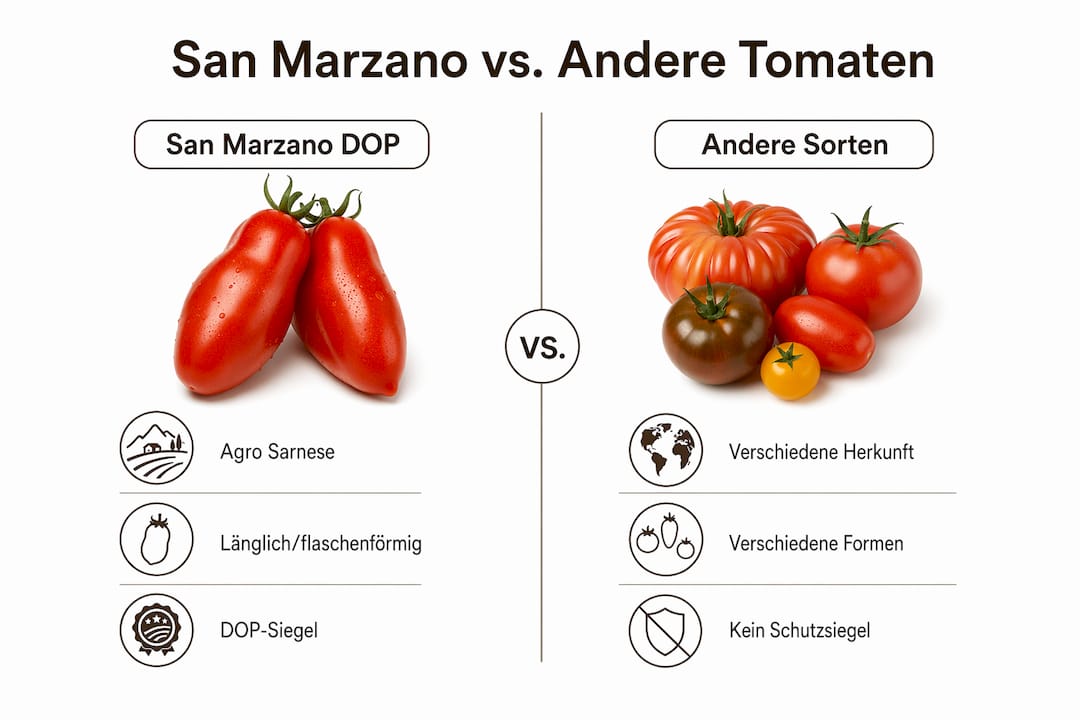
The DOP seal with consortium number guarantees origin within the protected area and adherence to traditional quality criteria. Without this number on the tin, the product is not a true San Marzano DOP, no matter what the label claims.
The scale of the problem is alarming: up to 95 % of products sold as San Marzano are not genuine DOP tomatoes. This means that nearly every tin on supermarket shelves bearing the name is an imitation. Consumers pay for provenance and quality they never receive.
Authentic San Marzano DOP are available only as whole peeled tomatoes—Pelati. Products labelled San Marzano that are diced, crushed or puréed are almost certainly fakes. That’s the simplest rule when buying.
Pro tip: When purchasing, look for three things: the DOP logo on the tin, the San Marzano Consortium number, and the wording “Pomodoro S. Marzano dell’Agro Sarnese-Nocerino DOP”. If any of these three elements is missing, the product is not authentic.
If you’re interested in comparing other protected tomato varieties from southern Italy, the Piennolo tomato from Vesuvius offers another fascinating example of terroir at work.
How to grow San Marzano tomatoes in your garden
San Marzano tomatoes can be grown successfully in Germany if the right conditions are created. The variety is more demanding than many standard cultivars, but careful tending is rewarded with exceptional fruit.
-
Start seedlings early: Sow 6–8 weeks before the last frost, typically March in Germany. Germinate seeds at 20–22 °C until the seedlings are strong enough for pricking out.
-
Choose the site: A full-sun spot with at least 6–8 hours of direct sun daily is essential. South or south-west orientation is ideal, whether in a bed, greenhouse or large pot on the balcony.
-
Prepare the soil: Aim for a pH between 6.2 and 6.8. A loose, humus-rich, well-drained soil best mimics Campania’s volcanic earth. Work in compost and a little horn meal at planting for a strong start.
-
Transplant: Plant out only after the Ice Saints in mid-May, when night temperatures stay above 13 °C. Seedlings set out too early stall and become disease-prone.
-
Remove side shoots: Regularly pinch out the suckers in the leaf axils—especially important with San Marzano. The plant should channel energy into fruit, not excess foliage.
-
Watering: Even soil moisture prevents blossom-end rot, a common calcium-deficiency disorder caused by irregular watering. Water at the base in the morning, never over the leaves.
-
Mulch: A layer of straw or grass clippings around the plant locks in moisture and buffers temperature swings, greatly reducing watering needs and stabilising root conditions.
For a deeper dive into tomato cultivation, Lushy Gardens offers practical tips for a successful, chemical-free harvest.
How are San Marzano tomatoes used in the kitchen?
San Marzano tomatoes are the traditional base for pizza and pasta sauces in Italian cuisine. No other product delivers the same depth and sweetness with so little effort. The Vera Pizza Napoletana—the original from Naples—actually mandates San Marzano DOP in its official rules.
Key culinary uses:
- Pizza Margherita: Uncooked, hand-crushed San Marzano tomatoes spread directly onto the dough. Their intense flavour withstands the short, fierce bake without loss of quality.
- Sugo al pomodoro: The classic tomato sauce needs only olive oil, garlic, basil and San Marzano tomatoes. After 25 minutes on the stove the sauce sings—no sugar or spices required.
- Bottling and preserving: The low water content makes San Marzano ideal for canning. Home-canned Pelati capture summer and taste freshly harvested even in January.
- Meat sauces and braises: The mild acidity pairs perfectly with beef, lamb and pork. The sauce deepens and rounds during long braises without turning bitter.
- Bruschetta and antipasti: Fresh San Marzano tomatoes, finely diced with sea salt and olive oil, create a bruschetta that needs nothing more.
Exports of San Marzano products rose by around 5 % in 2025 compared with the previous year. Growing interest in Germany shows that consumers here increasingly distinguish between mass-market goods and authentic products. Once you’ve cooked with true San Marzano DOP, you rarely reach for the standard tin again.
For step-by-step guidance on processing, see our article on working with San Marzano tomatoes.
Key takeaways
San Marzano tomatoes are worth the price only when they carry the DOP seal with consortium number and are sold as whole peeled fruit.
| Point | Details |
|---|---|
| Origin & DOP protection | True San Marzano tomatoes grow only in the Agro Sarnese-Nocerino and bear an official DOP seal. |
| Flavour profile | Firm flesh, few seeds and low water content yield a naturally creamy, mild sauce. |
| Risk of fakes | Up to 95 % of products under this name are not genuine DOP; only Pelati with a consortium number are authentic. |
| Home cultivation | Start seedlings in March, provide full sun, pH 6.2–6.8 and regular side-shoot removal for good yields. |
| Culinary use | San Marzano tomatoes are the mandatory base for Vera Pizza Napoletana and classic pasta sauces. |
Why true San Marzano is more than a tomato
By carmine
I’ve worked with southern Italian foods for many years, and the San Marzano tomato is the product I have to explain most often. Not because it is complicated, but because the market is so flooded with imitations that many people have never tasted the original.
What truly concerns me is indifference to provenance. Buying a tin labelled “San Marzano” without checking the DOP logo means paying for a name, not a product. That isn’t the consumer’s fault; it’s a failure of labelling. The food industry systematically exploits this variety’s good reputation.
My personal experience: a real San Marzano DOP tastes different even raw. The flesh is denser, the sweetness deeper, the acidity barely perceptible. Once you’ve compared them side by side, you immediately understand why top chefs from Naples to Tokyo insist on this variety.
My advice to home gardeners: buy certified seed from a reputable source and give the plant time. San Marzano is not for the impatient. But the first fruit you harvest yourself—warm from the sun, straight into your hand—is a moment you won’t forget.
— carmine
Minnelea: Discover authentic flavour from southern Italy
If you prize the quality of southern Italian tomato products, Minnelea is the place to look. We produce in Cilento, one of Campania’s most pristine regions, processing select ingredients in small batches using traditional methods.

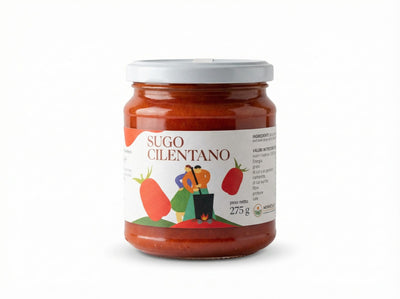
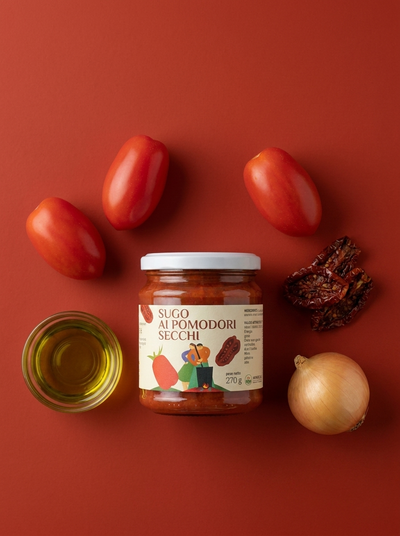
Our Sugo Cilentano is a handcrafted tomato sauce made from Cilento tomatoes that embodies the same commitment to purity and aromatic depth as the San Marzano tradition. To explore further, our sun-dried tomatoes in extra-virgin olive oil offer another example of the power of southern Italian terroir. Both make excellent gifts or additions to a well-stocked pantry.
FAQ
What exactly is the San Marzano tomato?
San Marzano is an elongated plum tomato with DOP protection, grown only in the Agro Sarnese-Nocerino in Campania. It is prized for firm flesh, few seeds and an intensely fruity yet mild aroma.
How can I recognise genuine San Marzano tomatoes when buying?
Authentic San Marzano DOP carry the DOP logo, a consortium number and are sold only as whole peeled tomatoes. Products lacking these features are not certified originals.
How does the San Marzano tomato taste compared with other varieties?
San Marzano tomatoes taste intensely fruity and slightly sweet, with mild, balanced acidity. Compared with other plum tomatoes their flavour is deeper and the cooked texture noticeably creamier.
Can I grow San Marzano tomatoes myself in Germany?
Yes, with the right preparation. Start seedlings in March, provide full sun, maintain a pH between 6.2 and 6.8 and remove side shoots regularly for a good harvest.
What are San Marzano tomatoes best used for in the kitchen?
They are ideal for pizza sauces, classic pasta sauces and braised dishes. Their low water content and mild acidity make them the best choice for any sauce that needs depth and natural sweetness.
Recommendations
- Working with San Marzano Tomatoes: Methods and Recipes – Azienda Agricola Minnelea
- What Is the Piennolo Tomato? Origin and Flavor – Azienda Agricola Minnelea
- Cilento Sun-Dried Tomatoes in EVOO 200g · Minnelea – Azienda Agricola Minnelea
- Artisanal Fruchtkonserven: Was steckt wirklich dahinter? – Azienda Agricola Minnelea