
What Is Pomodorino del Piennolo? Origin & Flavor
 | From our selection Fig JamHandmade, no preservatives. € 7,90 Discover → |
Pomodorino del Piennolo del Vesuvio DOP is a historic tomato variety from Campania, grown exclusively on the volcanic slopes of Mount Vesuvius and protected under the European Protected Designation of Origin since 2009. This small, oval tomato—topped by its signature point, the “Pizzo”—is considered one of Italy’s most flavorful tomatoes. What sets it apart from ordinary cherry tomatoes is not only its intensely sweet-tart aroma laced with mineral notes, but also its remarkable shelf life of several months. To truly understand Pomodorino del Piennolo, you have to know the soil from which it springs.
What Is Pomodorino del Piennolo del Vesuvio DOP?
Pomodorino del Piennolo del Vesuvio DOP has been EU-certified since 2009 and may be cultivated only in 18 municipalities encircling Vesuvius in the Campania region. The word “Piennolo” comes from the Neapolitan “pendolo,” meaning pendulum, and refers to the traditional practice of hanging tomato bunches for storage. The name is no accident: it points to a millennia-old method that safeguards both flavor and longevity in a single gesture.
The DOP certification guarantees far more than geographic origin. It dictates traditional farming methods, minimal irrigation, and the exclusion of industrial interventions. Quality standards hark back to historical practices recorded as early as 1885 by Professor Palmieri. In short, every tomato bearing the DOP seal is the fruit of generations of artisanal know-how.
Why Is the Volcanic Soil So Crucial?
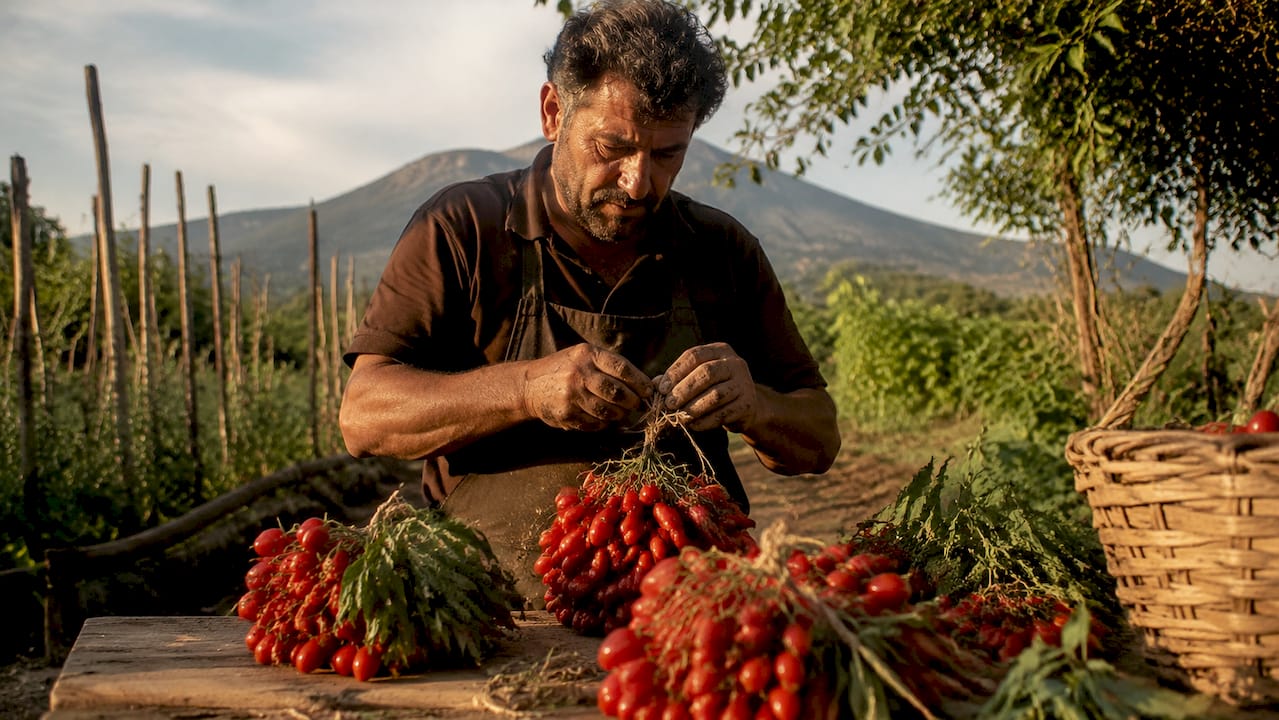
The lava soil of Vesuvius gives the tomato its unmistakable character. Volcanic earth is rich in minerals—potassium, phosphorus, and trace elements—that keep the flesh compact and the aroma concentrated. No other soil in Italy yields this precise balance of sweetness, acidity, and mineral depth.
The growing area sits between 150 and 450 meters above sea level. This altitude creates sharp day-to-night temperature swings that boost the fruit’s sugar content. Transplant the same seed elsewhere and you will harvest a different tomato.
Which Municipalities Belong to the DOP Area?
The protected zone encompasses 18 municipalities in the Province of Naples, including Ercolano, Torre del Greco, Boscoreale, and Ottaviano. All lie within Vesuvius’s direct sphere of influence. Only tomatoes from this exact demarcated area may bear the name “Pomodorino del Piennolo del Vesuvio DOP.”
What Are the Characteristics of the Piennolo Tomato?
The Piennolo tomato is oval, weighs about 20–30 grams, and carries the characteristic tip, the “Pizzo,” on its underside. This tip is more than a visual cue: it signals a high dry-matter content that keeps the flesh low in water and exceptionally storable. The dry-matter level stands at 13.0 ± 0.2 percent, explaining the fruit’s remarkable texture.
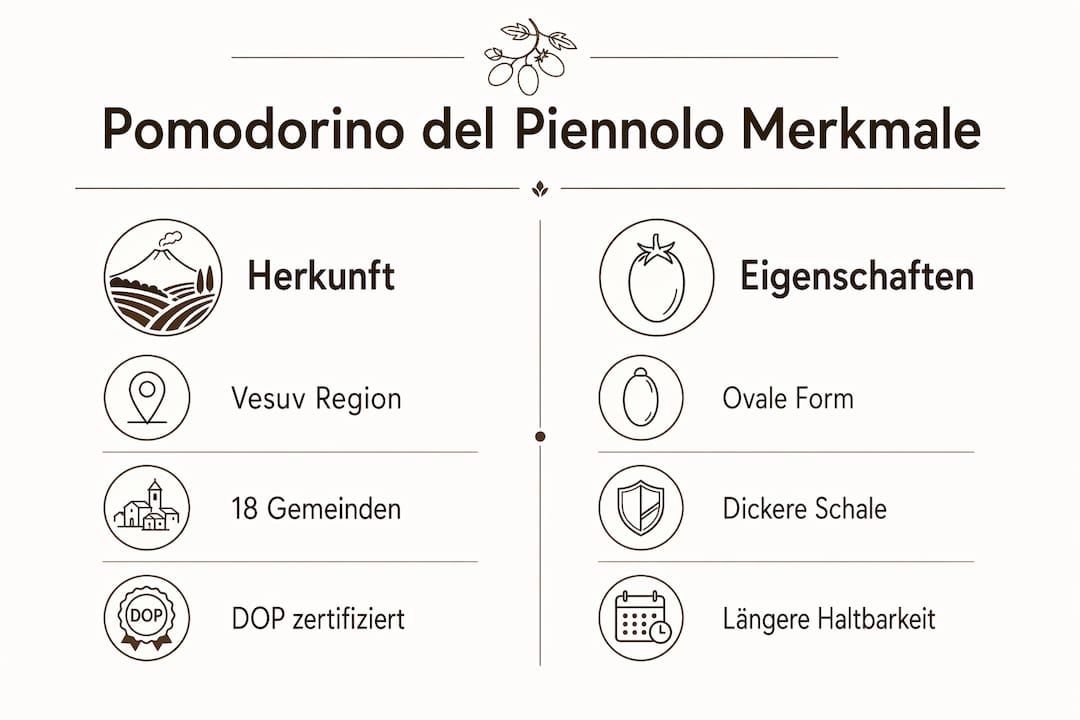
| Characteristic | Description |
|---|---|
| Shape | Oval with characteristic tip (“Pizzo”) |
| Weight | Approx. 20–30 g per fruit |
| Dry-matter | 13.0 ± 0.2 % |
| Aroma | Intensely sweet-tart with mineral notes |
| Energy value | Approx. 31.7 kcal per 100 g |
| Shelf life | Several months when stored correctly |
The skin is noticeably thicker than that of common cherry tomatoes, and the flesh is compact and low in water—traits that set it apart from ordinary cherry tomatoes. The full aroma only develops during the air-curing process in bunches. Taste one straight off the plant and you experience only half of what it can offer.
Pro tip: When buying, look for the pronounced tip at the blossom end. If the “Pizzo” is missing, you’re probably not holding an authentic DOP Piennolo tomato.
How Is Pomodorino del Piennolo Grown and Stored?
Cultivation follows strict, time-honored rules. Plants grow on volcanic soil between 150 and 450 meters above sea level, are staked with poles, and receive only minimal irrigation. This drought stress forces the plant to draw water—and minerals—from the soil, yielding concentrated, aromatic flesh.
Harvest begins in August. Rather than picking individual fruits, entire trusses are cut. Roughly 10 bunches weighing 2.5–3 kg are produced per 100 plants. These bunches, the famed “Piennoli,” are the heart of traditional storage.
How a Traditional Piennolo Bunch Is Made
Bunching is an art in itself. Here are the key steps:
- Selecting the trusses: Only healthy, undamaged clusters are chosen. Damaged fruit would invite rot.
- Tying with twine: The trusses are bound into a compact bundle with about 90 cm of twine.
- Hanging in ventilated rooms: Finished bunches hang in dry, well-ventilated spaces. Air circulation is essential to prevent mold.
- Gradual ripening over months: During storage the tomatoes slowly ripen. Flavor intensifies, sweetness increases, and the mineral note deepens.
Pro tip: Never store Piennolo tomatoes at home in plastic bags or sealed containers. Only free air circulation prevents mold and preserves flavor.
Traditional bunch storage is not mere preservation; it is an active ripening process that enhances flavor over weeks and months. This trait makes the Piennolo tomato unique among all Italian varieties.
How to Use Pomodorino del Piennolo in the Kitchen
The Piennolo tomato is the backbone of Neapolitan cuisine. Its concentrated aroma makes it the tomato of choice for Pizza Napoletana, pasta al pomodoro, and bruschetta. Chefs prize it because even a brief cooking time releases a deep, full-bodied tomato flavor.
For maximum aroma, one rule is clear: do not cook it too hot or too long. Kitchen pros like the team at Italianavera recommend using the tomato raw or as a quick sauce accent. Overheated Piennolo tomatoes lose their mineral edge and flatten out.
Classic Uses at a Glance
- Fresh on bruschetta: Halved, drizzled with good olive oil and sea salt. The flavor sings unaccompanied.
- Pizza Napoletana: The tomato is spread raw onto the dough and cooks only briefly in a wood-fired oven, preserving freshness.
- Pasta al pomodoro: Quickly sautéed in olive oil with garlic and basil. Ready in five minutes.
- Pacchetelle in jars: Halved tomatoes layered with basil and salt, then sterilized. This preserves the aroma through winter.
- Piennolo bunches as table décor: In southern Italy the bunches often hang visibly in the kitchen—both pantry and ornament.
Pacchetelle preservation is especially interesting for anyone wanting to recreate regional recipes from southern Italy. The tomatoes are halved, layered with basil, and vacuum-sealed in jars. The result is a conserve that retains the volcanic character of the fruit for months.
The Piennolo tomato is also an excellent partner for other antipasti. Its acidity and minerality naturally complement marinated eggplants, peppers, and sun-dried tomatoes. Once you’ve built an antipasto platter with real Piennolo tomatoes, you understand why this variety is considered indispensable in Naples.
Key Takeaways
Pomodorino del Piennolo del Vesuvio DOP is the only tomato in the world whose flavor, shelf life, and growing area are jointly protected by a European designation of origin.
| Point | Details |
|---|---|
| Origin & Protection | DOP-certified since 2009, grown in 18 municipalities on Vesuvius in Campania. |
| Key Identifier | The “Pizzo” tip signals high dry-matter content and guarantees storability. |
| Volcanic Soil | Mineral-rich lava soil shapes the intensely sweet-tart aroma with mineral notes. |
| Storage as Ripening | Bunches hung in ventilated rooms actively intensify flavor over months. |
| Culinary Use | Brief cooking preserves aroma; ideal for pizza, pasta, and Pacchetelle preserves. |
My Take on the Piennolo Tomato: What Many Overlook
I keep meeting the misconception that Pomodorino del Piennolo is simply an especially good cherry tomato. That falls short. This tomato is the product of its soil, its altitude, and a storage tradition that actively shapes flavor. Buy it fresh and cook it the same day and you miss half the story.
What fascinates me most is that the quality of this tomato cannot be replicated. Home gardeners can grow the variety, but they cannot imitate Vesuvian lava soil. The DOP seal here is no bureaucratic formality; it is a quality guarantee rooted in geology.
My practical advice to shoppers: favor Piennolo tomatoes as Pacchetelle in jars or in dried form. These preserves lock in the aroma reliably and are available year-round. Fresh bunches are seasonal and demand proper home storage. If you can’t provide that, reach for a trusted jar instead.
In the kitchen, less is more. A great Piennolo tomato needs no elaborate recipe—just good olive oil, a pinch of salt, and respect for the product.
— carmine
Discover Authentic Tomato Specialties from Southern Italy
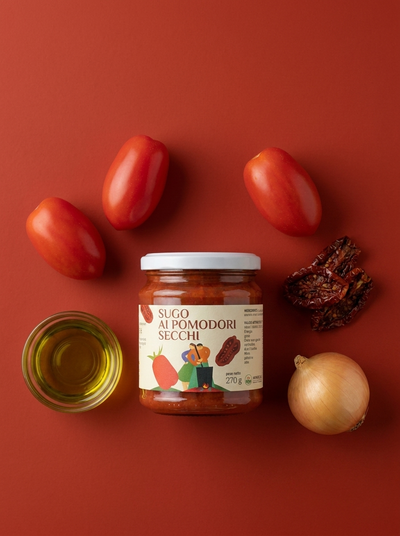
If you love the layered flavors of southern Italy, Minnelea is your destination. At Minnelea we transform select ingredients from Campania and Cilento into small-batch antipasti, sauces, and specialties that embody the same artisanal spirit as Pomodorino del Piennolo. Our sun-dried tomatoes in extra-virgin olive oil from Cilento are a direct example: intense tomato aroma preserved in native EVOO.

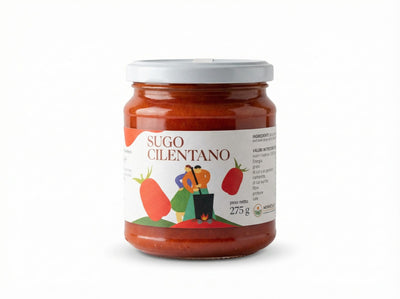
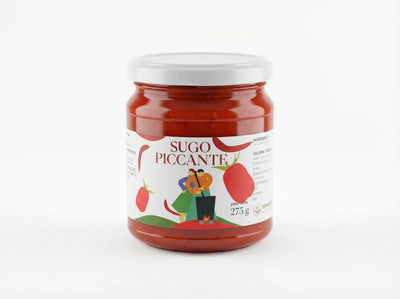
Anyone wishing to dive deeper into southern Italian cuisine will find another starting point in our traditional tomato sauce. Every Minnelea product stands for the same principle: authentic ingredients, traditional methods, and a flavor that tells the story of its origin.
FAQ
What does “Piennolo” mean in English?
“Piennolo” derives from the Neapolitan “pendolo,” meaning pendulum, and describes the traditional hanging of tomato bunches for storage.
How long do Piennolo tomatoes keep?
When stored correctly in well-ventilated rooms, Piennolo bunches remain edible for several months. Air circulation prevents rot and intensifies flavor during post-ripening.
Where does Pomodorino del Piennolo come from?
The tomato originates from 18 municipalities surrounding Vesuvius in Campania, southern Italy. The volcanic soil at 150–450 meters above sea level is the foundation of its unique flavor.
How does Pomodorino del Piennolo differ from cherry tomatoes?
Piennolo tomatoes have a thicker skin, denser flesh, and a significantly higher dry-matter content than common cherry tomatoes. Their aroma is more intense and carries a mineral note imparted by the volcanic soil.
What is the best way to use Piennolo tomatoes?
Brief cooking is essential. The tomato is ideal for pizza, pasta, and bruschetta, as well as for preserving as Pacchetelle in jars. Prolonged cooking destroys the mineral edge and concentrated aroma.
Recommendations
- What Is the Piennolo Tomato? Origin and Flavor – Azienda Agricola Minnelea
- Cilento Sun-Dried Tomatoes in EVOO 200g · Minnelea – Azienda Agricola Minnelea
- Cilento Peppers in EVOO · Mediterranean Antipasto · Minnelea – Azienda Agricola Minnelea
- Working with San Marzano Tomatoes: Methods and Recipes – Azienda Agricola Minnelea