
What Are Zucchini sott’olio? Tradition and Preparation
 | From our selection Fig JamHandmade, no preservatives. € 7,90 Discover → |
Many people think zucchini sott’olio are simply zucchini preserved in oil. The reality is more nuanced—and far more interesting. Zucchini sott’olio are a classic Italian specialty in which zucchini are conserved in a marinade of olive oil, vinegar, and aromatic spices. The phrase “sott’olio” literally means “under oil,” yet it describes a technique that goes well beyond simple submersion. This article tells you everything: from the meaning of the term to the preparation, plus creative ideas for your everyday kitchen.
Table of Contents
- Key Takeaways
- Definition and Origins of Zucchini sott’olio
- Making Zucchini sott’olio at Home
- Shelf Life and Safety When Preserving
- Everyday Uses in the Kitchen
- Preserving Methods Compared
- My Experience with Zucchini sott’olio
- Minnelea: Authentic Antipasti from the Cilento
- FAQ
Key Takeaways
| Point | Details |
|---|---|
| Understanding “sott’olio” | The term means “under oil” and refers to a marinade of oil, vinegar, and spices. |
| Preparation is crucial | Salting the zucchini and drawing out water before preserving improves texture and shelf life. |
| Use sterilised jars | Clean, sterilised jars and the vacuum effect while cooling protect against spoilage. |
| Allow maturing time | Full flavour intensity develops only after several days—or even weeks—of storage. |
| Highly versatile | Zucchini sott’olio work as antipasti, side dishes, snacks, or creative ingredients in many dishes. |
Definition and Origins of Zucchini sott’olio
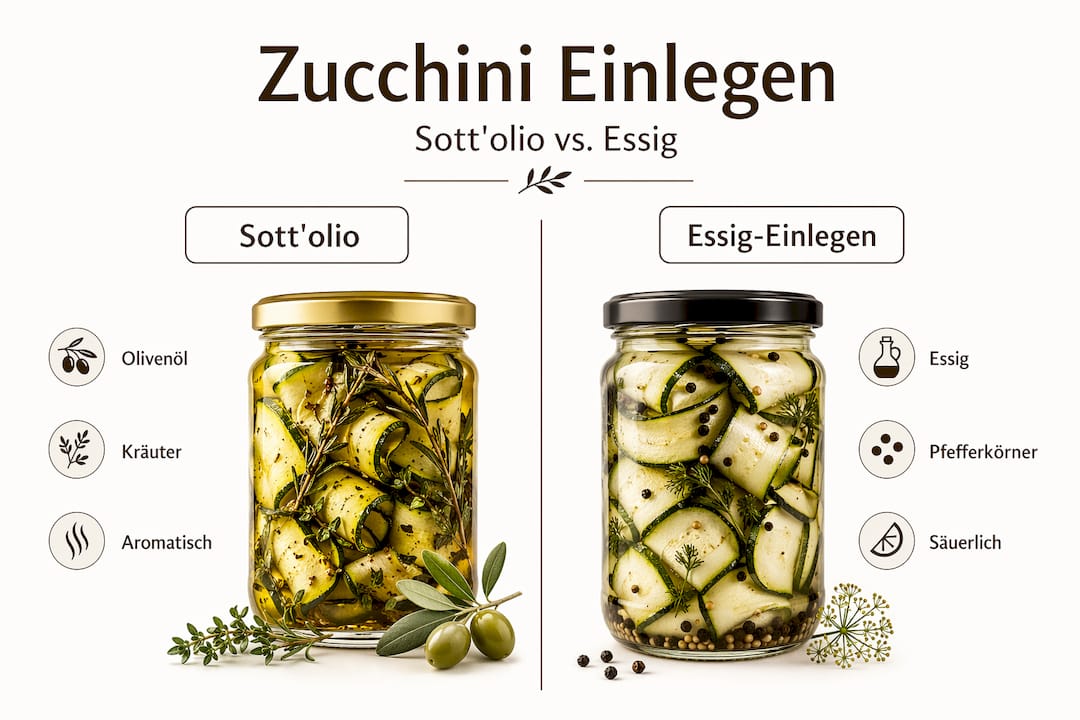
The term “sott’olio” comes from Italian and simply means “under oil.” It refers to a centuries-old preservation method in which vegetables are fully submerged in oil to protect them from oxygen and spoilage. What surprises many: authentic zucchini sott’olio almost always include vinegar as a second key component. The vinegar provides the necessary acidity that inhibits bacterial growth and gives the finished product its characteristic, gently tangy flavour.
The roots of this technique lie deep in southern Italy, especially in regions such as Campania, Calabria, and Sicily, where a rich culture of vegetable preservation thrives. Here, preserving vegetables is not a fallback but an expression of a lifestyle built on seasonality and respect for good ingredients.
Typical ingredients in a zucchini-sott’olio marinade are:
- High-quality olive oil as both preserving medium and flavour carrier
- White-wine vinegar or wine vinegar for acidity and freshness
- Garlic, thyme, basil, or bay leaf for Mediterranean aroma
- Mustard seeds, chilli, or juniper for depth and gentle heat
- A pinch of sugar to round out the acidity
There is no single “correct” recipe. Variations differ strongly by region, depending on whether the oil or the vinegar note should dominate. Southern Italy tends toward bolder herbs and more oil; northern Italy favours more vinegar-forward versions.
Pro tip: Choose a delicate extra-virgin olive oil with a neutral to fruity profile for sott’olio preparations. An overly bitter or intense oil can mask the subtle herb aromas of the marinade.
Making Zucchini sott’olio at Home
The good news: you can make excellent zucchini sott’olio at home, even outside Italy. The process is straightforward but demands careful preparation and hygiene. Here is a trusted step-by-step guide.
-
Prepare the zucchini: Wash fresh zucchini thoroughly. Leave the skin on—it adds flavour and texture. Slice the zucchini into thin rounds or strips.
-
Salt and draw out water: Place the sliced zucchini in a bowl, salt generously, and let rest for at least one hour. Salt draws out excess water from the vegetable, improves texture, and readies the cells for the marinade.
-
Pat dry dry: After salting, pat the zucchini dry or squeeze gently. Less moisture means deeper flavour penetration and better shelf life.
-
Make the marinade: Bring vinegar, a little sugar, salt, and your chosen spices to a boil. Typical spices are garlic, thyme, and chilli. Blanch the zucchini in the hot marinade for just a few minutes, keeping them tender yet still slightly crisp.
-
Sterilise the jars: Sterilise clean preserving jars in boiling water or in the oven. This step is non-negotiable if you want weeks of shelf life.
-
Fill the jars: Layer the zucchini with spices and herbs in the jars. Make sure the zucchini are fully covered with olive oil. Avoid any contact with air, as oxygen accelerates oxidation and spoilage.
-
Seal and create a vacuum: Seal the jars tightly and turn them upside down for a few minutes while they cool. This creates a natural vacuum that greatly extends shelf life.
-
Storage: Store the jars in a cool, dark, dry place. Once opened, keep in the refrigerator and consume within a few days.
Pro tip: Let the jars rest for at least three to five days before opening. Flavour intensity develops fully only over time. Right after preserving, the zucchini will taste noticeably milder.
Shelf Life and Safety When Preserving
Shelf life is what separates good preserving from risky preserving. Anyone who wants to conserve zucchini should know the key rules to enjoy them safely and with pleasure.
The decisive factors for long shelf life are:
- Sterilised jars: Clean, sterilised jars are the single most important foundation. Contaminated containers are the most common cause of premature spoilage.
- Vacuum effect: Turning the hot jars upside down immediately after sealing creates a natural vacuum that keeps oxygen out and can extend shelf life to three months or more.
- Complete oil coverage: The zucchini must always remain fully submerged in oil. Any pieces poking above the surface increase the risk of oxidation.
- Cool, dark storage: Heat and light accelerate quality loss dramatically. A cool cellar or refrigerator shelf is ideal.
- Check smell and appearance: A sharp or sour smell upon opening is a clear warning sign. Mould or discolouration means: discard the jar—do not taste.
When prepared and stored correctly, zucchini sott’olio keep unopened for up to a year. Once opened, they should be consumed within three to five days, always stored in the refrigerator and removed only with a clean spoon.
Everyday Uses in the Kitchen
Zucchini sott’olio are far more than a side dish. In everyday cooking, this specialty is increasingly valued for its flexibility.
The most classic ways to use them are:
- Antipasti platter: Zucchini sott’olio form the aromatic heart of a good antipasti selection, paired with preserved peppers, artichokes, or olives.
- Side for grilled meats: The tangy, herbaceous notes of the preserved zucchini contrast beautifully with spicy grilled meats or smoked cheeses.
- Bread-time and snacks: Served on a rustic wooden board with good bread and a little goat cheese, zucchini sott’olio instantly tell a Mediterranean story.
- Pasta ingredient: Preserved in oil and vinegar, zucchini pair wellell with pasta—especially with spaghetti aglio e olio or in a simple tomato sauce.
- Salad topping: A few strips scattered over a rocket salad add depth and acidity without extra dressing.
- Filling or topping: They work wonderfully as a focaccia filling, on pizza, or as a bruschetta topping.
Zucchini sott’olio are increasingly appreciated as a versatile antipasti element, especially in grilling and Mediterranean-inspired kitchens. Once you’ve tasted them, you’ll rarely want the pantry without them.
Preserving Methods Compared

Not every preserved zucchini is the same. When you decide to preserve zucchini, you have three main approaches, each differing in ingredients, flavour, and use.
| Method | Main ingredients | Flavour | Shelf life | Typical use |
|---|---|---|---|---|
| Sott’olio | Olive oil, vinegar, herbs, spices | robust-Mediterranean, aromatic | up to 12 months unopened | antipasti, side dish, pasta |
| Vinegar-preserved | Vinegar, salt, water, sugar | acidic, fresh, fairly neutral | up to 12 months unopened | side dishes, salad component |
| Sweet-and-sour | Vinegar, sugar, spices, optional oil | sweet-sour, rounded | 6 to 12 months | snack, bread-time, cheese board |
The sott’olio method is the most aromatically complex, because the interplay of vinegar acidity, oil, and spices permeates the zucchini over weeks. Vinegar-only preserving is simpler and faster but yields a plainer result. Sweet-and-sour versions pair well with cheese and snack platters but feel less distinctly Mediterranean.
Your choice depends on what you plan to do with the zucchini. For a true antipasti plate, nothing beats sott’olio.
My Experience with Zucchini sott’olio
Over the years I’ve tried many approaches, and one thing continually surprises me: most people underestimate the maturing time. Right after preserving, the zucchini are pleasant, but only after a week do the flavours really start to talk to one another. The oil absorbs the herbs, the acidity mellows, and the vegetable develops a depth you’d never expect from a freshly preserved piece.
What I’ve also learned: ingredient quality makes a noticeable difference. A good extra-virgin olive oil from the Cilento or Campania brings a fruitiness that a cheap supermarket oil simply can’t deliver. That’s not snobbery—it’s the physics of flavour transfer.
Another often-overlooked detail: the amount of vinegar. Many recipes are timid with acid, afraid of overpowering the vegetable. My experience is the opposite: too little vinegar makes the product flat and the preservation less safe. Acidity is not the enemy of flavour; it is its partner.
Zucchini sott’olio are not a recipe for me. They are a practice. And anyone who takes the time to do them properly instantly understands why this tradition has stayed alive in southern Italy for generations.
— carmine
Minnelea: Authentic Antipasti from the Cilento
If zucchini sott’olio excite you, you’ll love what Minnelea brings from the Cilento. At Minnelea we process select southern-Italian ingredients in small batches, with the same respect for craft and aroma that good sott’olio demands.

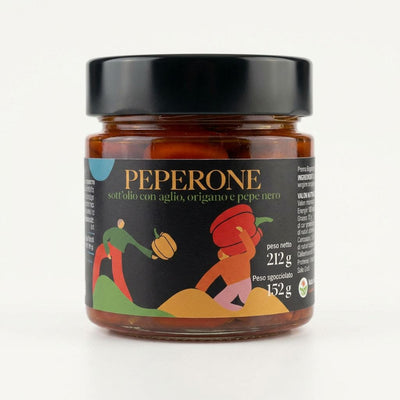
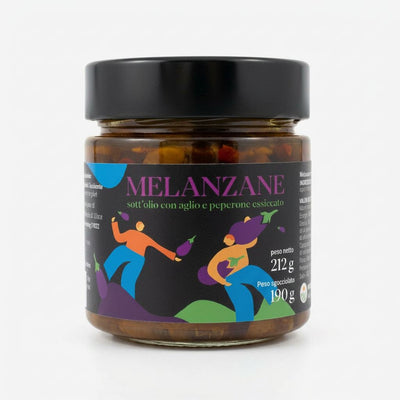
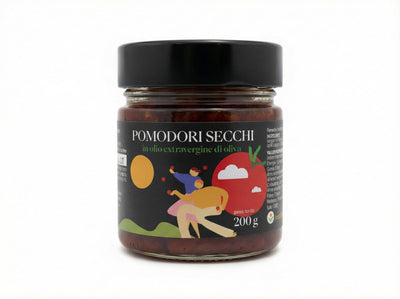
One of the most popular specialities in our range is eggplant preserved in extra-virgin olive oil, handcrafted according to traditional Campania recipes. They sit beautifully next to homemade zucchini sott’olio on any antipasti platter. If you’re looking for a special gift, our gift-set collection offers finely curated assortments of Mediterranean specialities. Explore the full sott’olio collection from Minnelea and let the richness of southern-Italian preserving artistry inspire you.
FAQ
What does “sott’olio” mean in English?
“Sott’olio” is Italian and literally means “under oil.” It describes a preservation method in which vegetables are submerged in olive oil, often combined with vinegar and spices.
How long do zucchini sott’olio keep?
Unopened and properly stored, zucchini sott’olio keep for up to a year. Once opened, store in the refrigerator and consume within three to five days.
Do I need to salt the zucchini before preserving?
Yes, salting is recommended. Salt draws water from the zucchini, improves texture, and enhances the shelf life of the finished product.
What is the difference between sott’olio and vinegar-preserved?
In the sott’olio method, olive oil is the dominant preserving medium, complemented by vinegar and herbs. Pure vinegar preserving uses mainly vinegar, water, and salt without oil, yielding a sharper, more neutral result.
When do preserved zucchini taste best?
Full aromatic depth develops only after several days to weeks of storage. Right after preserving, the zucchini are milder; after a week, oil, vinegar, and spices begin to harmonise.
Recommendations
- Cilento Eggplant in EVOO · Artisan Antipasto · Minnelea – Azienda Agricola Minnelea
- Cilento Tomato Sauce · Traditional Recipe · Minnelea – Azienda Agricola Minnelea
- Cilento Sun-Dried Tomatoes in EVOO 200g · Minnelea – Azienda Agricola Minnelea
- Pumpkin Cream EVOO 200g · Cilento Artisan · Minnelea – Azienda Agricola Minnelea