
A True Italian Breakfast: Bread, Jam & the Little Rules That Make All the Difference
The Italian breakfast is one of those details of our cuisine that Italians take for granted and foreigners study. It may look less structured than an English or German morning spread, yet it follows its own rules—fewer, but just as precise.
 | From our selection Fig JamHandmade, no preservatives. € 7,90 Discover → |
The traditional Italian breakfast is sweet, simple, and swift. Bread or crisp rusks, butter, jam, perhaps honey. Coffee or cappuccino. Sometimes a biscuit, a slice of nonna’s crostata, a wedge of yesterday’s cake. That’s it.
Below are the four things that set it apart, plus a practical guide to building a quality Italian breakfast at home.
The four rules of an Italian breakfast
1. It’s sweet, never savoury
Unlike Anglo-Saxon plates of eggs, bacon, and beans or German spreads of cheese, cured meats, and rye bread, the Italian breakfast is essentially sweet. Bread, jam, biscuits, brioche. Savoury at dawn still feels like a quirk—though recent generations have embraced salty yoghurt or avocado toast.
2. It’s quick, not lingering
A standard Italian breakfast is over in ten to fifteen minutes. There is no weekend “long-brunch” culture at home—that’s an import. Traditional breakfast happens early, standing at the bar counter or seated at the kitchen table, and it’s finished in a flash.
3. Coffee is the star
Coffee—espresso, moka, cappuccino—is the non-negotiable pivot. Everything else orbits around it. Tea is an alternative, but always a minority one.
4. Bread beats rusks
In real Italian homes, yesterday’s rustic loaf—lightly toasted—is preferred to commercial crisp rusks. A subtle detail that makes a huge flavour difference.
The right jam for every morning
A good Italian breakfast revolves around three or four different jams, rotated through the week. Keep a few jars open in the fridge and pick whichever one calls to you at dawn.
The universal classic
Strawberry confettura has been the first choice of Italians since childhood. It works on white or whole-wheat bread, rusks, brioche—the “neutral” jam that pleases everyone.
For citrus lovers
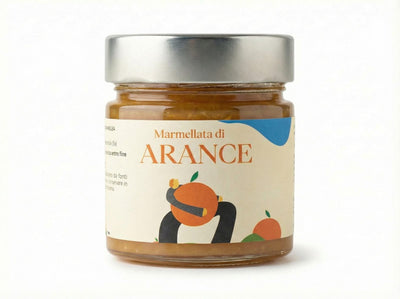
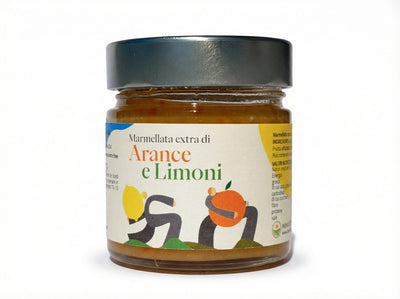
Orange marmellata is the second most popular. Fresh, fragrant, a touch more bitter than strawberry. Lovely with black tea and whole-grain bread.
For a bolder note
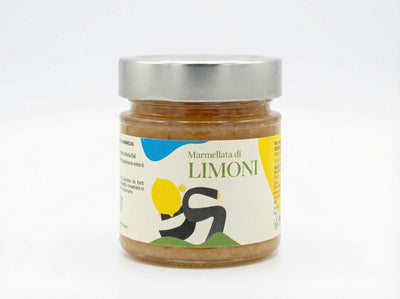
Lemon marmellata is the sharpest in the range. Ideal for those who dislike overly sweet breakfasts and want a clean citrus punch.
For something special
Fig confettura is the “weekend” or “guest” jam. Lusciously sweet, packed with fruit pieces. Worth saving for Saturdays or when company arrives.
A sample weekly rotation
To keep mornings interesting, here’s a rotation that works:
- Mon–Wed: strawberry confettura (the classic)
- Thu–Fri: orange marmellata (the fresh)
- Sat–Sun: fig confettura or apricot confettura (the weekend)
For visual variety on the plate, alternate red jams (strawberry, berries), orange ones (apricot, orange), and darker tones (blueberry, fig). The eye matters at breakfast too.
Bread pairings: what works
Not every bread loves every jam.
White country loaf: works with everything. The most versatile.
Whole-wheat bread: stands up to intense jams (blueberry, fig, lemon). Sweeter jams like strawberry can feel “lost” against its robust flavour.
Rusks: better with sweeter jams (strawberry, apricot, apple). Sharper citrus jams can feel harsh on an already dry rusk.
Brioche or pan brioche: anything goes. The brioche’s sweetness can handle even the most intense confetture.
Bonus: honey as an alternative
Honey is the second most Italian alternative to jam at breakfast. We won’t dive deep here—it deserves its own chapter—but know that many families alternate honey and jam through the week, and the pairing with coffee or cappuccino is equally valid.
The Italian breakfast kit
If you want to stock up for the month, our Sweet Awakening kit includes six artisan confetture—strawberry, fig, apricot, blueberry, red apple, mixed berries—covering the whole weekly rotation without a single decision.
All confetture and marmellate are in the confetture & marmellate catalogue.