
Italian Cheese Board: The Complete Guide to Pairings with Jams and Antipasti in Oil
There's a reason why a cheese board served in a restaurant always looks better than the one you make at home. It's not the quality of the cheeses. Quite often, you'll find those same cheeses at any good Italian deli. The reason is the rule of contrasts: what you put next to the cheese, how much of it, and in what order.
 | From our selection Welcome Kit (6 jars)Handmade, no preservatives. € 34,90 Discover → |
This is the guide we use internally at Minnelea to explain how our line of jams and antipasti in oil pairs with Italian cheeses. No hearsay, no improvised combinations. Five cheeses, eight pairings, three boards ready for as many occasions.
What an Italian cheese board really is
An Italian cheese board is not a "random assortment of cheeses". It's a thoughtful sequence that starts with the most delicate cheese and arrives at the most intense, designed to be eaten in a specific order, ideally from left to right (clockwise, if the board is round).
This means two practical things:
- You need at least three different types of cheese: one soft-paste, one semi-aged, one aged or blue.
- Each cheese deserves a sweet or savoury pairing that balances it. It's not decoration: it's flavour design.
The five Italian cheeses you need
You don't need ten cheeses. Five well-chosen ones cover any occasion.
1. Mozzarella fior di latte or burrata. Fresh paste, milky sweetness, neutral flavour. It's the opening of every summer board. Burrata, especially, holds up to contrasting pairings thanks to its stracciatella heart.
2. Cow's milk or sheep's milk ricotta. Also fresh-paste, but with a slightly tangy note. It replaces mozzarella on autumn-winter boards and works equally well sweet or savoury.
3. Semi-aged pecorino. Hard paste, bold but not aggressive flavour. It bridges the freshness of soft cheeses and the power of aged ones.
4. Parmigiano Reggiano aged 24 or 30 months. Granular, salty, packed with umami. It's the most recognisable Italian cheese in the world, and the one cheese you can't leave off a serious board.
5. Sweet or piquant Gorgonzola. The blue closes the board. The sweet one is creamy and gentle; the piquant version calls for sugary, slightly alcoholic pairings. Pick based on who's at the table: the piquant isn't for everyone.
If you have room for a sixth, rotate seasonally: caciocavallo silano in winter, Apulian stracciatella in summer.
The pairings that make the difference
This is where most people get it wrong. The rule is simple: delicate cheeses pair with light sauces, antipasti in oil and compotes (acidity, freshness, vegetable notes); intense cheeses pair with sweet, deep, alcoholic or spiced jams.
Here's the map.
Mozzarella and burrata → sun-dried tomatoes in oil or sun-dried tomato spread
Fresh pasta filata needs a savoury contrast, not a sweet one. A teaspoon of sun-dried tomato spread by Minnelea on a crostino with burrata reframes both: the tomato draws out the sweetness of the stracciatella, the burrata softens the concentration of the tomato. If you prefer whole-piece texture, sun-dried tomatoes in EVO oil work just as well.
Variant: roasted peppers in EVO oil cut into strips, alongside buffalo mozzarella. A southern Italian summer aperitivo, built in three minutes. Or aubergines in EVO oil sliced into ribbons.
Ricotta → lemon jam
Ricotta is Italy's most underrated cheese. It works with everything, but its signature pairing is extra lemon marmalade. The tangy note of the ricotta and the gentle bitterness of the lemon zest complete each other: the result is a bite that tastes far more complex than it was to prepare. It's also the starting point of half of southern Italian pastry.
Pecorino → fig jam
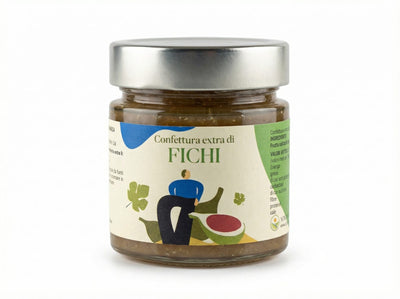
A classic, but a classic for a reason. Semi-aged pecorino has a direct savouriness that white fig jam by Minnelea (Dottato variety, whole fruit) wraps without covering. The sugary side of the fig settles into the grain of the cheese, and the finish lasts long.
If your pecorino is more aged (over 12 months), it works even better with dried figs or walnuts next to the jam.
Parmigiano Reggiano → fig jam or traditional balsamic vinegar
Aged Parmigiano calls for sweetness, but a deep sweetness. Two paths:
- Fig jam, as with pecorino, but in a smaller dose: Parmigiano is already intense, just a tip of a spoon on a shard is enough.
- Traditional balsamic vinegar (not the IGP balsamic from Modena you find in supermarkets, but the DOP Tradizionale from Modena or Reggio Emilia): a few drops on shards of 30-month Parmigiano is the pairing Italian cuisine codified decades ago.
Gorgonzola → piquant fig jam or mostarda
Gorgonzola is where jams really shine. Piquant Gorgonzola with fig jam, especially if there's a hint of pepper in the jam or if you accompany it with a fruit mostarda, is the most "restaurant" moment of the whole board. Sweet Gorgonzola prefers a more acidic jam: try red apple or lemon.
The rule of contrasts, in two lines
If you only remember one thing from this article:
Fresh, delicate cheese → savoury, vegetable pairing (antipasti in oil, vegetable spreads).
Aged or blue cheese → sweet, deep pairing (jams with whole fruit).
It works almost every time. The few exceptions are above (ricotta + lemon is the only true "middle ground" on fresh-paste cheeses).
Visual composition and quantity per person
The aesthetic side matters less than the internet says, but two practical rules apply:
- Quantity: 80-100 grams of cheese total per person if the board is the main course, 50-60 grams if it's a starter.
- Spacing: leave one to two centimetres of clear board between each cheese. If everything's stacked, the eye won't read the sequence.
- Open jars: jams and spreads are served open directly on the board, each with its own small spoon. No transferring into bowls — you lose half the effect.
- Bread and crisp accompaniments: two types. A neutral white bread (baguette or rustic bread in thin slices) and something crunchy (taralli, broken friselle, breadsticks). Never industrial crackers on a serious board.
Three boards ready by occasion
Quick aperitivo (30 minutes, 4 people)
- Burrata + Minnelea sun-dried tomato spread on crostini
- Semi-aged pecorino + Minnelea extra white fig jam
- Parmigiano in shards
- Green olives and taralli
- Breadsticks and slices of white bread
- Wine: dry sparkling (Franciacorta, Trento Doc, Alta Langa)
Dinner with friends (1 hour, 6-8 people)
- Buffalo mozzarella + Minnelea peppers in EVO oil
- Ricotta + Minnelea extra lemon marmalade
- Aged pecorino + extra fig jam
- 30-month Parmigiano + drops of balsamic vinegar
- Sweet Gorgonzola + chestnut honey (or Minnelea extra red apple jam)
- Fresh fruit: grapes and Williams pears
- Wine: medium-bodied red (Chianti Classico, Aglianico del Vulture, Nebbiolo d'Alba)
Gift board (pre-composed, to take along)
This is the format many Minnelea customers build to bring to dinner or as a gift — which is why Minnelea gift kits exist, giving you the combination already built:
- Premium 18-jar Gift Kit — jams, antipasti and sauces assorted, the most complete format
- Premium 8-jar Tasting Kit — smaller cut, perfect for a single gift
- Cilento Grand Reserve Kit (12 jars) — premium selection
Pair them with a sealed portion of Parmigiano Reggiano and a bag of fennel taralli. They work better than the standard panettoni, especially for mid-year occasions.
Mistakes to avoid
- Too many cheese types. More than six different varieties and the palate gets confused; it stops distinguishing the steps.
- Industrial, overly sweet jams. Supermarket jams often have 50-60% added sugar: they cover the cheese instead of accompanying it. Artisan extra jams (≥ 65% fruit) work better because they let the cheese emerge.
- Closed jars. A closed jar on the board means the guest has to open it. Open it yourself first.
- Cold jams from the fridge. Jams are served at room temperature, never cold: the chill blocks the aromas.
- Cured meats on a cheese board. They're two different things. Mixing cured meats and cheeses on the same board is a catering shortcut: both lose definition. If you want both, build two separate boards.
Where a good board starts
Good Italian cheeses you'll find almost anywhere. What changes the outcome is the jar you put next to them: the right jam, the right antipasto, the right spread.
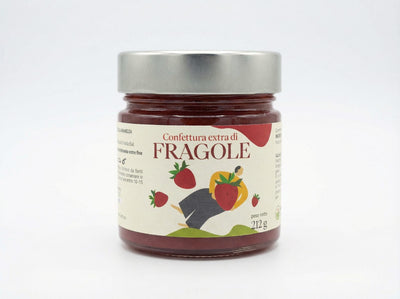
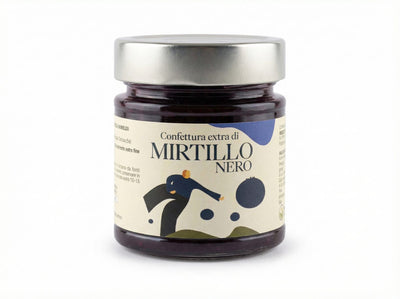
At Minnelea, that's exactly what we do: extra jams with whole fruit (Dottato white figs, lemons, strawberries, red apples, oranges, blueberries, apricots, mixed berries) and a line of antipasti in oil and spreads designed for the cheese board — sun-dried tomato spread, sun-dried tomatoes in EVO oil, peppers in EVO oil, aubergines in EVO oil. These are the jars we've kept open on our internal tasting boards for three years.
If you want to put together your first complete cheese board, start here:
- Extra Dottato white fig jam
- Extra lemon marmalade
- Extra red apple jam
- Peppers in EVO oil
- Aubergines in EVO oil
- Sun-dried tomato spread
- Sun-dried tomatoes in EVO oil
For those who want it pre-composed: Premium 18-jar Gift Kit or Premium 8-jar Tasting Kit.
Related reading
- Burrata warm or cold? Every way to serve it with antipasti in oil and jams
- Parmigiano and jam: 6 pairings that elevate aged cheese
- Ricotta in 7 gourmet versions: sweet, savoury, with jam, with antipasti in oil
- The art of pairing cheeses with jams: fig jam and other traditional flavours
- The perfect Italian aperitivo: the complete guide