
Pairing Fig Jam with Wine: A Connoisseur’s Guide
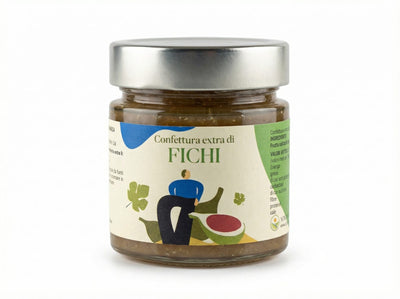
 | From our selection Fig JamHandmade, no preservatives. € 7,90 Discover → |
Pairing fig jam with wine is one of the most elegant forms of culinary match-making, delighting gourmets and oenophiles alike. The marriage of honeyed, sun-ripened figs and the layered aromatics of a well-chosen wine creates flavour experiences that transcend the ordinary. Whether served alongside a curated cheese board, folded into a home-cooked confettura, or offered as a counterpoint to savoury Mediterranean antipasti, knowing the guiding principles unlocks the full potential of this pairing. Let us show you which wines to choose, how to craft the jam, and which pitfalls to avoid.
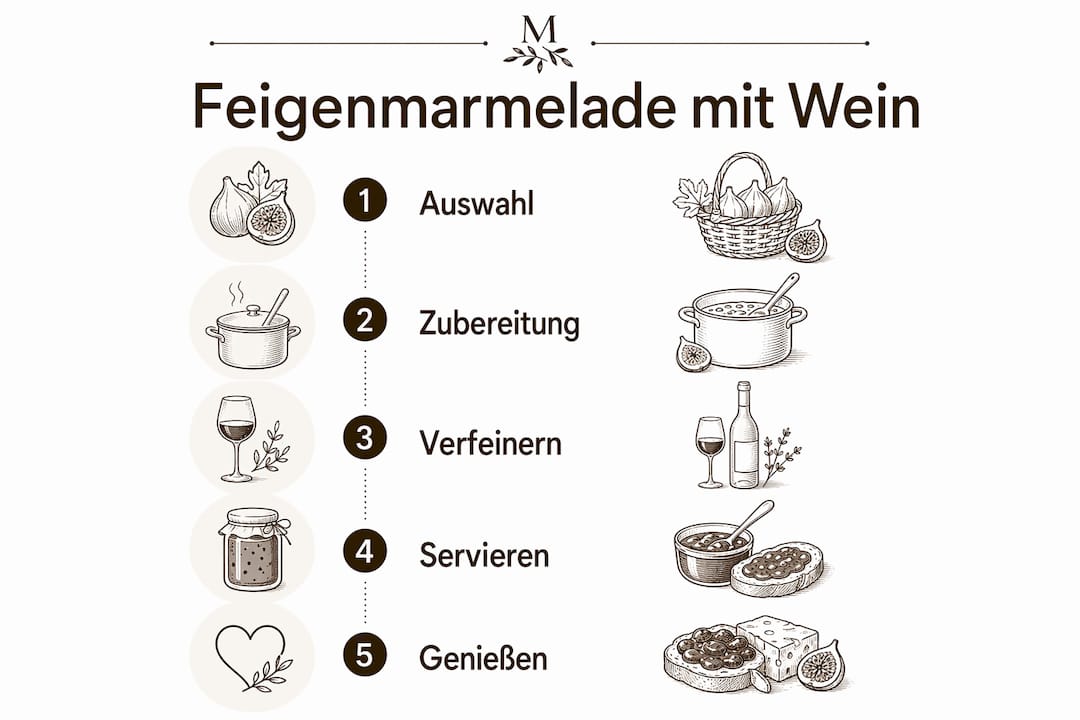
Which wines work best with fig jam?
Choosing the right wine is the single most important decision when pairing with fig jam. Not every bottle harmonises with the fruit’s intense sweetness; the wrong choice can tip the entire flavour balance.
Sommeliers recommend noble sweet wines such as Sauternes, Tokaji Aszú or Passito di Pantelleria as first choices. These wines carry balanced acidity that frames, rather than amplifies, the jam’s sweetness. Sauternes, for example, offers botrytis notes reminiscent of honey and dried apricot that meld seamlessly with the caramelised character of fig.
If you prefer a livelier profile, reach for sparkling alternatives. Prosecco or Moscato d’Asti provide a refreshing counterpoint to the jam’s density. Their bubbles lift the fruit notes and keep the pairing from feeling heavy.
Different rules apply when you are actually cooking the jam:
- Merlot and Pinot Noir are the preferred reds, as they are low in tannin. Tannic wines turn bitter during cooking and spoil the aroma.
- Dry whites such as Vermentino or a Pinot Grigio from northern Italy make a lighter alternative if you favour a brighter, fresher jam.
- Noble dessert wines like Vin Santo or Muscat de Beaumes-de-Venise can be reduced in small quantities to lend remarkable depth to the confettura.
- Supermarket “cooking wines” are off-limits. Inferior wines concentrate their faults and ruin the final flavour.
Pro tip: Use only a wine you would happily drink on its own. Reduction magnifies both virtues and flaws.
How to prepare fig jam with wine correctly
Making fig jam with wine follows a simple principle: quality of ingredients first, technique second. A truly artisanal result is born not of chance, but of deliberate choices at every step.
The base recipe: quantities and ratios
Standard recipes call for 800 g–1 kg figs, 200 ml dry, fruity red wine and 500 g jam sugar 2:1. These proportions are time-tested, yielding a confettura with balanced sweetness and reliable set.
Step-by-step method
- Prepare the figs: Ripe figs are washed, stems removed and roughly diced. Overripe fruit intensifies flavour; underripe fruit lacks aroma.
- Maceration: Combine figs with jam sugar and let stand 30–60 minutes. This resting period breaks down cell structure and draws out juices, leading to deeper, more concentrated flavour.
- First boil: Bring the fruit mixture to a rolling boil for 4–5 minutes without the wine. This releases pectin and begins setting.
- Add the wine: Only after the first boil. Adding wine later preserves volatile aromatics and prevents delicate notes from being lost to prolonged heat.
- Second boil: Boil hard for another 2–3 minutes. Perform a set test on a chilled plate.
- Season and jar: Finish with fresh lemon juice, ladle hot into sterilised jars and seal immediately.
Aromatic accents
| Ingredient | Effect | Suggested amount |
|---|---|---|
| Lemon juice | Freshness, set, acid balance | 2–3 Tbsp per kg figs |
| Thyme | Mediterranean depth, herbal note | 2–3 fresh sprigs |
| Rosemary | Resinous aroma, complexity | 1 sprig, removed before jarring |
| Vanilla | Warm sweetness, rounding | 1 split pod |
Mediterranean herbs such as thyme or rosemary can be added during cooking to deepen flavour without masking the wine notes.
Pro tip: A good wine for jam is fruity and round. Lemon juice not only aids setting but also highlights the wine’s fruit—always add it at the end.
How to pair fig jam and wine at the table
Serving fig jam alongside a matching wine is an art in itself. Here, the focus shifts from cooking to the interplay of texture, aroma and temperature on the plate.
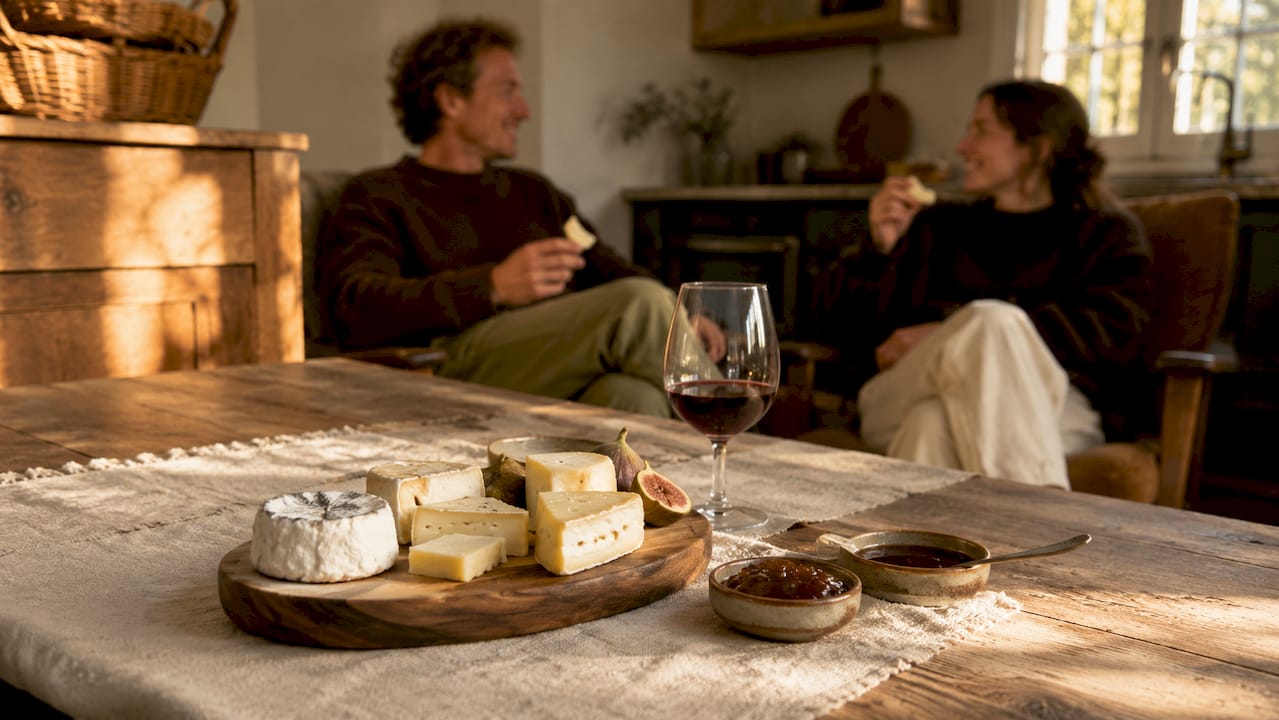
Fig jam on the cheese board
Fig jam is superb with bold cheeses such as blue or baked Camembert. Its sweetness slices through fat and tempers saltiness. Noble sweet wines like Sauternes or Tokaji Aszú amplify this effect with their own acidity and botrytis notes.
For a successful fig jam for the cheese board, we recommend:
- Roquefort or Gorgonzola with a glass of Sauternes: the contrast between salty-creamy and honeyed-spicy is classic and unbeatable.
- Camembert or Brie with a fruity Pinot Noir: the cheese’s softness and the wine’s berry notes marry beautifully with fig sweetness.
- Goat cheese with a dry Riesling Spätlese: the wine’s acidity and the cheese’s freshness create a vivid counterpoint to the jam.
- Manchego with a Spanish Tempranillo: regional logic that works because wine and cheese share the same flavour ancestry.
Mediterranean tapas and creative pairings
Fig jam with Mediterranean tapas featuring Manchego and Prosciutto is a tried-and-true combination from Spanish and Italian tables. Regionally attuned wines such as Tempranillo or a dry white that balances the jam’s sweetness are ideal.
| Dish | Role of fig jam | Wine suggestion |
|---|---|---|
| Blue cheese | Sweet counter to salt | Sauternes, Tokaji Aszú |
| Baked Camembert | Fruity companion | Pinot Noir, Merlot |
| Prosciutto & fig | Aromatic bridge | Prosecco, Moscato d’Asti |
| Manchego on tapas board | Regional harmony | Tempranillo, Vermentino |
| Goat cheese crostini | Fresh contrast | Riesling Spätlese, Pinot Grigio |
The principle of regional pairing is especially reliable. Wines and foods that share the same geographical DNA almost always complement one another. A fig jam from southern Italy sings beside a Primitivo from Puglia or a Greco di Tufo from Campania in a way no recipe can fully capture.
Mistakes to avoid when pairing
Pairing fig jam with wine is not rocket science, but certain missteps can noticeably spoil the result. Knowing them protects you from disappointment.
- Using tannic wines: Cabernet Sauvignon or Barolo are out of place in jam. Tannins turn bitter when cooked and completely overshadow the fruit.
- Adding wine too early: Boiling the wine from the start strips delicate aromatics. Adding it after the first boil is not optional—it is decisive.
- Too little acidity: A fig jam without lemon juice tastes flat and sets poorly. Acidity is the invisible amplifier that brings every other flavour forward.
- Improper storage: Once opened, jars belong in the fridge and should be consumed within two to three weeks. Poor storage dulls flavour and can alter texture.
- Too much wine: More wine does not equal more aroma. Excess liquid prevents setting and dilutes the fig character.
Pro tip: Buy the same wine for cooking that you will serve at the table. It creates a seamless flavour bridge your guests will feel instantly.
Key takeaways
The finest fig jam with wine is born from the union of fruity, low-tannin wine, precise technique and thoughtful pairing with cheese or Mediterranean dishes.
| Point | Details |
|---|---|
| Wine choice for cooking | Use Merlot or Pinot Noir; tannic wines like Cabernet turn bitter. |
| Add wine after first boil | Preserves volatile aromatics and builds complexity. |
| Acidity is essential | Lemon juice improves set and highlights fruit; never omit. |
| Cheese pairing by intensity | Blue cheeses need noble sweet wines; goat cheese loves dry whites. |
| Regional logic when serving | Wine and jam from the same region sing together most naturally. |
What continually surprises me about this combination
by carmine
I have experimented with many pairings, but the marriage of fig jam and wine is one of the few that surprises me every single time. What fascinates me most: most people underestimate the role of acidity. They assume fig jam is sweet, so it needs a sweet wine. That is often true when serving, but not always.
My honest recommendation: try a dry, mineral white wine with a good fig jam on goat cheese. The contrast is startling at first, then utterly convincing. Suddenly the jam seems less sweet and far more complex. This is the principle of contrast in pairing, and it works here better than in almost any other combination.
When cooking, I have learned that wine quality is not about price but about fruitiness. A simple, fresh Merlot from Cilento beats an expensive, oak-laden Barolo in jam every time. Cooking forgives no flaws, yet it generously rewards freshness and vibrancy. Once you grasp that, you cook differently.
For special occasions I recommend the trio of artisanal fig jam, a glass of Passito di Pantelleria and a ripe Pecorino. That is not a recipe; it is an experience.
— carmine
Discover Minnelea’s fine fig jams
Minnelea crafts its fig jams in small batches from hand-picked Cilento figs. Each jar carries the soul of the southern Italian coast: ripe fruit sweetness, natural depth and a texture that shines on a cheese board or as an ingredient in your own confettura.
If you wish to pair fig jam with wine, Minnelea offers the ideal foundation. The artisanal jams from southern Italy are created for the German fine-food market and for discerning palates. Explore the full collection and find your personal favourite for the next cheese platter or wine evening.
FAQ
Which wine pairs best with fig jam?
Noble sweet wines such as Sauternes, Tokaji Aszú or Passito di Pantelleria harmonise beautifully. For a fresher contrast, choose Prosecco or Moscato d’Asti.
Can any red wine be used for fig jam?
No. Tannic reds like Cabernet Sauvignon become bitter when cooked. Only low-tannin, fruity reds such as Merlot or Pinot Noir are suitable.
When should wine be added during jam-making?
Add the wine only after the first boil of the fruit. This preserves volatile aromatics and yields a more complex flavour profile.
What goes with fig jam on a cheese board?
Fig jam pairs especially well with blue cheese, Camembert and goat cheese. Noble sweet wines complement strong cheeses; dry whites suit milder ones.
How long does homemade fig jam with wine keep?
Stored cool and unopened, the jam lasts several months. Once opened, keep refrigerated and consume within two to three weeks.
Recommendations
- Pairing Jam with Cheese: The Ultimate Guide – Azienda Agricola Minnelea
- Cilento Forest Berry Jam · Artisan · Minnelea – Azienda Agricola Minnelea
- Cilento Washington Orange Marmalade · Artisan · Minnelea – Azienda Agricola Minnelea
- Cilento Orange and Lemon Marmalade · Artisan · Minnelea – Azienda Agricola Minnelea